What are the methods for preventing and controlling deformed strawberries in greenhouses?
Using greenhouse cultivation is a good way to increase strawberry yields and income. However, because greenhouse cultivation is highly technical, especially during winter and early spring, when temperatures are low, light is weak, and the climate is changeable, improper management often leads to many abnormal fruits that are too thin, too fat, curved, flat in shape, or uneven on the surface...
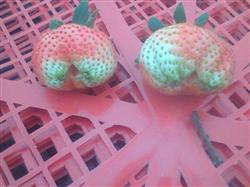 Using greenhouse cultivation is a good way to increase strawberry yields and income. However, because greenhouse cultivation is highly technical, especially during winter and early spring, when temperatures are low, light is weak, and the climate is changeable, improper management often leads to many abnormal fruits that are too thin, too fat, curved, flat in shape, or uneven on the surface, known as deformed fruits. According to surveys, deformed fruits occur quite commonly in greenhouse strawberries. Taking the following measures can reduce the occurrence of deformed fruits. Selecting good varieties is the most effective measure for controlling the occurrence of deformed fruits. Cold-tolerant varieties, because of their strong resistance to low temperatures, will have a greatly reduced incidence of deformed fruits. Varieties with poor disease resistance are susceptible to disease during the flowering period, which will lead to an increase in deformed fruits.
Adjust the greenhouse temperature properly. Too low a temperature is an important cause of deformed fruits. Strawberries like a warm, cool climate; they are not resistant to severe cold or heat. When the temperature reaches 5°C, they begin to sprout and grow, and the most suitable temperature for growth and development is 20°C~25°C; below 10°C and above 30°C are both unfavorable to their growth and development.
Doing pollination well is a key measure for reducing the occurrence of deformed fruits. In the cold season, the outdoor temperature is low, the greenhouse vents are small and the ventilation time is short, the interior is in a windless state, and it is cold outside the greenhouse with no insects entering, so strawberries cannot rely on wind and insects for pollination. Poor pollination is another important cause of deformed fruits. The countermeasure is to do pollination well.
Water imbalance is an important cause of deformed fruits. Strawberries are very sensitive to water; they fear both drought and waterlogging. Soil that is too dry or too wet in the greenhouse will cause an imbalance in the supply and demand of water and nutrients, leading to poor fruit development and the formation of deformed fruits. Because strawberry roots are relatively shallow and are mainly distributed in the top 20 cm of soil, they are not drought-tolerant. In addition, the room temperature is relatively high, soil moisture evaporation is large, and drought is very likely to occur. When soil moisture is insufficient, water should be given in time. However, because ventilation in the greenhouse is low during the cold season, moisture indoors is not easily lost, and wet damage is likely to occur, so do not flood-irrigate; instead, water frequently in small amounts.
Improper fertilization is also a key factor leading to deformed fruits. Greenhouse strawberries have a long fruiting period and a relatively high demand for the three elements nitrogen, phosphorus, and potassium. Insufficient organic fertilizer, excessive application of nitrogen fertilizer, or improper fertilization can easily lead to excessive vegetative growth of branches and leaves, causing poor ventilation and light penetration in the plants and aggravating the occurrence of deformed fruits. On the basis of heavily applying organic fertilizer, pay attention to increasing the application of phosphorus and potassium fertilizers, and do not apply ammonium bicarbonate as a topdressing.