5 Control Methods for the Apple Flatheaded Borer
Nursery stock quarantine: The apple flatheaded borer is a quarantine pest and can be spread to new areas with nursery stock. Therefore, quarantine work at the time of nursery stock shipment must be strictly strengthened to prevent its spread. Protecting natural enemies: During the mature larval and pupal stages, the apple flatheaded borer has two species of parasitic wasps and one species of parasitic fly; in orchards that are not frequently sprayed with pesticides, the parasitism rate can reach 36...
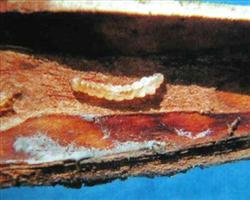
Nursery stock quarantine: The apple flatheaded borer is a quarantine pest and can be spread to new areas with nursery stock. Therefore, quarantine work at the time of nursery stock shipment must be strictly strengthened to prevent its spread.
Protecting natural enemies: During the mature larval and pupal stages, the apple flatheaded borer has two species of parasitic wasps and one species of parasitic fly; in orchards that are not frequently sprayed with pesticides, the parasitism rate can reach 36%. In autumn and winter, about 30% of the larvae and pupae are eaten by woodpeckers.
Manual control: Take advantage of the adult beetle's death-feigning behavior and manually capture adults that fall to the ground; remove dead trees, prune out infested branch tips, and burn them in a centralized manner before pupation; manually dig out the insects. In winter and spring, scrape away the old bark at the damaged areas, use a knife to dig out the larvae beneath the bark layer, and then apply 5-degree lime sulfur mixture.
Applying pesticide to control the insects: When the larvae are feeding in the shallow layer, repeated inspections should be carried out. If damage signs are found on the trunk, simply brush the pesticide on with a brush. The pesticide can be 80% dichlorvos emulsifiable concentrate at 10 times dilution; 80% dichlorvos emulsifiable concentrate diluted 20 times with kerosene.
Spraying pesticide to kill adults: In orchards with severe apple flatheaded borer infestation, controlling the larvae alone often cannot fully control the damage. On the basis of larval control, pesticide should be sprayed continuously during the peak period of adult occurrence, such as 20% fenvalerate emulsifiable concentrate at 2000 times dilution, 90% trichlorfon at 1500 times dilution, etc. When insect tunnels caused by flatheaded borers are found on the bark surface of branches 2 years old or older, use a small knife to make a few shallow cuts on the bark surface of the fruit tree branches, then apply a mixture of 4 times diluted omethoate and dichlorvos to the damaged areas, applying whenever damage occurs. Prune out severely damaged branches that are nearly dead to reduce the source of insects.