-

What causes deformed melon fruit? Causes and control methods
Causes of deformed fruit in melons and control methods
-
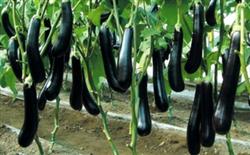
Common Problems of Greenhouse Eggplant in Early Spring and Their Control Methods
In the early spring season, when temperatures are low and light is weak, greenhouse eggplant often shows various abnormal conditions. The common problems and their control are described below: 1. Stunted seedlings In the early spring crop, eggplant often shows stunted seedling symptoms at the seedling stage, such as small leaves, dark green color, thin stems and few roots. After transplanting, such seedlings recover slowly, grow weakly, and...
-
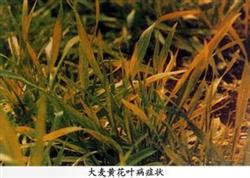
Occurrence Patterns and Control Methods of Barley Yellow Mosaic Disease
Barley yellow mosaic disease occurs mainly in the lower Yangtze River basin, in the provinces and municipalities of Hubei, Zhejiang, Jiangsu, Shanghai and Anhui, among which Jiangsu, Zhejiang and Shanghai are the most severely affected. Diseased plants die off prematurely, leading to a lower rate of productive tillers in barley, a marked reduction in seed-setting rate, lower thousand-grain weight, lower flour yield and reduced quality. When barley develops...
-
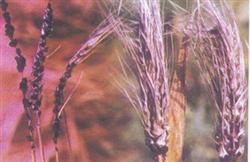
Transmission Routes and Control Methods of Barley Covered Smut
How is barley covered smut transmitted? What control methods are there? (1) Occurrence pattern: The transmission routes of the barley covered smut pathogen occur in two situations: one situation is that during threshing, black powder (chlamydospores) gets mixed in, and the chlamydospores adhere to the seed surface; after barley is sown, the chlamydospores germinate into hyphae and invade the young tissues of the barley seedlings...
-
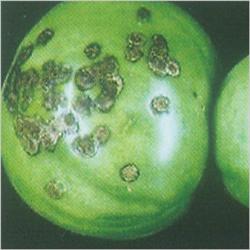
What to do when tomatoes get bacterial spot? Symptoms and chemical control methods
★Symptoms: Tomato leaves, stems and fruits can all be infected by bacterial spot. The old leaves near the ground are affected first, with initial water-soaked dark green spots that enlarge into nearly round or irregular brown lesions with distinct edges, surrounded by a narrow yellow halo ring, thinner in the center and with a greasy sheen. Stems, when infected, first develop water-soaked dark green to yellowish-brown...
-
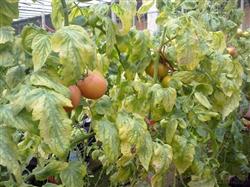
What causes yellowing and curled leaves in tomatoes? Detailed prevention and control methods
Question: What is the cause of yellowing and curled leaf disease in tomatoes? How can it be prevented and controlled? Answer: Hello! Regarding yellowing and curled leaf disease in tomatoes: if this disease is accompanied by the occurrence of tobacco whitefly (small white moths), then it is very likely tomato yellow leaf curl virus disease (commonly known as: TY virus disease). TY virus...
-
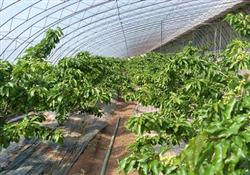
Sweet Cherry Pest and Disease Control Methods and Techniques
(1) Main diseases 1. Cherry brown spot disease: also known as leaf shot hole disease, it is the most important leaf disease of sweet cherry. (1) Symptoms: At the early stage of the disease, small purple spots the size of a needle tip form, then enlarge, and some join together to form round brown lesions, on which small black dots appear, namely conidia masses and perithecia. ...
-
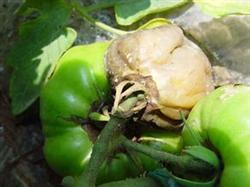
Symptom Identification and Chemical Control Methods for Tomato Sour Rot
The symptoms currently occur only in a few regions. It damages only the fruit, and mostly overripe fruit; fruit with wounds is especially susceptible. The diseased part softens, the skin turns slightly brown, becomes wet-rotten and slightly wrinkled, with fine cracks. When humidity is high, sparse white mold grows on the surface of the diseased part. Finally the diseased fruit leaks water, rots, and has a sour odor. Disease pattern...
-
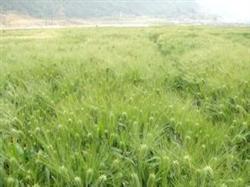
Barley Field Weed Control Methods and Precautions
In the coastal areas of our province, rice-barley rotation is predominant. Due to the need for crop rotation adjustment, a certain area of malting barley must be planted every year. On the basis of optimizing the variety layout, standardized cultivation measures can improve quality indicators of malting barley such as grain shape uniformity, thousand-grain weight and grain protein content. In production, the following key points need to be grasped...
-
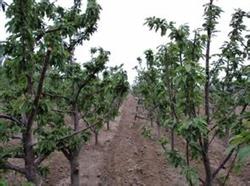
Identification and Control Methods for Common Cherry Diseases and Pests
Many of the diseases and pests affecting cherries are the same as those of other stone fruit trees, so their control methods can be used for reference. The main diseases harming cherries are shot hole disease, crown and root collar rot, and gummosis. Crown and root collar rot mostly occurs on trees in their first fruiting stage, causing the crown and root collar to decay. Control methods: mainly avoid piling soil around the root collar for long periods, and control underground pests that gnaw and wound the bark. At the same time, check frequently; when diseased plants are found, scrape and treat them promptly, and after scraping, disinfect with Bordeaux mixture or lime sulfur mixture. For severe crown and root collar rot, the aboveground growth can also be restored through spring bridge grafting. The main pests harming cherries include the red-necked longhorn beetle, the golden-line jewel beetle, the small clearwing moth, the spherical scale insect, and the phalera caterpillar. The small clearwing moth has one generation per year, and its larvae cause damage within the cortex of large branches. Control measures mainly include spraying during the peak emergence period of adults, whitewashing the branches and trunk to prevent egg laying, and promptly spraying or digging out larvae when their frass is found in the field.
条件筛选