Common Problems of Greenhouse Eggplant in Early Spring and Their Control Methods
In the early spring season, when temperatures are low and light is weak, greenhouse eggplant often shows various abnormal conditions. The common problems and their control are described below: 1. Stunted seedlings In the early spring crop, eggplant often shows stunted seedling symptoms at the seedling stage, such as small leaves, dark green color, thin stems and few roots. After transplanting, such seedlings recover slowly, grow weakly, and...
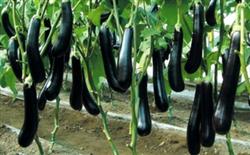
In the early spring season, when temperatures are low and light is weak, greenhouse eggplant often shows various abnormal conditions. The common problems and their control are described below:
1. Stunted seedlings
In the early spring crop, eggplant often shows stunted seedling symptoms at the seedling stage, such as small leaves, dark green color, thin stems and few roots. After transplanting, such seedlings recover slowly, grow weakly, and are prone to flower and fruit drop.
Cause: The disease is most likely to occur when the seedbed temperature is too low (below 15°C for a long time). When heating facilities or nutrient pots are used for raising seedlings, water consumption is high; if watering is not timely and the seedbed soil becomes too dry, the disease can also occur.
Control method: Raising early spring eggplant seedlings coincides with a period of low temperature, so temperature management is the most critical. First, choose low-temperature-tolerant varieties: for example, among round eggplants, Qieza No. 12 and Yuanza No. 2, and among long eggplants, Shouguang Purple Long Eggplant, etc.; second, use heating facilities, such as laying ground heating wires, adding small arched sheds, second-layer curtains and other insulation facilities, water in time, and strengthen temperature and moisture management.
2. Flower drop, fruit drop and leaf drop
After flowering, the flowers drop without setting fruit; during low-temperature periods, the lower leaves yellow and fall off on their own; during high-humidity periods, young eggplants soften and fall off on their own.
Cause: Too low a temperature (below 15°C) or too high a night temperature (above 20°C) easily forms short-styled flowers, which generally cannot set fruit normally. When nitrogen fertilizer is lacking, the plants grow weaker, branching decreases, flower bud development is poor, and short-styled flowers increase. When water and fertilizer are excessive, especially if watering is done when the first eggplant flowers, flower drop, fruit drop and leaf drop are also likely. When nitrogen and phosphorus fertilizers are applied in excess, the plants age due to long-term nutritional imbalance, causing the junction between the petiole and stem and between the fruit stalk and stem to form an abscission layer due to lack of auxin and then drop.
Control method: Strengthen temperature management in the early stage and take corresponding warming measures. After watering to help the seedlings recover, properly control water to restrain growth until the first eggplant "opens its eyes"; then end the restraint period and begin watering and fertilizing. When leaf drop occurs, spray the leaves with a 700-fold aqueous solution of zinc sulfate, or spray the plants with a zinc-containing nutrient (such as Lufengbao) to prevent drop and promote growth. During the flowering and fruiting period, plant growth regulators can also be used to dip flowers and preserve fruit. For example, apply 20-30 ml/kg of 2,4-D to the calyx and upper part of the fruit stalk, or spray flowers with 40-50 mg/kg of 4-CPA.
3. Stiff eggplant
Stiff eggplant appears as small fruit, dull skin, hard texture and poor taste.
Cause: During the fruit expansion period, low temperature and weak light or high temperature and strong light easily cause stiff eggplant. When fertilizing, too much phosphorus fertilizer affects the absorption of potassium and boron, thereby making the fruit stiff. If flowering encounters low temperature and weak light, pollen development is poor, affecting pollination and fertilization, and stiff eggplant is easily formed.
Control method: Strengthen temperature and light management, clean the greenhouse film in time to increase light transmittance; or hang reflective curtains indoors to increase light. When transplanting, phosphorus fertilizer should mainly be applied at the seedling roots, and later each application should be small; avoid excessive amounts. During the fruiting period, focus on applying potassium fertilizer. Once stiff fruit caused by excessive phosphorus fertilizer appears, switch to potassium fertilizer and boron fertilizer (potassium sulfate, borax) to reduce the harm.
4. Double-bodied fruit ⟧17⟧ The fruit is double-bodied and deformed, affecting its commercial appearance, but not its quality.
The fruit is double-bodied and deformed, which affects its commercial appearance but does not affect its quality.
Cause: Excessive fertilizer supply and too high a concentration of growth regulators produce deformed eggplant with multiple carpels.
Control method: Strengthen temperature management during the flowering period, supply water and fertilizer in appropriate amounts, and the concentration of growth regulators should be appropriately increased (when temperature is low) or reduced (when temperature is high) within the specified concentration range.
5. Cracked eggplant and dull eggplant
Fruit cracking and calyx cracking, dull fruit skin, and relatively poor quality.
Cause: Damage by broad mite makes the fruit skin thicker and rougher, while the internal placenta continues to develop, causing inner growth without outer growth. During fruit expansion, drought makes the fruit skin hard, after which watering is suddenly done. In the later stage of fruit development, the soil is dry and short of water, and water supply is not timely.
Control method: Use agents such as propargite and anilazine to control broad mite larvae. During the fruiting period, water must not be lacking; water evenly.
6. Wilting of apical leaves
The stem skin at the top of the plant becomes suberized and cracked, the leaves remain green, with scorched and yellowing edges, and the flesh under the fruit top sinks inward; the plant is prone to Phytophthora blight and fruit rot.
Cause: In alkaline soil, or when shifting from a low-temperature and weak-light period to high temperature and strong light, aboveground transpiration increases, but root absorption capacity is weak, causing apical leaves to wilt and drop due to calcium and boron deficiency.
Control method: Supplement calcium and boron fertilizers to the leaves. On hot, strongly lit days, pay attention to ventilation and cooling. When Phytophthora blight occurs, spray fungicides such as azoxystrobin and thiophanate-methyl for control.
7. Flower buds not opening
The ovary does not expand, and the flower buds remain tight and do not open.
Cause: Boron deficiency.
Control method: Spray the leaves with a 200-fold aqueous borax solution or boron-containing microfertilizer.