-
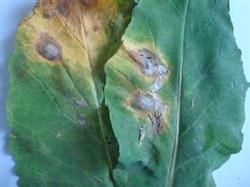
What are the control methods for rape black spot disease?
I. Symptoms Rape black spot disease mainly damages leaves, leaf stalks, stems and siliques. When leaves are infected, brown round spots appear initially, slightly concentric-ringed, sometimes with a yellow halo around them, and under high humidity black mold-like growth forms on them. When the leaf stalk and the junction between the leaf stalk and the main stem are infected, elliptical to spindle-shaped ring-patterned spots form, encircling...
-
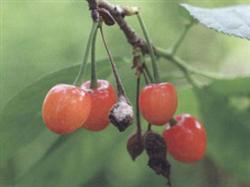
What to Do When Brown Rot Occurs in Cherry Trees? Detailed Control Methods
What to do when brown rot occurs in cherry trees? How to control it. Damage symptoms: Cherry brown rot is also called sclerotinia disease, gray rot, etc. It can attack flowers, leaves, shoots and fruit, but fruit suffers the most serious damage. After infecting the flower organs, the stamens and petals first develop brown water-soaked spots, after which the entire flower rapidly rots, with gray...
-
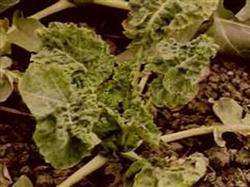
Symptom Identification and Control Methods of Rapeseed Viral Diseases
[Distribution and Damage] It occurs to varying degrees in all rapeseed-producing areas across the country, and generally the winter rapeseed areas suffer more severe disease than the spring rapeseed areas. This disease is caused by single or mixed infection of viruses such as Turnip mosaic virus (TuMV), Cucumber mosaic virus (CMV), Tobacco mosaic virus (TMV) and Rapeseed mosaic virus (YMV). Generally, yield is reduced by 20%-3...
-
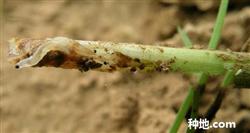
What to do when chives get chive maggots? All the chive maggot control methods are here
What to do when the chives you planted get chive maggots? Asking for guidance. Chive maggots: during spring irrigation, pesticides can be added to kill them; in late April, when adults emerge, spray with 600 times diluted Mieshabi; in early May, use 40% omethoate 800 times diluted solution to drench the roots for control. Mole crickets and white grubs are underground pests: during their peak damage period in March, April and May, in the chive beds use...
-
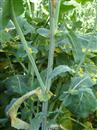
Control Methods and Key Technical Points for Sclerotinia Rot of Rapeseed
Sclerotinia rot of rapeseed, also called stem rot, is a fungal disease. It has a long period of harm, occurring from emergence to maturity, and is most prevalent after flowering. 1. After infection at the seedling stage, reddish-brown spots appear on the stem base and leaf stalks, then expand and turn white, with white cottony mycelium on the rotting tissue, and finally...
-
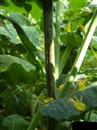
Leaf Color Diagnosis and Control Methods for Red and Yellow Seedlings in the Rapeseed Seedling Stage
Rapeseed stem rot, commonly known as "white stalk", "hemp stalk", "moldy root crown" and so on, is one of the main diseases affecting rapeseed growth. The control of rapeseed stem rot should focus on prevention, and the main technical control measures are as follows. 1. Prevent seed-borne infection: eliminate sclerotia and kill pathogens on seeds through screening, air separation, chemical seed dressing and other methods...
-
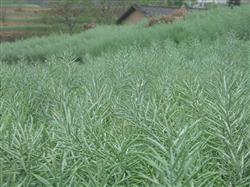
Weed Occurrence Characteristics and Control Methods in Rapeseed Fields
To obtain high quality and high yield in cultivated rapeseed, in addition to normal management such as timely sowing to secure seedlings, weeding and reducing waterlogging, skillful fertilizer application is the key to high yield. 1. Apply sufficient base fertilizer. Applying sufficient base fertilizer is the foundation for high rapeseed yield and should account for about 60% of the total for the whole growing period. To achieve a yield target of about 250 kg per mu, for medium-fertility...
-
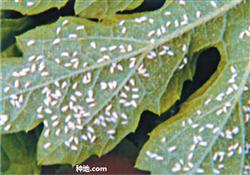
What are the control methods for greenhouse whitefly on bitter melon?
How to control whitefly on greenhouse bitter melon? Please advise. Greenhouse whitefly, also known as glasshouse whitefly, belongs to the order Homoptera, family Aleyrodidae. In the late 1970s, with the expansion of protected vegetable growing areas such as greenhouses and plastic tunnels, the occurrence and distribution of this pest showed a trend of spreading and expanding. At present, it occurs and causes damage in most areas of our country, ...
-
What are the control methods for mango shoot blight and gummosis?
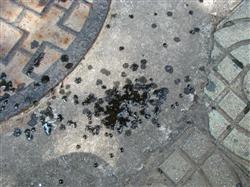
What is mango shoot blight and gummosis? What methods can effectively control it? Mango shoot blight and gummosis mainly damages shoots and the main trunk, causing dieback, but it can also harm seedlings and fruit. When seedlings are affected, dark brown necrotic spots usually appear from the bud union or wounds, rapidly spreading upward and downward, causing the scion to die. ...
-
Pest and Disease Control Methods for Mango During the Flowering and Young Fruit Stages
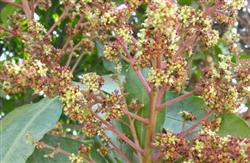
The flowering and fruit-setting stage of mango is an extremely critical period in mango production management. The management measures for the flowering and fruit-setting stage include the following aspects: 1. Tidying up flowering branches and shoots. About 2 months before flower bud differentiation, remove overly dense branches, shaded weak branches and diseased or pest-infested branches, leaving only 1-2 shoots per branch. This can increase the tree canopy's...
条件筛选