-
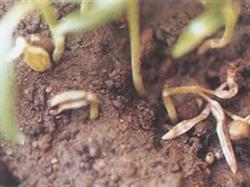
What are the control methods for damping-off in water spinach?
Symptoms After the seeds germinate, infection before emergence mostly causes seed rot; after emergence, infection appears near the soil surface as water-soaked areas that soften and develop basal rot. The diseased part constricts, rapidly spreads around the stem, the seedlings topple, and the whole plant quickly dies, causing patches of dead seedlings. Disease conditions The optimum growth temperature is 15-16°C, and the optimum soil temperature for disease development is...
-
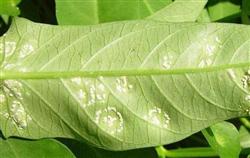
What to Do When Water Spinach Gets White Rust? A Detailed Guide to Prevention and Control Methods
First, implement a 2-to-3-year crop rotation with other vegetable varieties. Second, before sowing, dress the seeds for sterilization at a ratio of 300 g of 35% metalaxyl per 100 kg of seeds; third, in the early stage of the disease, spray with 50% copper metalaxyl wettable powder at 6000 to 7000 times dilution, or with 72.2% propamocarb aqueous solution at 8000 times dilution, applying once every 7 to 10 days...
-
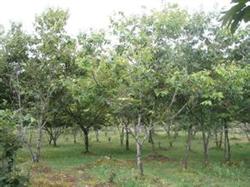
Key Pest and Disease Control Methods and Techniques for Chestnut
1. Select good varieties and prepare enough scion wood. Select good varieties. For the improvement of chestnut orchards, the three new varieties Dahongpao, Qingmaozao and Hongmaozao should be selected. These new varieties have been trial-planted in our city and have the characteristics of early fruiting, high quality, high yield, large fruit and strong stress resistance, and are suitable for promotion and planting throughout the city. Scion collection and storage...
-
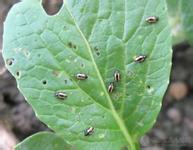
What are the control methods for striped flea beetles on rapeseed?
In recent years, the striped flea beetle has become another major insect pest during the seedling stage of rapeseed in Hongta District. The striped flea beetle is commonly known as the cabbage flea and the soil flea, and its larva is called the white maggot. This insect not only flies but also jumps well, making it difficult to catch on the leaves. When disturbed, it jumps to the ground or to the field-edge ditch, and then quickly flies back onto the leaves to feed. It often gathers in groups on the undersides of leaves to feed,...
-
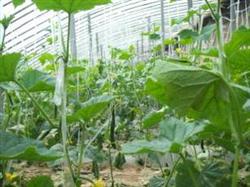
Integrated Pest and Disease Control Methods for Greenhouse Cucumbers in Spring
I. Common Diseases in Spring 1. Downy mildew (1) Occurrence characteristics: persistent (long-term companion), devastating (rapid spread, outbreaks). (2) Occurrence conditions: High humidity: relative humidity above 83% favors disease development, (water droplets or water film on leaf surface), spore germination and invasion. Optimum temperature: 15-20°C. Nutritional status...
-
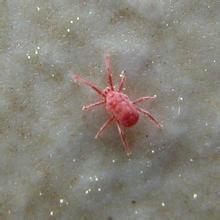
What are the control methods for chestnut spider mites?
The chestnut spider mite, also known as the conifer small claw mite, damages chestnut leaves, causing them to lose chlorophyll and develop small yellowish-white spots; in severe cases the leaves scorch and turn brown, resulting in reduced yield. It overwinters as winter eggs laid on the leaf scars, rough bark crevices and branching points on the underside of 1- to 4-year-old branches, and begins hatching in late April to early May of the following year, which coincides with the chestnut bud-break period...
-
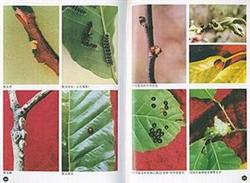
How to prevent and control chestnut pests? A detailed guide to practical control methods
1. Chestnut gall wasp The chestnut gall wasp, also called the chestnut tumor wasp, has a dark brown head and abdomen in the adult stage, filiform brown antennae, and a swollen, jet-black thorax. It lays eggs inside buds from June to July, and the larvae grow and overwinter inside the buds. In spring, when the buds sprout and produce short shoots, the affected branches or leaf stalks swell into galls (tumors), causing the branches and leaves to wither and die and weakening the tree...
-
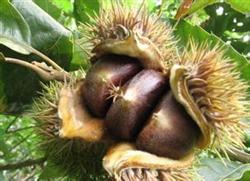
How to prevent and control empty burs in chestnut? These methods are very practical
Chestnut "empty burs" is also called "empty bur", and the empty bur rate can reach 30%-90%, affecting chestnut yield. The main causes of empty burs in chestnut are: (1) poor pollination and fertilization during the chestnut flowering period. (2) boron deficiency and available phosphorus deficiency in the soil. (3) the influence of other factors. First, variety: different varieties have different numbers of female and male inflorescences and consume different nutrients, so the empty bur rate also differs. The...
-
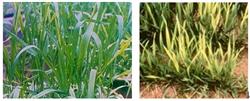
What are the control methods for waterlogging damage in wheat?
Boron deficiency symptoms in wheat generally appear first in new growth, showing as terminal buds that easily die back, a long flowering duration, sometimes heading and tillering at the same time, and a prolonged growth period; stamens are poorly developed, anthers are thin and small, empty and not dehiscing, not shedding pollen, pollen is scarce or malformed, the ovary swells horizontally, the glumes do not close front and back, and later wither;...
-
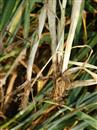
What are the integrated control methods for wheat take-all disease?
Wheat take-all is a typical root disease, capable of infecting wheat from sowing through to harvest. The main sites of infection are the wheat roots and the 1st to 2nd nodes of the stem base. After infection by the pathogen, the roots turn black and rot, losing their ability to absorb water and nutrients, which causes the above-ground parts to dry up and die, resulting in white heads. 1. ...
条件筛选