What are the control methods for striped flea beetles on rapeseed?
In recent years, the striped flea beetle has become another major insect pest during the seedling stage of rapeseed in Hongta District. The striped flea beetle is commonly known as the cabbage flea and the soil flea, and its larva is called the white maggot. This insect not only flies but also jumps well, making it difficult to catch on the leaves. When disturbed, it jumps to the ground or to the field-edge ditch, and then quickly flies back onto the leaves to feed. It often gathers in groups on the undersides of leaves to feed,...
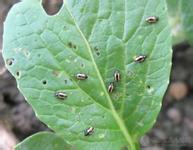
In recent years, the striped flea beetle has become another major insect pest during the seedling stage of rapeseed in Hongta District. The striped flea beetle is commonly known as the cabbage flea and the soil flea, and its larva is called the white maggot. This insect not only flies but also jumps well, making it difficult to catch on the leaves. When disturbed, it jumps to the ground or to the field-edge ditch, and then quickly flies back onto the leaves to feed. It often gathers in groups on the undersides of leaves to feed, and the damaged leaf surface is covered with dense small oval holes. On sunny days, adults mostly hide on the undersides of leaves or in soil cracks, and come out in the morning and evening to cause damage. The larvae damage only the roots of the cabbage, boring into the root bark and biting off the fibrous roots, causing the leaves to wilt and die. Damage is most severe at the seedling stage and often causes gaps in the rapeseed field, or even destroys the entire field. Control methods: generally, after sowing and once the insects appear, spray the rapeseed plants or drench the roots in the morning and evening with 40% fenpropathrin-malathion emulsifiable concentrate at 2000-3000 times dilution, 80% dichlorvos at 1500-2000 times dilution, or 50% phoxim at 2000-3000 times dilution.