-
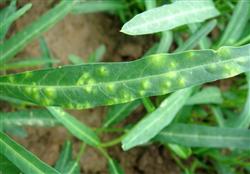
What are the control methods for white rust in water spinach?
Because of the high temperature and frequent rain after early summer, water spinach is prone to white rust. Once the disease occurs, it not only reduces the yield but also affects the quality. 1. Symptoms At the early stage of the disease, spots first appear on the upper surface of the leaves as pale yellow to yellow spots, which later gradually turn brown. The spots are relatively large. On the underside of the leaves, white raised blister-like pustules form, nearly round or elliptical to irregular, sometimes coalescing into larger pustules. Later, the pustules rupture and release white sporangia. When the leaves are severely damaged, the spots are dense, the diseased leaves become deformed, and the leaves fall off.
-
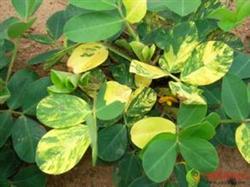
What are the control methods for peanut viral diseases?
Peanut disease is one of the major diseases of peanut, seriously affecting the yield and quality of peanut, and it is especially severe in the production areas of northern China. For peanut viral diseases, except for bud blight, which is mainly transmitted by thrips, other diseases such as mild mottle disease, yellow mosaic disease, and common mosaic disease are transmitted through seeds and aphids, and seed-borne infected tubers...
-
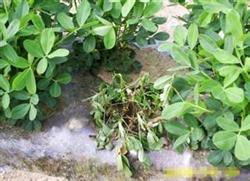
How to prevent and control peanut bacterial wilt? These methods must be mastered
The period of peanut flowering and peg penetration is the outbreak period of peanut bacterial wilt, and during this period attention should be paid to spraying for control. Control method: when peanuts begin to show buds, spray the leaf surface once every 10-15 days with a 1500-fold 70% hymexazol aqueous solution, or a 600-fold 20% thiodiazole-copper aqueous solution, evenly wetting all leaves, until water droplets begin to...
-
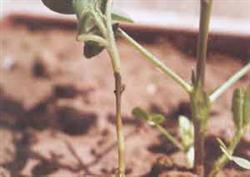
How to prevent and control peanut southern blight? Detailed practical methods
Peanut southern blight generally begins to occur in large numbers in early to mid-June. Comprehensive control measures are as follows: for lower-lying fields, dig good ditches to help drain standing water and lower the water table; sloping peanut fields should also have good ditches so that water does not accumulate after rain. Apply more calcium and potassium fertilizer. After the initial flowering stage, in combination with building up soil and hilling the beds, apply 40-5...
-
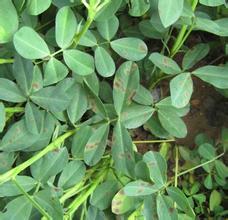
Control Methods and Technical Key Points for Peanut Web Blotch
Peanut web blotch, also known as brown stripe disease and cloud-pattern blotch disease, often occurs mixed with leaf spot disease, and can cause early defoliation of peanut leaves, severely affecting peanut yield. I. Disease occurrence pattern The disease mostly begins during the flowering stage, with the peak period from pod setting to maturity, mainly damaging leaves, initially producing circular or irregular...
-
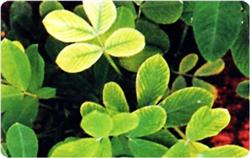
Detailed Explanation of Pest Control Methods During Peanut Growth
I. Causes of Iron Deficiency in Peanuts Peanut is one of the crops relatively sensitive to the iron element. Although iron is not a component of chlorophyll, it is an indispensable condition for chlorophyll synthesis, a constituent of the cytochrome oxidase and peroxidase related to respiration, and participates in the oxidation-reduction processes within the plant. Due...
-
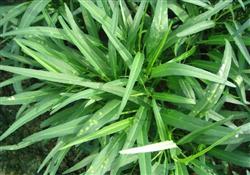
What to do when water spinach gets white rust? Detailed control methods
①Use disease-free seeds or treat seeds with 0.3% of seed weight of ridomil-mancozeb seed dressing. ②This disease is limited to infecting Convolvulaceae vegetables; after 2~3 years of crop rotation, the control effect is good. ③Pay attention to field drainage and thin out plants for ventilation. ④At the early stage of the disease, spray 48% metalaxyl-mancozeb wettable powder, 40% metalaxyl-copper wettable powder...
-
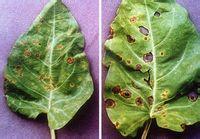
Symptom Identification and Control Methods of Brown Spot Disease in Water Spinach
Symptoms initially appear as small yellowish-brown spots, which later expand into circular to oval, or irregular dark brown lesions, 4-8 mm in diameter, with distinct edges. In severe cases, the lesions merge with each other, and the diseased leaves turn yellow, wither and die. Disease conditions: It is prone to occur in rainy and humid weather or during off-season cultivation. Control methods...
-
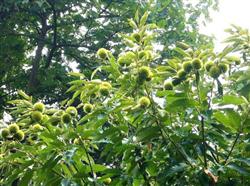
Chestnut Pest and Disease Prevention and Control Methods and Technical Key Points
In Anhui Province, chestnuts are mainly distributed in the mountainous areas of southeastern and western Anhui. Since the 1990s, they have also been developed on a large scale in the Jianghuai hilly region. The main chestnut-producing counties (cities) include Jinzhai, Huoshan, Shucheng, Yuexi, Guangde, Ningguo, Taihu, and others. There are about 150 species of pests and diseases harming chestnuts in our province, with common and severe occurrences affecting chestnuts...
-
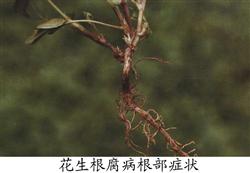
What are the control methods for peanut root rot?
There are broadly two causes of peanut root rot: one is waterlogging, and the other is root rot disease. Control should begin with draining away the standing water and keeping the ditches clear. Before sowing peanuts, treat the seed with a 10% Shileshi seed coating, and after the disease appears, drench the roots with a 1000-fold dilution of Lüheng No. 1 or No. 2; foliar spraying is ineffective. Practise crop rotation: in lightly affected fields, rotate every other year, and in severely affected fields, rotate for 3 to 5 years. Deep ploughing to improve the soil, applying more organic fertiliser, and rational irrigation and drainage will strengthen disease resistance.
条件筛选