How to prevent and control empty burs in chestnut? These methods are very practical
Chestnut "empty burs" is also called "empty bur", and the empty bur rate can reach 30%-90%, affecting chestnut yield. The main causes of empty burs in chestnut are: (1) poor pollination and fertilization during the chestnut flowering period. (2) boron deficiency and available phosphorus deficiency in the soil. (3) the influence of other factors. First, variety: different varieties have different numbers of female and male inflorescences and consume different nutrients, so the empty bur rate also differs. The...
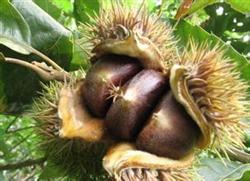
Chestnut "empty burs" is also called "empty bur", and the empty bur rate can reach 30%-90%, affecting chestnut yield. The main causes of empty burs in chestnut are: (1) poor pollination and fertilization during the chestnut flowering period. (2) boron deficiency and available phosphorus deficiency in the soil. (3) the influence of other factors. First, variety: different varieties have different numbers of female and male inflorescences and consume different nutrients, so the empty bur rate also differs. Second, water: in dry years, watering sufficiently or having enough rainfall during the chestnut flowering period, fruit filling period, and freezing period can not only make the chestnut tree grow vigorously, but also significantly reduce the empty bur rate. Third, light: when light is poor, the supply of soil moisture, nutrients, and oxygen falls short of demand, and the chestnut tree cannot carry out normal photosynthesis, resulting in short new shoots, yellow leaves, and poor fruiting, while the empty bur rate also increases greatly. Fourth, wind: during the chestnut flowering period, if the wind speed is too high, the empty bur rate of chestnut increases; if the wind speed is too low, or even there is no wind, the empty bur rate of chestnut also increases somewhat. The most suitable wind force during the chestnut flowering period is generally level 3-4, and there is a great difference between open areas and non-open areas.
Prevention and control of empty burs in chestnut: (1) Select excellent chestnut varieties with a high fruit-setting rate and a low empty bur rate, such as Jiaozha, Qingzha, Chushuhong, Dahongpao, Jiujiazhong, Maobanhong, etc. (2) Cultivate the best tree structure. From the young tree stage to the early fruiting stage, moderately dense planting should be used, preferably with a natural spindle shape, which can increase early yield and economic income. By the early full-fruiting stage, appropriate thinning and reasonable pruning should be carried out to cultivate a trunk-shaped tree body, which can more effectively use space and increase the wind and light conditions of the tree body, thereby reducing the empty bur rate and increasing yield. (3) Reasonably arrange pollinizer trees. Chestnut has a low fruit-setting rate under self-pollination, and mixed pollination with pollen from multiple varieties can significantly reduce the empty bur rate. It is generally believed that the number of pollinizer trees arranged should be 1/3 of the main cultivar trees. (4) Properly thin male inflorescences and burs to reduce nutrient consumption by the tree body. When the male inflorescences grow to 1-2 cm, remove them, leaving only 2-3 below the mixed inflorescences, so that the female-to-male ratio remains above 1:149. (5) Artificial supplementary pollination. At present, in chestnut orchards with too single a variety, some plants can be top-grafted as pollinizer trees. In addition, selecting varieties with strong compatibility, collecting pollen, and carrying out artificial supplementary pollination can increase the fruit-setting rate by 20%-40%. (6) Strengthen fertilizer and water management to maintain healthy and vigorous tree growth. Apply topdressing and irrigation at the appropriate time, especially paying attention to fertilization during the chestnut flower primordium stage and pollination period. For adult trees, 2-3 kg of urea or 2 kg of nitrogen-phosphorus compound fertilizer can be applied in holes, followed by irrigation. For mountainous areas without irrigation conditions, in the rainy season, use the method of making a basin under the tree canopy and shallow trenching outside the basin to intercept and store rainwater, and green manure can be applied in the trench to improve soil fertility. Early topdressing should be mainly nitrogen, and later nitrogen, phosphorus, and potassium should be applied together. (7) Spray nutrient solutions such as boron and phosphorus on the leaves. Spraying 0.15%-0.25% boron fertilizer 2-3 times during the flowering period can reduce the empty bur rate by 23%-32%, and the effect is best when mixed with urea and potassium dihydrogen phosphate at full bloom. The key periods for the most effective control of empty burs in chestnut are the two periods of ovule formation (late May) and double fertilization (late June). At the stage when chestnut female flowers begin to differentiate, if a solution of potassium dihydrogen phosphate or calcium superphosphate 0.3%-0.5% + urea 0.3% is sprayed 1-2 times, combined with boron spraying, phosphorus spraying, and urea spraying during the flowering period, it can not only prevent empty chestnut burs, but also promote an increase in chestnut female flowers.