Integrated Pest and Disease Control Methods for Greenhouse Cucumbers in Spring
I. Common Diseases in Spring 1. Downy mildew (1) Occurrence characteristics: persistent (long-term companion), devastating (rapid spread, outbreaks). (2) Occurrence conditions: High humidity: relative humidity above 83% favors disease development, (water droplets or water film on leaf surface), spore germination and invasion. Optimum temperature: 15-20°C. Nutritional status...
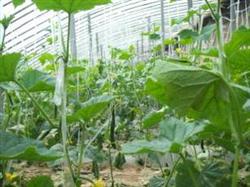
I. Common Diseases in Spring
1. Downy mildew
(1) Occurrence characteristics: persistent (long-term companion), devastating (rapid spread, outbreaks).
(2) Occurrence conditions: High humidity: relative humidity above 83% favors disease development, (water droplets or water film on leaf surface), spore germination and invasion. Optimum temperature: 15-20°C. Nutritional status: carbon-to-nitrogen ratio imbalance in the plant body, plant senescence.
(3) Integrated control: ① Create a sterile indoor environment. The main route of fungal transmission is wind, so promptly repair damaged spots in the greenhouse film; when ventilating to remove moisture, avoid windy time periods -- cut off the transmission route. ② Create a sterile park environment. After diseased plants, leaves, and cucumbers in the greenhouse are cleared to outside the greenhouse, they must be buried immediately. The area around the storage site should be regularly disinfected with 0.1-0.2% potassium permanganate to prevent transmission when windy, maintain a sterile park environment, and achieve "everyone maintains, everyone benefits." In this way, repeated infection and transmission of pathogens and a vicious cycle can be avoided, greatly reducing pesticide use and labor input, achieving the goal of cost savings and efficiency gains. ③ Regular preventive pesticide use. A. Preventive agents:
Bran vinegar liquid (1:3:3) + Tianda 2116, Kebo, thiazole zinc, Antaisheng, Dakning, 0.1% potassium permanganate, 80% fosetyl-aluminum 30g + sugar-vinegar liquid + medical-grade streptomycin sulfate 1 million units 3 vials, chlorothalonil smoke agent. B. Therapeutic agents: Before spraying, remove severely diseased leaves and eliminate the pathogen -- manual disinfection, especially apply an imported agent once before watering for prevention. Selected agents: fosetyl-aluminum manganese zinc, Yikuaijing, DuPont Kailu, Baitai, Kaite, Kairun, Akebai, Liangdun. ④ Physical control: High-temperature greenhouse sealing: suitable for plants with overly vigorous growth. Advantages: broad-spectrum sterilization, effective against downy mildew, gray mold, powdery mildew, etc., saves pesticides, reduces labor. Steps: spray pesticide → water → close vents → raise temperature to 43-46°C → maintain for 1.5-2 hours → water the next day. Precautions: hang 3 thermometers respectively in the middle of the greenhouse, front, middle, and rear; shade the thermometers on the south side; observe every 15 minutes; if above 48°C, place straw curtains to cool down, do not open vents to cool down.
2. Gray mold
(1) Clean up diseased cucumbers: Use a cola bottle to catch diseased cucumbers at the bottle mouth, then carefully remove them to prevent diseased spores from scattering and spreading. Diseased cucumbers and leaves cleared outside must be buried or burned, and the storage area disinfected. Removing by hand and casually throwing them outside is equivalent to helping the pathogen spread; spraying repeatedly while the disease keeps occurring makes it difficult to control and increasingly severe.
(2) Selected agents: 65% Kedeling 1000-1500 + 25% Junsuiqi emulsifiable concentrate 1000x solution, Ruizhen, Kaize, Shijiale, Nongliling, Kemeling, Kangmeiwei, Puhaiyin, focus on spraying young fruits. This disease has developed resistance to Sukeling, so it is recommended to use it less.
3. Whitefly
(1) Prevention: Hang yellow sticky boards indoors, cover outdoor vents with insect-proof nets. How to use yellow sticky boards: hang about 20 pieces per mu, evenly distributed. Hang at a height 15-20cm above the top of the plants, and raise the yellow sticky board position as the plants grow.
(2) Treatment: ① Fumigate at night, Dadusheng, dichlorvos smoke agent 0.5Kg/mu, or an appropriate amount of sawdust absorbing 80% dichlorvos emulsifiable concentrate 300-400 milliliters, applied on tiles or flower pots. ② Spray in the morning, DuPont Wanling + imidacloprid, Tianwangxing, Miemanmeng, Aketai, abamectin, pyrethroids. In severe cases it causes sooty mold (carbendazim, Duomeiling, Jiameiling).
II. Correct Use of Chemical Pesticides
1. Spraying temperature: 18-28°C. Above 28°C is prone to phytotoxicity, and too low a temperature gives poor control efficacy.
2. Concentration preparation amount: pesticide per bucket (g) = 15000 dilution factor / dilution ratio.
3. Use adjuvants: organosilicon, Zhantou, etc., urea and sugar, increase absorption speed by 50%.
4. Use of smoke agents: The effect is most outstanding when used on cloudy and snowy days; after fumigating for 5-8 hours, the greenhouse can be opened for ventilation. If fumigation time is too long, phytotoxicity will occur.
5. Pesticides requiring cautious use: (1) Pesticides to which cucumber is sensitive: phoxim, paclobutrazol, triadimefon, abamectin, fangluosu, ethephon, PuliKe; (2) Pesticides with restricted use: Shigao, Fuxing, mancozeb, carbendazim, restricted-use pesticides.
III. Frequently Wipe the Greenhouse Film -- Broad-Spectrum Pathogen Elimination
Cucumber growth requires five major ecological factors: temperature, light, water, fertilizer, and gas. Among these, temperature and light are both directly affected by the light transmittance of the greenhouse film and have an extremely important relationship with it. In addition, ultraviolet rays in sunlight entering the greenhouse can kill pathogens and can dwarf plants to make them sturdy. The ultraviolet lamps currently developed precisely utilize this mechanism.
Therefore, frequently sweep and wipe the greenhouse film to achieve the highest light transmittance and effectively play three functions: enhance light intensity and improve photosynthetic efficiency; raise the air temperature and soil temperature inside the greenhouse; kill multiple pathogens. In production, attention should be paid to the integrated and comprehensive application of technologies that reduce pesticide use (such as: ecological inhibition of bacteria, shielding and blocking bacteria, health care and antibacterial measures, fumigation sterilization, manual disinfection), which both saves costs and increases efficiency and improves product quality, meeting consumer demand for pollution-free products and the requirements of modern agricultural development.