How to prevent and control chestnut pests? A detailed guide to practical control methods
1. Chestnut gall wasp The chestnut gall wasp, also called the chestnut tumor wasp, has a dark brown head and abdomen in the adult stage, filiform brown antennae, and a swollen, jet-black thorax. It lays eggs inside buds from June to July, and the larvae grow and overwinter inside the buds. In spring, when the buds sprout and produce short shoots, the affected branches or leaf stalks swell into galls (tumors), causing the branches and leaves to wither and die and weakening the tree...
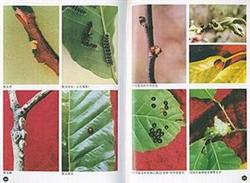
1. Chestnut gall wasp
The chestnut gall wasp, also called the chestnut tumor wasp, has a dark brown head and abdomen in the adult stage, filiform brown antennae, and a swollen, jet-black thorax. It lays eggs inside buds from June to July, and the larvae grow and overwinter inside the buds. In spring, when the buds sprout and produce short shoots, the affected branches or leaf stalks swell into galls (tumors), causing the branches and leaves to wither and die and weakening the tree, seriously affecting growth and fruiting in the current and following year.
Control methods: ① In winter, prune out weak twigs and diseased or pest-infested branches and burn them to eliminate overwintering larvae. ② Protect the natural enemy Encryptus wasps. ③ Before and after adult emergence from the galls (June to July), spray 40% omethoate 1000x solution; or in early April (when chestnut buds redden and swell but have not yet opened), apply 40% synergized omethoate to the trunk and branches by scraping off the corky layer on a semicircular ring about 30 cm long on branches roughly 10 cm thick, and brushing on about 10 mL of the solution.
2. Cloud-banded longhorn beetle
The adult cloud-banded longhorn beetle is dark brown, with 2 white spots on the pronotum; the larva has a brown "mountain"-shaped marking on the pronotum. It mainly damages branches and trunks, causing dead branches and affecting tree vigor.
Control methods: ① From May to July, capture and kill adults before egg laying. ② From June to July, scrape off eggs and newly hatched larvae from the trunk. ③ Use a steel wire hook to kill larvae that have already bored into the trunk. ④ Inject 80% dichlorvos 100x solution into the insect holes, or plug the holes with cotton balls dipped in 50% phosphamidon (or 50% fenitrothion) 40x solution.
3. Red-waisted clearwing moth
The adult red-waisted clearwing moth resembles a large hornet in body color, with the female adult having a yellow abdomen, a purplish-red waist, transparent membranous wings, tufts of brown hairs on the legs, and a spindle-shaped cocoon on the outside of the body made of silk, frass, and wood shavings. The larvae overwinter under the bark of branches and trunks, begin activity in April of the following year, and adults emerge in peak numbers from late August to late September, laying eggs in cracks in the rough bark of the trunk or in larval tunnels, with the most eggs laid on the trunk 10-70 cm above ground. It mainly damages the phloem of the trunk and main branches; the affected areas swell into tumor-like bumps, the bark splits and curls, the scars do not heal for a long time, and in severe cases the tree dies.
Control methods: ① During peak adult occurrence, spray the trunk with 80% dichlorvos 1000x solution to kill adults and newly hatched larvae. ② Locate areas with frass and scrape off the larvae. ③ Apply a mixture of 1 part 80% dichlorvos and 30 parts kerosene to the trunk.
4. Chestnut weevil
The adult chestnut weevil is small, black or dark brown, 7-9 mm long, with a slender snout. The larva is spindle-shaped and milky white. The larvae feed on the kernel; about 10 days after harvest the larvae mature, bore out of the chestnut fruit, and spin cocoons to overwinter.
Control methods: ① During the adult activity period, spray the canopy with 90% trichlorfon or 80% dichlorvos 1000x solution. ② Fumigate the chestnut fruits. Under sealed conditions, fumigate each cubic meter of chestnut fruits with 2.5-3.5 g of methyl bromide for 24-48 hours, or treat with 30 mL of carbon disulfide for 20 hours to kill the pests without affecting germination capacity. ③ Kill larvae by soaking chestnut fruits in warm or hot water. Soak in warm water at 50-55°C for 15-30 minutes, or in hot water at 90°C for 10-30 seconds; the kill rate can reach over 90%, and germination capacity is not affected.
5. Peach fruit borer
The peach fruit borer, also called the peach fruit moth, fruit-spot pyralid moth, etc., has a bright yellow adult with rows of black spots on the dorsal and lateral sides of the abdomen. The larvae overwinter in bark cracks or in dry involucres and similar places; after adults emerge, they lay eggs on the involucre around August, and after hatching the larvae enter through the stalk of the involucre, often causing severe fruit drop. During the chestnut growing season only a few older larvae bore into the chestnut fruits, but after harvest they feed heavily, often hollowing out the chestnut fruits and binding them together with frass and silky threads, causing fruits that are not hollowed out to lose their food value.
Control methods: ① During the larval hatching period, spray 80% dichlorvos 1000x solution. ② After the involucres are brought in, remove the husks and take out the chestnut fruits promptly within 5-6 days to reduce damage. ③ After harvest, fumigate the involucres with carbon disulfide, or dip the involucres quickly in 90% trichlorfon 100x solution and then pile them up.
6. Chestnut red spider mite
The chestnut red spider mite damages the leaf surface with adults and nymphs, causing affected leaves to show pale small spots and finally turn yellow-brown, scorch, and drop early. It overwinters as eggs on the undersides of branches, hatches from late April to mid-May, and has its peak occurrence from mid-May to early July.
Control methods: ① During the occurrence period, spray the canopy with dicofol 800-1000x solution, or 40% dimethoate 1000x solution. ② In early to mid-May, apply chemicals to the trunk by scraping a 10 cm ring at the base of the trunk (scraping off only the rough bark and slightly exposing the tender bark), applying 40% dimethoate 1-10x solution or 50% monocrotophos 1-20x solution, applying once more after the solution dries slightly, and wrapping with plastic film after it dries.
7. Red-legged green scarab
The red-legged green scarab, also called the copper-green scarab, has adults that damage young leaves, young shoots, and inflorescences, often eating leaves into a net-like pattern. The larvae bite the root system, weakening the tree and even causing it to die. The larvae overwinter in the soil, emerge and pupate from late April to early May, and adults occur in peak numbers from June to July.
Control methods: ① Kill larvae. Evenly broadcast 3% carbofuran at 1-1.5 kg per mu, then rake the soil to cover it, or drench with 50% phoxim 1000x solution. ② During peak adult occurrence, spray 90% trichlorfon 1500x solution or 80% dichlorvos 1000x solution in the evening. ③ In the morning or evening, shake the trees to dislodge and kill the pests manually. ④ Use light traps at night.
8. Bagworm
The bagworm larva hides inside its bag, standing on the leaf surface or hanging on the underside of leaves, and feeds on leaves; it is highly voracious and often eats all the leaves on an entire tree.
Control methods: ① Spray the canopy with 90% trichlorfon 800-1500x solution. ② Remove the insect bags.