Integrated Control Methods and Technical Key Points for Walnut Branch Blight
Walnut branch blight is caused by fungal infection and mainly damages branches and trunks. It occurs in all regions, with a general diseased plant rate of 20-30%, and in severe cases the diseased plant rate reaches over 80%, causing massive branch dieback and directly affecting tree growth as well as walnut yield and quality. Therefore, timely control is necessary to curb the disease and promote tree...
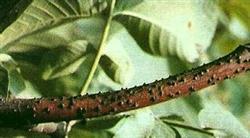
Walnut branch blight is caused by fungal infection and mainly damages branches and trunks. It occurs in all regions, with a general diseased plant rate of 20-30%, and in severe cases the diseased plant rate reaches over 80%, causing massive branch dieback and directly affecting tree growth as well as walnut yield and quality. Therefore, timely control is necessary to curb the disease, promote tree development, increase yield and quality, and boost returns.
I. Symptom Identification Leaves on affected branches gradually turn yellow and drop: the cortex of diseased branches gradually loses its green color, initially turning grayish-brown, then becoming light reddish-brown to dark gray, with the cortex drying out, cracking, and exposing grayish-brown xylem. When the lesion expands to encircle the branch for one full circuit, the branch dies back, and in severe cases the entire tree dies.
II. Causes of the Disease
1. Incomplete orchard sanitation. The pathogen overwinters on dead branches, and the following spring it spreads via wind, insects, and rainwater. The disease begins in May-June, with the peak period in July-August.
2. Inadequate management. First, insufficient water and fertilizer weakens the tree, reducing disease resistance and increasing the disease rate; second, soil compaction leads to poor root development and reduced absorption function; third, mechanical wounds caused by careless operation during management facilitate pathogen invasion; fourth, late frost damage easily causes young trees and tender branches to become infected with this disease.
3. Shading within the orchard and poor ventilation and light penetration cause branches to grow tender and weak, making them susceptible to the disease.
III. Control Methods
1. Thorough orchard sanitation. In winter, sweep up dead branches, fallen leaves, and diseased fruits in the orchard and take them outside to burn. Prepare a whitewash with 12.5 kg of quicklime, 0.5 kg of sulfur powder, 1.5 kg of salt, 0.25 kg of vegetable oil, and 50 kg of water, and apply it to tree trunks in winter.
2. Strengthen management. First, deep plowing of the soil: carry out deep plowing after walnut harvest and before leaf fall to mature the soil, promote root development, and improve absorption function. The suitable depth of deep plowing is 20-30 cm. Second, apply sufficient fertilizer: in combination with deep plowing, apply 150-200 kg of decomposed organic fertilizer per mature large tree, and apply a nitrogen, phosphorus, and potassium compound fertilizer once in June-July. Third, irrigate promptly to promote robust tree growth and improve disease resistance.
3. Prune out dead branches. Promptly prune out diseased branches when found and take them outside the orchard to burn. At the same time, carry out summer pruning to thin out densely shaded branches, diseased and pest-infested branches, and water sprouts, improving ventilation and light penetration and reducing the disease rate.
4. Chemical control. From June to August, choose 70% thiophanate-methyl wettable powder at 800-1000 times dilution or mancozeb wettable powder at 400-500 times dilution for spray control. Spray once every 10 days, and 3-4 consecutive sprays can achieve noticeable control results. At the same time, promptly control trunk-boring pests such as the cloud-patterned longhorn beetle and the walnut small jewel beetle to prevent the pathogen from entering through borer holes.