-
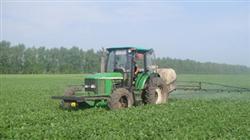
Correct Application Methods and Key Spraying Points for Foliar Fertilizers
1. Different foliar fertilizers have different application concentrations; higher is not always better. 2. Different crops and different growth stages respond differently to foliar fertilizers. 3. Different crops react differently to foliar fertilizers. 4. How well a foliar fertilizer dissolves and its dilution concentration greatly affect the spraying results...
-
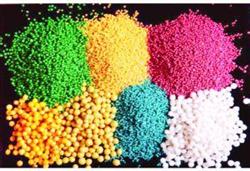
Detailed Explanation of Fertilizer Types and Application Methods (Part 6)
Achievement of Shandong Agricultural University: The fertilizer coating controlled-release technology involves spraying a uniform controlled-release film onto the surface of crop-specific compound fertilizer or urea granules. Its core technology lies in the film material and corresponding additives. By adjusting the formula, the number and size of pores on the film can be set to control nutrient release. Controlled-release fertilizer...
-
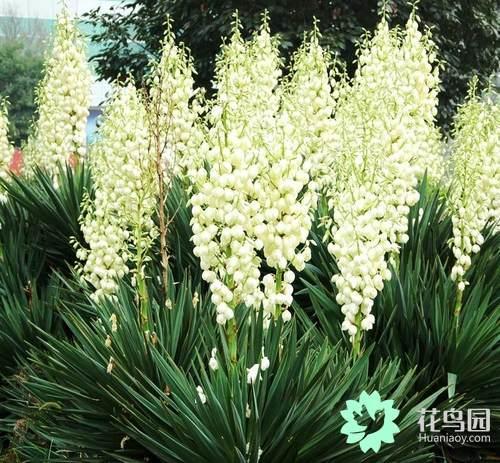
Sisal has high economic value and extremely wide uses, and is the hard fiber with the largest application volume in the world.
Sisal, also called pineapple hemp, is the hard fiber with the largest application volume and the widest range in the world today, and is mainly grown in Africa, Asia and other places. World sisal import and export trade is growing continuously, but China's domestically produced sisal fiber still cannot meet...
-
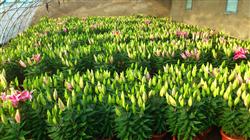
Low potassium fertilizer application rates lead to reduced crop yields
Foliar feeding is a fertilization method in which a diluted solution of chemical fertilizers or trace elements is sprayed onto the leaves and absorbed and utilized by the plant through the leaf stomata, so it is also called topdressing outside the roots. The advantages of topdressing outside the roots are: small dosage, rapid and significant fertilizer effect, the fertilizer is not fixed by the soil and is not affected by the absorption function of the root system...
-
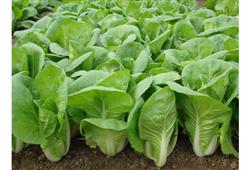
Application Methods of Potassium Fertilizer in Vegetable Cultivation
There are many types of potassium fertilizer, and different types have different application methods. Commonly used potassium fertilizers include potassium chloride, potassium sulfate, potassium-magnesium fertilizer and plant ash. Potassium chloride and potassium sulfate are physiologically acidic fertilizers and should be applied together with lime and organic fertilizer. For chlorine-sensitive crops such as potatoes, potassium chloride and potassium-magnesium fertilizer with high chlorine content should not be applied...
-
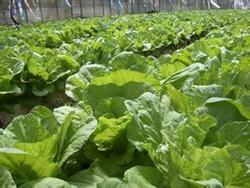
Scientific application methods and technical key points for potash fertilizer
Potassium is one of the three essential fertilizer elements. Many vegetables often require more potassium than nitrogen and phosphorus; well-grown vegetables contain potassium at 2.5%-7% of their dry matter, higher than their nitrogen and phosphorus content. Most vegetables absorb more potassium than nitrogen; for example, the nitrogen-to-potassium ratio absorbed by cucumber is 1:(1.5-1.7), by pumpkin is 1:2.1, and by tomato is 1:...
-
Over-application of phosphate fertilizer causes many harms, do you know these dangers?
1. Apply according to the soil. Soil conditions are closely related to the effectiveness of phosphate fertilizer. On soils with low organic matter and low available phosphorus content, applying phosphate fertilizer to the vast majority of crops can increase yields, therefore, phosphate fertilizer should be allocated mainly to soils with low organic matter content and phosphorus deficiency, so as to give full play to its fertilizer efficiency. Such as red soil dryland, yellow mud field, ...
-
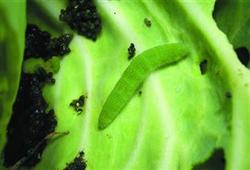
Application of Pieris rapae granulosis virus insecticide in vegetable production
Pieris rapae granulosis virus, trade names: Yangkang, Wuzhou No. 1, Pieris rapae virus, Wuda Oasis Precision Chongke, common name: Pieris rapae granulosis virus, main formulation is concentrated powder, is a live virus insecticide, processed from the bodies of insects killed by Pieris rapae granulosis virus infection, belongs to low-toxicity insecticides, only against...
-
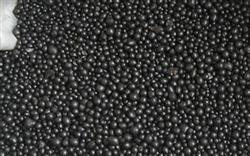
The application of organic fertilizer should be done in moderation; more is not always better
Biological organic compound fertilizers, which combine organic fertilizers with inorganic fertilizers and come with various microorganisms or high-energy compounds, have been launched on the market and are very popular among farmers, with fairly obvious effects. First, they can improve the physical and chemical properties of the soil, enhance water and fertilizer retention performance, and increase the ability to supply fertilizer continuously; second, they can significantly inhibit cotton, melon...
-
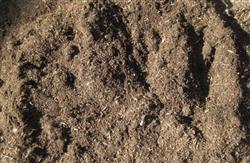
The hidden dangers of improper organic fertilizer application cannot be ignored
Compost is a widely used organic fertilizer in rural China, made by piling up various organic wastes such as straw, fallen leaves, wild grass, aquatic plants, green manure, peat, garbage, river mud, and human and livestock manure. It is divided into two types: ordinary compost and high-temperature compost. 1. Methods of making compost. 1. Ordinary compost:...
条件筛选