Detailed Explanation of Fertilizer Types and Application Methods (Part 6)
Achievement of Shandong Agricultural University: The fertilizer coating controlled-release technology involves spraying a uniform controlled-release film onto the surface of crop-specific compound fertilizer or urea granules. Its core technology lies in the film material and corresponding additives. By adjusting the formula, the number and size of pores on the film can be set to control nutrient release. Controlled-release fertilizer...
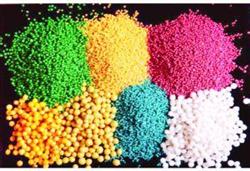 IV. Ammonium Nitrate Ammonium nitrate contains 33%-35% nitrogen and comes in two forms: crystalline and granular. The former is highly hygroscopic, while the latter is slightly less hygroscopic due to a moisture-proof agent coating its surface. Ammonium nitrate contains both ammonium nitrogen, which has weak mobility in soil, and nitrate nitrogen, which has strong mobility; both can be well absorbed and utilized by crops. Therefore, ammonium nitrate is a good nitrogen fertilizer that leaves no residue in soil and is a physiologically neutral fertilizer. Ammonium nitrate is suitable as a topdressing for dryland crops, and applying it in small divided doses is more economical. It should not be applied to paddy fields, nor used as a base fertilizer or seed fertilizer.
V. Ammonium Sulfate Ammonium sulfate contains 20%-21% nitrogen. Pure ammonium sulfate is white crystalline, while fertilizer-grade ammonium sulfate often contains some impurities and appears pale green or gray. Ammonium sulfate is a physiologically acidic fertilizer. Long-term heavy application on acidic soils will increase soil acidity, so lime and organic fertilizers should be applied together. On calcareous and neutral soils, sulfate ions combine with calcium ions to form calcium sulfate (calcium sulfate has very low solubility and easily clogs soil pores, leading to soil compaction), so organic fertilizers should be applied together. Ammonium sulfate is suitable as seed fertilizer, base fertilizer, and topdressing.
VI. Ammonia Water Ammonia water contains 15%-20% nitrogen. It is a liquid fertilizer, strongly alkaline, with a pungent ammonia odor and strong corrosiveness. Ammonia water is unstable in nature and easily lost through volatilization. The higher the concentration, the higher the temperature, the longer the storage time, and the poorer the container seal, the greater the volatilization loss. Ammonia water can be used as base fertilizer and topdressing, but it should be applied deeply in furrows and diluted several times with water; otherwise, it will burn crops.
VII. Calcium Nitrate Calcium nitrate contains 13%-15% nitrogen. Pure calcium nitrate is white crystalline, while fertilizer-grade calcium nitrate is gray or pale yellow granular. It is extremely hygroscopic and easily deliquesces and dissolves in air, so it should be kept sealed during storage and transport. Calcium nitrate is suitable for various soils and crops. Because it contains 19% water-soluble calcium, it is especially suitable for calcium-loving crops such as vegetables, fruit trees, peanuts, and tobacco. When applying calcium nitrate, care should be taken to avoid the loss of nitrate ions.
Phosphate Fertilizers
I. Superphosphate Superphosphate contains 14%-20% available phosphorus (phosphorus pentoxide) and is generally a gray or pale yellow powder. The secondary component of superphosphate is anhydrous calcium sulfate, accounting for about 50% of the total, and it also contains 3%-5% free acid and secondary compounds such as iron phosphate and aluminum phosphate. Superphosphate is a physiologically acidic fertilizer with a certain degree of hygroscopicity and caking tendency. During storage, attention should be paid to moisture protection, and generally it should not be stored for more than one and a half years. Superphosphate is suitable for various soils and crops and can be used as base fertilizer, topdressing, and foliar fertilizer.