-

Application of Euonymus japonicus 'Aureo-marginatus' in garden color blocks
Garden construction cannot do without the use of color. At present, red, yellow and green shrubs are commonly used in garden construction to form color blocks, so as to enrich the color composition of the garden. Because plants in red and yellow are relatively few, currently red small shrubs are mostly Loropetalum chinense var. rubrum, yellow small shrubs are mostly Ligustrum vicaryi, while green small shrubs have relatively rich varieties, including Euonymus japonicus 'Microphyllus' and Ilex crenata 'Convexa'. The commonly used Ligustrum vicaryi among yellow small shrubs has its obvious shortcomings: Ligustrum vicaryi is a deciduous shrub of the genus Ligustrum in the family Oleaceae, light-loving, slightly shade-tolerant, not tolerant of drought
-
Detailed Explanation of Rhododendron Cultivation Techniques and Landscape Application
China has a long history of rhododendron cultivation, with records of artificial cultivation dating back to the Han Dynasty. In the Tang Dynasty, rhododendrons began to be used in private gardens, and because of their graceful plant form and brilliant flower colors, they were deeply loved by people. Rhododendron generally refers to plants of the genus Rhododendron in the family Ericaceae, with about 960 species worldwide. China is the birthplace and distribution center of rhododendrons, with about 542 species, mainly distributed in the Hengduan Mountains area of the three provinces and regions of Southwest China, Yunnan, Tibet and Sichuan. Rhododendrons prefer cool conditions and fear scorching sun,
-
Engineering Applications and Management Methods for Hokkaido Boxwood
Hokkaido boxwood is an excellent landscaping material, but because it was introduced and promoted relatively late, many design units are still not familiar enough with its growth habits and characteristics, and it is used sparingly or configured inaccurately in design applications. As a result, nursery growers feel lost about how to cultivate and prune it: they plant a whole field of seedlings but do not know how to manage them, and after several years pass, they are left sighing in dismay! Based on several years of research and practice at this nursery, the following cultivation trial methods are considered effective. 1. Single-trunk small tree. When the seedling grows to 1.8-2 m, pinch out the growing tip at the top, keep the upper 30 cm for branching, and remove all branches below so that it concentrates on developing the upper part into a crown.
-
Detailed Explanation of the Characteristics and Practical Applications of Euonymus japonicus
Euonymus japonicus, also known as Japanese spindle, is native to Japan. It prefers a warm, humid environment with plenty of sunlight, has strong cold resistance, tolerates shade, and withstands drought and poor soil. It grows best in fertile, loose sandy loam. Propagation is commonly done by cuttings, and rooting is fastest when cuttings are taken during the plum rain season. Select semi-lignified mature branches, 12-15 cm long, and insert them into a seedbed made of half sand and half soil; they root 20-25 days after insertion. Transplanting of seedlings should not be carried out in spring from March to April. Small seedlings can be planted bare-rooted, while large seedlings need a soil ball. Planting
-

Clever Use of Plant Ash to Prevent Flower Pests and Diseases, and Its Many Remarkable Applications
The Clever Use of Plant Ash in Flower Pest and Disease Control
-
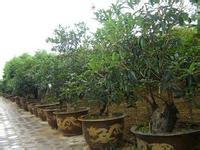
The Art of Osmanthus Landscaping and Its Application in Gardens
Osmanthus is one of the ten traditional famous flowers of our country, and is a specialty ornamental flowering tree and aromatic tree species of our country, excelling in form, color, fragrance and charm. Because of qualities such as "loving the winter glory of the osmanthus tree" and "not abandoning itself because its flowers are small, with pure fragrance drifting far and rich sweetness reaching afar," it has been favored by literati and scholars of past dynasties; and because it is associated with "Chang'e Flying to the Moon"...
-
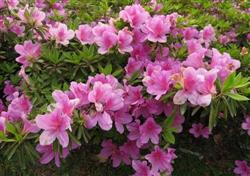
What fertilizer is best for azaleas? Fertilizer selection and application methods
What fertilizer is best for azaleas? Please give guidance. Azaleas are fertilizer-loving plants. In addition to the main nutrients nitrogen, phosphorus and potassium, they also need trace elements such as boron, copper, molybdenum and zinc. For azaleas, fertilizers with mild strength and long-lasting effect are suitable. For home azalea growing, ox horn, ram horn and animal hoof pieces can be used; these fertilizers contain 12%-15% nitrogen and 0.2%-8% phosphorus, and also contain a small amount of potassium and trace elements. Thin hoof pieces take effect 1 month after application, while thick hoof and horn pieces show fertilizer effect after 2 months, and the fertility can last 6-8 months. When using them, they can be buried at the edge or bottom of the pot along with repotting or changing pots. Cake fertilizer is also a relatively complete fertilizer in terms of nutrition. The nutrients in cake fertilizer generally contain 2.1%-7.6% nitrogen, 0.54%-3.3% phosphorus and 0.5%-2.7% potassium. Generally speaking, soybean cake and peanut cake contain more nitrogen, while rapeseed cake and cottonseed cake contain more phosphorus. They must be fully fermented before application. Fertilizer made by composting livestock manure and tree leaves can be mixed into the growing medium when repotting.
条件筛选