-
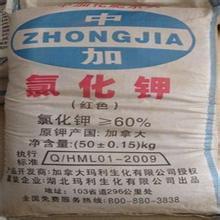
Five key points for efficient and scientific application of potassium fertilizer
Veteran vegetable grower Master Chang switched to growing tomatoes these past two years, and his yields and returns have remained good, because he pays close attention to soil testing and fertilization. When he tested his soil last year, the organic matter in his greenhouse soil reached 27.25g/kg. Because the soil organic matter content was relatively high, this spring he did not use organic fertilizer, but instead applied 40 kg of compound fertilizer per mu, 7...
-
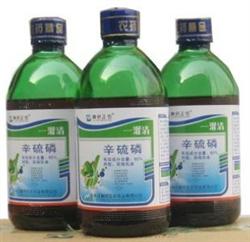
Application Methods and Technical Key Points of Botanical Insecticides
Chemical fertilizers, pesticides and hormones are major means of agricultural production and play an important role in ensuring increased agricultural output and higher farmer incomes. With social development, in order to improve labor efficiency and increase economic returns, farmers often mix two or more of chemical fertilizers, pesticides and hormones when applying them in production. Scientific and rational...
-
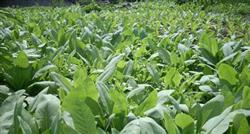
How to use herbicides in vegetable fields safely? Master these key application points
Weeds in vegetable fields are a major problem in vegetable production. Hand weeding is both labor-intensive and backbreaking, so the vast number of vegetable growers need to use herbicides in vegetable production. However, vegetables come in many varieties, have short growing periods, high multiple-cropping indexes, and complex crop rotations, and there are also many types of herbicides. If used improperly, they can easily cause herbicide damage, or even total crop loss...
-
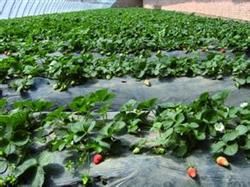
What are the principles of mixed fertilizer application? Explained clearly in one article
Implement in accordance with the provisions of NY/T 496-2002. The fertilizers used should be those already registered or exempt from registration with the agricultural administrative department. Restrict the use of chlorine-containing compound fertilizers. Permitted fertilizer types: organic fertilizers include compost, waterlogged compost, barnyard manure, biogas fertilizer, green manure, crop straw fertilizer, peat fertilizer, cake...
-
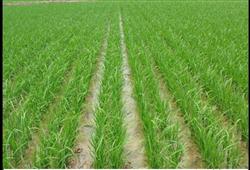
Application of Pesticide Synergists in Insecticides
Recently, the Rice Insecticide Application Technology and Market Promotion Exchange Meeting was held in Changsha. At the meeting, experts from the National Agricultural Technology Extension Center and several other institutions analyzed the market changes in rice insecticides in recent years from different perspectives. They also predicted that due to changes in major rice pests and the rapid development of pest resistance, the...
-
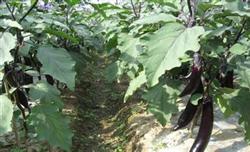
Technical Guidance on the Application of Commercial Organic Fertilizer for Solanaceous Fruit Vegetables
Solanaceous fruit vegetables include tomatoes, eggplants, peppers and other vegetables whose harvested fruit is the product; they are warm-loving, fertilizer-tolerant vegetables. According to the growth stage, methods such as broadcast application of base fertilizer, strip trench application of topdressing, hole application of transplanting fertilizer, and root dipping are generally used. The application rate of commercial organic fertilizer should be scientifically determined according to the needs of different vegetables and soil nut...
-
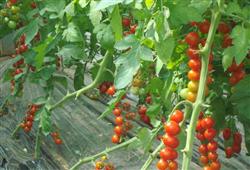
How to use growth regulators on cherry tomatoes? Application differs by type
Cherry tomato varieties fall broadly into two types: one is the indeterminate type, whose top does not terminate and which can keep growing continuously; the other is the determinate type, which automatically terminates after growing a few leaves and continues growing upward via side branches. The management of these two types differs little, but there is a considerable difference in growth regulator application....
-
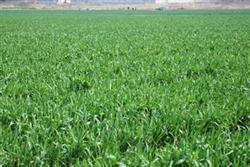
Timely application of regulators to wheat boosts stress resistance and yield
1. Paclobutrazol. At the wheat jointing stage; spray 50 kg of a 200 ppm paclobutrazol solution per mu, which can dwarf the plants, enhance lodging resistance and drought resistance. It can also control powdery mildew and improve the plant's absorption and utilization of nitrogen. 2. Chlormequat. For wheat fields with large populations and vigorous growth, at the wheat jointing stage, use 40-50 kg of a 40-50 ppm solution made from 5% chlormequat aqueous solution per mu...
-
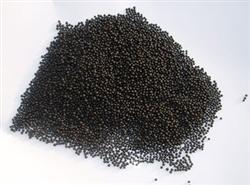
A Detailed Explanation of the Role of Organic Fertilizer and Common Application Methods
In the total nutrient amount currently applied as fertilizer to farmland in our country, about more than 1/4 of the nitrogen, more than 1/3 of the phosphorus, more than 80% of the potassium, and more than 90% of the trace elements are supplied through the application of organic fertilizer. Applying organic fertilizer is an important foundation for the sustainable development of modern agriculture. A large amount of research and practice holds that organic fertilizer has comprehensive nutrients and long-lasting fertilizer efficiency....
-
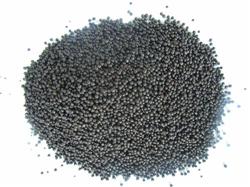
Organic fertilizer can be used year after year; long-term application is no problem
Organic fertilizer and chemical fertilizer used together complement each other, but if the combination is unreasonable, both will suffer damage and cause harm. 1. Benefits of mixing organic fertilizer and chemical fertilizer: 1. Making up for each other's shortcomings and building soil fertility. Chemical fertilizer has a single nutrient, high content, and quick effect, but a short duration; organic fertilizer has complete nutrients, a long-lasting effect, and can improve the soil...
条件筛选