The application of organic fertilizer should be done in moderation; more is not always better
Biological organic compound fertilizers, which combine organic fertilizers with inorganic fertilizers and come with various microorganisms or high-energy compounds, have been launched on the market and are very popular among farmers, with fairly obvious effects. First, they can improve the physical and chemical properties of the soil, enhance water and fertilizer retention performance, and increase the ability to supply fertilizer continuously; second, they can significantly inhibit cotton, melon...
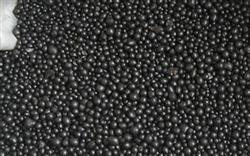 For a long time, people have blamed soil deterioration entirely on the excessive use of chemical fertilizers, and further believed that applying more organic fertilizer can not only increase crop yield and quality but also nourish and enrich the soil. Therefore, in recent years, many vegetable growers have spared no expense to greatly increase their application of organic fertilizer. What they do not realize is that excessive application of organic fertilizer can also affect the physical and chemical properties of the soil and, in severe cases, lead to a series of adverse consequences, such as the accumulation of soil salts, which affects crop growth. So, how can organic fertilizer be applied in a scientific and reasonable way? In the author's view, the following points should be noted:
Pay attention to selecting high-quality organic fertilizer. High-quality organic fertilizer is the foundation for high-quality and high-yield vegetables, but most of the organic fertilizer currently used by vegetable growers is purchased commercial fertilizer, and the quality is generally rather low. Some is even mixed with urban sludge, household garbage, and the like, and simply does not meet the standard for organic matter content. Even some purchased chicken manure is mixed with soil, or has been adulterated by unscrupulous traders with caustic soda (used to increase volume). The effect of applying these inferior organic fertilizers to the soil can be imagined. Therefore, in production, high-quality organic fertilizer must be selected, and when choosing commercial organic fertilizer, it is best to choose products made by legitimate large manufacturers.
Strictly control the amount of fertilizer applied. Since applying more organic fertilizer is harmful rather than beneficial, we should control its dosage in future production. So how much should be applied per mu of vegetable plot to meet the needs of vegetable production? In the author's view, under normal circumstances, applying 15-20 cubic meters of pure chicken manure and 35-40 cubic meters of rice husk manure per mu of vegetable plot is appropriate. Solanaceous fruit vegetables have a relatively large fertilizer requirement, so the upper limit may be used. Leafy vegetables have a slightly smaller fertilizer requirement, so the lower limit may be used.
Applying it together with biological fertilizer gives good results. Whether organic fertilizer is applied as a base application or as a top dressing with irrigation, it is best to use it together with biological fertilizer. Why should it be used together with biological fertilizer? Because after organic fertilizer is applied together with biological fertilizer as a top dressing with irrigation, the biological bacteria in the biological fertilizer can accelerate the decomposition of the organic matter in the organic fertilizer, making it more conducive to crop absorption, and at the same time can decompose and transform some harmful substances in the organic fertilizer, avoiding harm to vegetables. Therefore, when applying organic fertilizer as a base application, 150-200 kg of biological fertilizer can be applied together per mu, and when applying it as a top dressing with irrigation, 20-25 kg of biological fertilizer can be applied together per mu each time, giving better results.