-
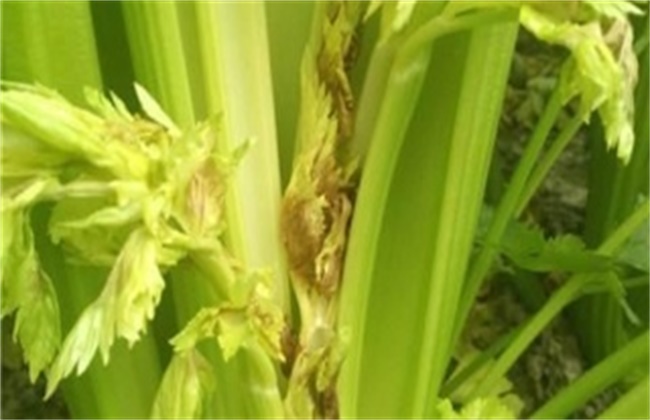
What are the common fertilizer application mistakes in greenhouse celery cultivation
Common fertilizer application mistakes in greenhouse celery
-
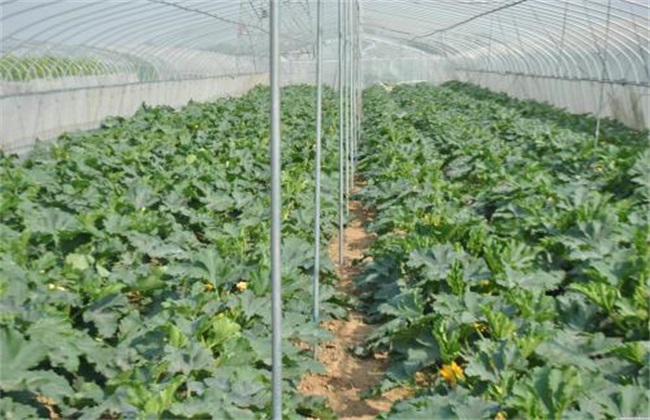
What are the common fertilizer application mistakes for greenhouse vegetables?
Fertilizer application mistakes for greenhouse vegetables
-

Causes of Sprouting on Rice Panicles and the Best Application of Panicle Fertilizer and Phosphorus Requirements
Causes of Rice Panicle Sprouting and Prevention Methods
-
Detailed Explanation of the Three Fertilizations for Rice and Their Application Techniques
Scientific fertilization is one of the important measures for achieving high quality and high yield in rice. However, rice fertilization is a highly technical task, and in practice it must be flexibly managed according to variety characteristics, soil fertility, climatic factors, and cultivation conditions. As is well known, the fertilizer requirements of rice are expressed in the nutritional period, the critical nutritional period, and the period of maximum nutritional efficiency. For example, early rice has a short growth period and relatively low fertilizer demand, so fertilization should be early and concentrated. Middle rice and late rice have longer growth periods, high fertilizer demand, and strong absorption intensity, so the number of topdressings should be increased and the proportion of topdressing raised.
-
Detailed Guide to the Application Technology of Longkejun in Rice Cultivation
Currently, it is the season of frequent typhoons and rainstorms, and also a period when rice diseases are prone to occur. The application technology of 20% Longkejun suspension concentrate on rice is as follows: To control bacterial foot rot of rice, use 100 grams of 20% Longkejun per mu diluted in 50 kg of water, spray the first application at the early stage of disease onset, then spray once every 7-10 days, for 2 consecutive applications, with remarkable control efficacy. For rice bacterial leaf blight, spray promptly when diseased plants are found in the field or after typhoons and rainstorms, using a 500-700 times dilution of 20% Longkejun for 2 sprays, at an interval of 7-10 days, with control efficacy reaching about 80%
-
Application of Anther Culture Technology in Rice Breeding
Using disease-resistant plants from the first backcross generation for anther culture can transfer disease-resistance genes into japonica rice in a short time, accelerating the process of disease-resistant breeding in japonica rice. Zhejiang Agricultural University began making crosses in 1975. An anther culture was carried out in 1976, and by 1977 stable varieties resistant to rice blast and bacterial leaf blight, such as Dan 209, had been developed. The whole process took only 3 years, and resistance genes for two diseases were transferred at the same time; its breeding speed and efficiency greatly exceeded the conventional research methods of Japanese scholars. This study also explored the approach of applying the anther culture method in seed production to produce foundation seed. Tests showed that pure lines from anther culture had a certain effect of purification and rejuvenation compared with foundation seed produced by the "three-plot method." Anther-cultured disease-resistant varieties have now been used as resistance sources for late japonica rice.
-
Application Methods of Fertilizer Long in Formula Fertilization for Rice
1. Advantages of Fertilizer Long: (1) Long-acting and synergistic effect, extending the fertilizer efficiency period of nitrogen fertilizer by 1 time, with no fertilizer deficiency phenomenon throughout the entire growth period of rice. (2) Improved nitrogen fertilizer utilization rate; deep fertilization overcomes fertilizer loss due to running, overflowing and seepage of field water, reducing fertilizer loss. (3) Enhanced resistance of rice to low temperature, drought and disease erosion. (4) Changes traditional multiple surface fertilization to deep one-time fertilization, saving fertilization labor and costs. (5) Reduced nitrogen fertilizer dosage; according to plots with different fertility, the pure nutrient amount of nitrogen fertilizer can be reduced by 15%-25%. 2. Fertilizer Long
-
Application of Allicin as a Feed Additive
Allicin is the collective term for the main bioactive components in garlic. In China, allicin has a long history of use as a medicine. It is a broad-spectrum antibacterial agent with multiple biological functions such as anti-inflammatory, blood pressure-lowering, blood lipid-lowering, platelet aggregation-inhibiting, anti-cancer and anti-viral effects. Its use as a feed additive in livestock and aquaculture was developed through research and exploitation based on the development of rural farming, and it has promotional value. The author now introduces the application techniques as follows for readers' reference. (I) Functional effects of allicin. 1. Bactericidal action
-
Reasonable Application Methods of Allicin Feed Additives
Allicin has the effect of improving the growth environment of livestock and poultry. The volatile sulfur-containing compounds in allicin can not only give off a special garlic odor to drive away mosquitoes, flies and insects from biting and sucking feed or manure, but also, under the action of enzymes in the bodies of livestock and poultry, be converted into allicin and excreted from the body to prevent mosquitoes and flies from breeding and growing in manure and urine, thereby improving the surrounding environment. Allicin has an anti-disease effect on livestock and poultry. Allicin can effectively kill various pathogenic bacteria such as Shigella dysenteriae, Pasteurella, Salmonella enteritidis, and Pseudomonas aeruginosa, and has the functions of enhancing resistance to viral diseases, and replacing
-
Large-scale leaf-rolling of the central leaves of rice may be related to excessive application of quinclorac
For some time recently, hundreds of readers across our province have called to report large-scale leaf-rolling of the central leaves of rice seedlings, which is even more common in direct-seeded rice production. Many readers brought in diseased plants. The root systems of the diseased plants are generally fairly normal, and there are no obvious disease spots or other symptoms on the leaves. After examining the submitted diseased plants, relevant experts from the Institute of Plant Protection of the Provincial Academy of Agricultural Sciences and other units preliminarily diagnosed that the leaf-rolling of the central leaves of rice is not caused by viruses or other pathogenic microorganisms, but may be phytotoxicity caused by herbicides such as 2,4-D and quinclorac, or may be caused by physiological
条件筛选