-
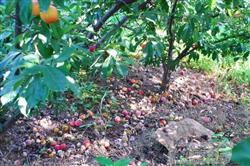
What causes plum trees to drop their flowers and fruit?
Plum trees flower easily, but often they are covered in blossoms yet carry only half a tree's worth of fruit. Heavy flowering consumes a lot of nutrients, and fruit drop is serious. Plum trees generally have three peak periods of flower and fruit drop: the first flower drop begins after flowering is complete, and the main cause is incompletely developed floral organs that have lost the ability to be fertilized or were never fertilized. The second fruit drop...
-
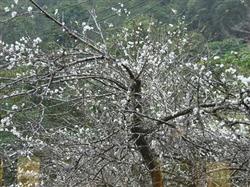
Detailed Explanation of Flower and Fruit Management Techniques for Plum Trees
Plum trees produce a large number of flowers, but their self-pollination fruit-setting rate is low. To achieve stable and high yields, flower and fruit management is an important part. Flower and fruit management is mainly reflected in pollination, flower and fruit thinning, and flower and fruit preservation. 1. Pollination The most suitable time for pollination is in the early full-bloom stage. For pollination, choose flowers that have been open for no more than 3 days. ...
-
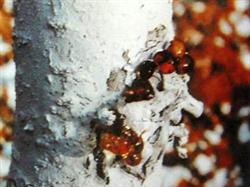
What are the key points of post-harvest management techniques for plum trees
Gummosis is a common non-infectious disease of plum and other stone fruit trees, with an incidence rate as high as 76%-95%. Affected trees show yellowing leaves and weak branches, declining tree vigor, severe fruit drop, and may even die entirely. The bark at the affected area cracks and swells, exuding a soft, transparent gummy sap that oxidizes and congeals into a reddish-brown gelatinous substance. Caused by gummosis...
-
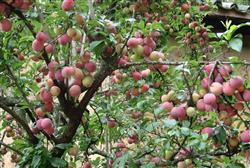
Take good care of management in early summer for plum trees, and only then can the plums be high-quality and high-yield
Although the plum is a fruit tree with good yielding ability and strong disease resistance, due to poor management in early summer, it often shows severe alternate bearing, small fruit, and quality that cannot be guaranteed. Plum trees in full fruit period are mainly borne on short fruit branches and bouquet-like fruit branches. At present, plum fruit is in the fruit expansion stage. In order to enlarge the fruit, ensure uniform fruit size...
-
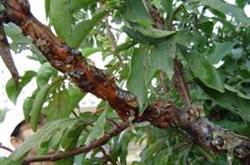
Plum tree gum disease is highly damaging, and complete eradication is imperative
Plum tree gum disease is an important disease on the trunks and branches of plum trees. When it occurs severely, it often causes the trunks to dry up and die, greatly affecting tree vigor and yield. It mostly occurs in warm and rainy seasons, especially in the south. Control measures: 1. Strengthen cultivation management. Apply sufficient base fertilizer when planting plum trees, and after entering full production years, increase fertilizer application...
-
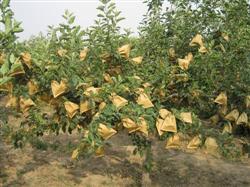
Pest and Disease Control Methods for Pear Trees Before Bagging in Early Spring
The period before and after bud break in early spring is when diseases and pests begin their activity, and once the pear orchard is bagged, spraying becomes considerably more difficult. Therefore, pest and disease control before bagging is the key to pest and disease management in bagged pear orchards. During this period, the focus should be on strengthening control of the pear psylla (Psylla pyrisuga), pear aphid, and red spider mite, among others. (1) Strengthen soil, fertilizer, and water...
-
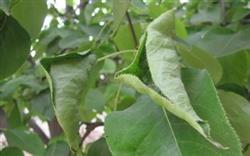
What species of aphids harm pear trees?
The aphids that harm pear trees are mainly 3 species: the pear two-tailed aphid, the pear yellow powdery aphid, and the Chinese pear original-tail aphid. These 3 aphids harm only pear trees; the two-tailed aphid and the yellow powdery aphid occur commonly and severely, while the original-tail aphid rarely occurs and causes lighter damage. Their morphological differences are as follows: (1) Pear two-tailed aphid: ① The wingless viviparous female aphid is 2 mm long, green or dark green...
-
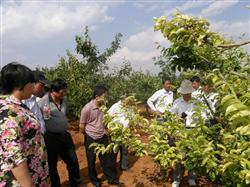
How to prevent and treat pear tree chlorosis? Reasonable fertilization is key
Iron deficiency symptoms in pear trees start from the new shoots, with leaf color changing from pale green to yellow, only the leaf veins remaining green. In severe cases, the entire leaf turns yellow-white, with scorched necrotic spots forming along the leaf margins. Affected new shoots are thin and weak, with elongated internodes and underdeveloped axillary buds. Pear trees can develop this at any stage from seedling to mature tree. The cause of this...
-
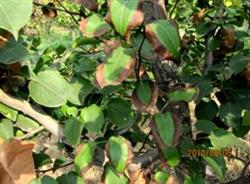
What are the control methods for potassium deficiency in pear trees
Villagers reported that in a pear orchard in a mountain village, some pear tree branches were found to have shortened internodes, smaller leaves that were yellow-green in color, with leaf margins curling upward, browning, and scorching; in severe cases, the entire tree's leaves were like this, resembling fire damage, and it was even more severe on trees in poor, thin soil with exposed roots, affecting tree vigor and yield. Many fruit growers could not figure out...
-
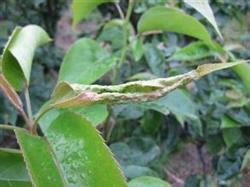
Control Methods for Pear Aphid Pests on Pear Trees
Pear aphid, also known as pear two-branched aphid or pear leaf-curling aphid, commonly called "greasy bug," occurs in pear-growing areas throughout the country and is one of the major pests of pear trees. When damage is severe, it causes early defoliation, affecting both the current year's yield and flower bud differentiation. This insect belongs to the order Homoptera, family Aphididae. 1. Damage symptoms: Adults and nymphs gather in colonies on buds, leaves, and tender shoots to suck...
条件筛选