How to prevent and treat pear tree chlorosis? Reasonable fertilization is key
Iron deficiency symptoms in pear trees start from the new shoots, with leaf color changing from pale green to yellow, only the leaf veins remaining green. In severe cases, the entire leaf turns yellow-white, with scorched necrotic spots forming along the leaf margins. Affected new shoots are thin and weak, with elongated internodes and underdeveloped axillary buds. Pear trees can develop this at any stage from seedling to mature tree. The cause of this...
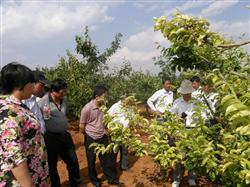
Iron deficiency symptoms in pear trees start from the new shoots, with leaf color changing from pale green to yellow, only the leaf veins remaining green. In severe cases, the entire leaf turns yellow-white, with scorched necrotic spots forming along the leaf margins. Affected new shoots are thin and weak, with elongated internodes and underdeveloped axillary buds. Pear trees can develop this at any stage from seedling to mature tree. The cause of this chlorosis is iron deficiency, so it is also called iron deficiency syndrome, or iron deficiency yellow leaf disease.
Sometimes symptoms ease after new shoots stop growing or after the rainy season arrives. Generally, the iron content in soil is abundant, but in alkaline soil, due to the action of base ions, active iron is converted into inactive iron and cannot be absorbed and used by plants, resulting in iron deficiency chlorosis. Iron deficiency chlorosis mostly occurs in saline-alkali areas. In neutral soil, excessive fertilizer and water, especially excessive nitrogen fertilizer, cause new branches to grow too vigorously, leading to insufficient iron absorption, which can also cause new shoots to show varying degrees of iron deficiency chlorosis. In this case, iron deficiency chlorosis can be controlled through balanced fertilization, increased application of organic fertilizer, increased application of biological fertilizer, and controlling new shoot growth.
Formula fertilization: 2 jin phosphate and potassium fertilizer + 6 jin organic fertilizer + 300 grams microbial compound bacteria, preferably adding 2 jin soybean cake and an appropriate amount of ferrous sulfate, bud fertilizer once, fruit-swelling fertilizer once, wintering fertilizer once, three times in total per year. Pay special attention that bud fertilizer must use less nitrogen fertilizer, and heavily apply organic fertilizer and biological fertilizer; for normal fruit trees, the ingredients can be appropriately reduced. The phosphate and potassium fertilizer mentioned above can use compound fertilizer of 46% or above, the organic fertilizer can be replaced with biogas slurry, and the compound bacteria are Bacillus subtilis + Bacillus mucilaginosus, or Xinshengli compound microbial agent. In addition, when chlorosis occurs in apple trees, kiwifruit trees, peach trees and other fruit trees, this method can also be used for prevention and treatment.