-
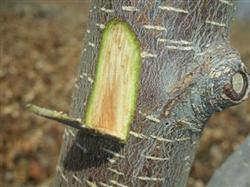
Pear Tree Early Spring Frost Damage Protection Methods and Technical Key Points
I. Frost Prevention 1. Spray salt water: Before the late frost arrives, spray the tree with 10-20% salt water. This can increase the concentration of cell sap in the tree, lower the freezing point, and also increase air humidity. When water condenses in the cold, it releases latent heat, thereby protecting against frost damage. 2. Spray hormones: In early spring, spray 0.1-0.2% maleic hydrazide solution to inhibit budding and delay flowering,...
-
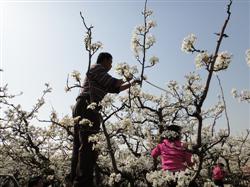
What is the difference between pruning methods for pear trees and apple trees
Post-bloom management of pear trees is a critical period in the whole year's management. Whether the comprehensive management measures during this period are appropriate directly affects the fruit set rate and fruit quality. The key points of pear tree management during this period are: 1. Pollination Pear flowers generally open after 8 o'clock in the morning. Flowers that open on the same day can be pollinated, and pollination is best 1 to 2 days after the flowers open...
-
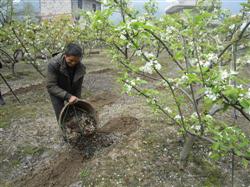
Correct Fertilization Methods and Technical Key Points for Pear Trees
I. Fertilizer amount. Generally speaking, producing 100 kg of pear fruit requires 0.47 kg of pure nitrogen, 0.23 kg of pure phosphorus, and 0.48 kg of pure potassium, with a nitrogen, phosphorus, and potassium ratio of 1:0.5:1. If calculated at a yield of 2500 kg of pears per mu, then each mu requires 11.75 kg of nitrogen, 5.75 kg of phosphorus, and 12 kg of potassium. In actual production, it can be based on...
-
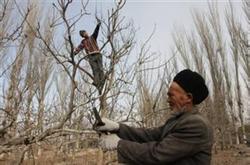
Key Points of Simplified Pruning Technique for Pear Trees Trained to a Modified Central Leader Form
For pear trees trained to a modified central leader form, the trunk height is 60-70 cm, the tree height is 3.5 m, and 4-5 larger scaffold branches are borne on the middle and lower parts of the central leader. The spacing between scaffold branches is about 20 cm. The basal angle of the scaffold branches is 60 degrees. The waist angle is 30-50 degrees. The tip angle is upright; the scaffold branches extend in a single axis. On them are borne small and medium fruiting shoots or fruiting branch groups; the ratio of scaffold branch to trunk is controlled...
-
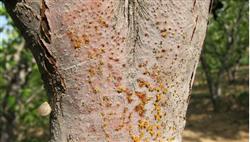
How to prevent and control pear tree canker? Mastering these methods is enough
1. Strengthen the tree to prevent disease: (1) Reasonable load: According to the tree's growth condition and fertilization level, determine an appropriate fruit load. Do not let the tree bear too heavy a load, and even less should you adopt excessive measures such as branch bending and girdling to increase fruit production for short-term gain. Properly thin flowers and fruits so that both fruiting and tree growth are achieved. (2...
-
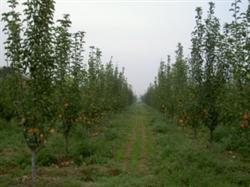
Detailed Explanation of Early Spring Management Techniques for Pear Trees
1. Dig planting holes or planting trenches. ① For pear orchards with colored varieties spaced more than 3 m apart, planting holes can be dug; centering on the planting hole, dig a circular or square planting pit 1 m deep and 1 m wide, placing the topsoil and subsoil separately on either side of the hole. ② For pear orchards with spacing below 2 m, planting trenches must be dug, with a trench depth of 1 m, ...
-
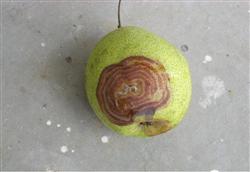
How to control pear tree pests? These small measures are simple and practical
Pear fruit borer. It has 2-3 generations per year and has the habit of moving between buds and fruits to cause damage. At this time, the pear fruit borer is inside the dead flower stalks. When the young fruit develops to the size of a thumb, it moves to damage the young fruit. One larva can damage 1-4 young fruits, so systemic insecticides such as 40% Haolaoli should be used for control. Oriental fruit moth...
-
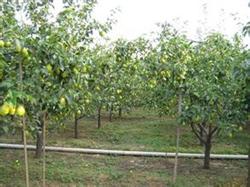
Key Technical Points for High-Yield Fertilization Management of Pear Trees
About one month before pear fruit ripens, the growth rate accelerates, which is called the fruit expansion stage. Topdressing at this time can improve photosynthetic efficiency, promote nutrient accumulation, and benefit fruit expansion and flower bud differentiation. This topdressing can both increase the yield of the current year and lay the foundation for fruiting in the following year. 525 Shandong Fruit Network The fertilization period is generally at the fruit...
-
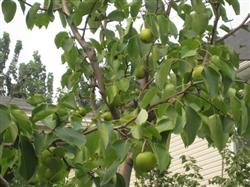
How should the first hurdle of pear tree management be handled well?
Rationally distributing the tree's stored nutrients and reducing useless consumption is one of the important techniques for promoting normal tree growth and producing high-quality fruit. The period from flowering to fruit set is an important time that determines the number of fruits set on the pear tree that year, the development of young fruit, and whether the leaf area that creates the material conditions for later fruit development can form early. During this period...
-
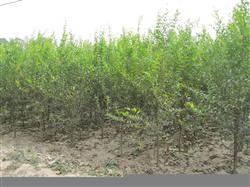
What are the key cultivation techniques for young pomegranate trees?
Pomegranates like sunlight, tolerate drought and poor soil, bear fruit early, and are easy to manage, making them an important economic tree species for mountain development. During the young stage, the following cultivation measures should be carried out well: 1. Select good varieties and strong seedlings. 1. Choose superior varieties for planting. Pomegranates can be divided into three categories: sweet, sour, and sweet-sour. Unless there are special needs, cultivation should focus mainly on sweet pomegranates...
条件筛选