-

What techniques are there for spraying foliar fertilizer on fruit trees?
Are there techniques for spraying foliar fertilizer on fruit trees? What should be noted when spraying foliar fertilizer on fruit trees? Is there anyone online who can help explain? Foliar spraying of fertilizer on fruit trees is the main form of root-outside topdressing, and it has advantages such as a small amount of fertilizer used, fast absorption, remarkable fertilizer effect, strong targeting, not being fixed by the soil, and not being restricted by the strength of root absorption function...
-
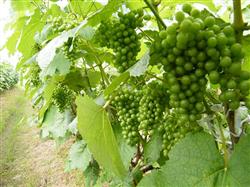
Methods and Technical Key Points for Summer Topdressing of Fruit Trees
How to do summer topdressing for fruit trees? Please introduce the methods. In mid-to-late June, the fruits of grape, pear and other fruit trees begin to swell and are in the first rapid expansion stage. Flower buds are in the physiological differentiation stage, their root systems grow rapidly and their absorption function is active, making nutrient deficiency likely. During this critical period, timely and appropriate topdressing can supplement the nutrients needed by the tree and promote...
-
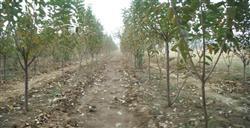
What are the methods of applying organic fertilizer to fruit trees?
How should organic fertilizer be applied to fruit trees? Please give guidance. Fruit trees need a balanced supply of nutrients. Although organic fertilizer is very rich in nutrients, the ratio and content of nitrogen, phosphorus and potassium cannot fully meet the growth needs of fruit trees. Especially during the piling and decomposition process of organic fertilizer, the nitrogen content will further decrease. If applied alone...
-
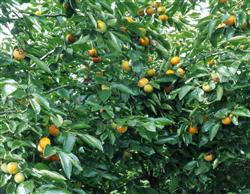
What fertilizer is best to apply before and after harvesting persimmon trees?
What fertilizer is best to apply before and after harvesting persimmon trees? Why apply fertilizer even after harvesting? Before and after fruit harvest, persimmon trees should be given nitrogen and potassium fertilizer to promptly replenish the tree's nutrients and raise its nutrient level, which helps the tree flower and fruit normally the following year. The specific method is: apply pre-harvest fertilizer 15~20 days before harvesting the persimmons, mainly with quick-acting, fast-dissolving nitrogen and potassium fertilizer. For trees bearing 50 kg or more, apply 2~3 kg of urea and 0.5~1 kg of potassium chloride or potassium sulfate per tree, or 1~1.5 kg of potassium sulfate, broadcast after rain or dissolved in 50~60 times clear water and drenched on. Apply post-harvest fertilizer within 10~15 days after harvesting, mainly with complete nitrogen, phosphorus and potassium fertilizer and high-quality organic fertilizer. Along with clearing the orchard, remove all kinds of weeds around the persimmon tree, then dig a ring-shaped trench 25~30 cm deep and 25~30 cm wide around the tree's drip line, thoroughly stir and mix 2~3 kg of nitrogen, phosphorus and potassium compound fertilizer with 40~50 kg of composted, fully rotted human, livestock and poultry manure, apply it into the ring trench, and cover with soil.
-
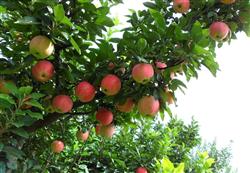
When is the best time to apply potassium fertilizer to apple trees?
When is the best time to apply potassium fertilizer to apple trees? What is the purpose of applying potassium fertilizer to apples? Applying potassium fertilizer to apple trees at the right time and in the right amount can significantly increase fruit size, raise sugar content, improve coloring, and also make the fruit color vivid, the skin smooth and clean, and improve internal qualities such as flavor and taste. The uptake of potassium by apple trees is generally from early July...
-
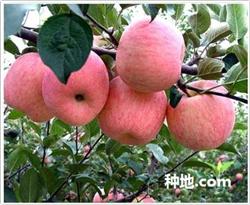
How to correctly apply potassium fertilizer to vegetables and fruit trees
How should potassium fertilizer be applied when growing apples? Need guidance. Potassium is one of the important elements needed by fruit trees, especially for improving apple quality and enhancing fruit quality, where it plays an irreplaceable role, so potassium fertilizer is also called fruit fertilizer. Applying potassium fertilizer at the right time and in the right amount can noticeably increase fruit size, raise sugar content, and improve color. ...
-
Applying undecomposed organic fertilizer to fruit trees does much harm, and it cannot be ignored
Organic fertilizer is also called farmyard manure. In fruit tree production, the commonly used types include compost, pen manure, stable manure, green manure, cake fertilizer, river mud, poultry manure, human feces and urine, and miscellaneous soil manure. Most organic fertilizers need to be decomposed by microorganisms before they can be absorbed by the plant's root system, so they are also called "slow-release fertilizers" and can be applied as base fertilizer...
-
How to Use Fruit Tree Fertilizer? A Detailed Guide to Fruit Tree Fertilization Methods
The correct use of fruit tree fertilizer is one of the key steps in producing pollution-free fruit. The correct use of fruit tree fertilizer is one of the key steps in producing pollution-free fruit. The national agricultural industry standard issued and implemented by the Ministry of Agriculture last year also set out clear rules for fertilizer use in the production of green food (fruit)...
-
Correct Methods and Techniques for Spraying Foliar Fertilizer on Fruit Trees
Spraying Period and Dosage 1. Nitrogen fertilizer should generally be used in the early and late stages of fruit tree growth, appropriately combined with phosphorus and potassium fertilizers. An appropriate spraying concentration can effectively promote new shoot growth, increase fruit yield, and benefit flower bud differentiation. The concentration for urea is 0.2-0.3% in the early stage and 0.3-0.5% in the late stage; for decomposed human manure...
-
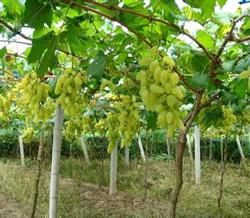
What is the correct method for foliar feeding of fruit trees?
1. Types, timing and amounts of spray fertilizer. Nitrogen fertilizer should generally be used in the early and late stages of fruit tree growth, appropriately combined with phosphorus and potassium fertilizers. An appropriate spray concentration can effectively promote new shoot growth, increase fruit yield, and benefit flower bud differentiation. The concentration for urea is 0.2%-0.3% in the early stage and 0.3%-0.5% in the late stage; decomposed...
条件筛选