-
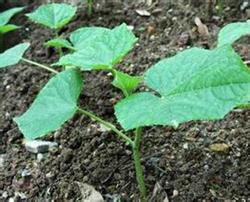
How to prevent root burn and seed rot when raising cucumber seedlings in winter and spring
Winter and spring are seasons with low temperatures, short daylight, and weak light. These natural conditions are all important factors affecting the formation of strong seedlings. However, under current production levels, it is difficult to fundamentally solve them artificially, especially the light conditions. Therefore, in the winter and spring seedling-raising season, if management is improper, the cucumber seedlings will easily...
-

Azalea losing leaves badly? Once you understand the root problem, you won't have to worry anymore
When many novice flower lovers choose flower plant varieties to care for, the first thing they consider is definitely plants that bloom beautifully. Indeed, who doesn't like things with high "looks"? But many times, "beauties" also come with thorns...
-

Detailed Explanation of Key Points for Early-Maturing Lotus Root Cultivation Techniques
Based on their adaptability to water levels, lotus roots can be divided into two ecological types: shallow-water lotus root and deep-water lotus root. Shallow-water lotus root is suitable for water levels of 10-20 cm, with a maximum water depth tolerance of 30-50 cm. Deep-water lotus root is suitable for water levels of 30-50 cm, with a maximum water depth tolerance of 1-1.2 m. The general principle for water layer management in shallow-water lotus root is: shallow at the front, deep in the middle, ...
-

Detailed Guide to Lotus Root Cultivation: Master All Key Points of Cultivation and Management
Lotus root belongs to the Nymphaeaceae family as a perennial aquatic plant, also known as pond lotus and furong. It prefers a warm, humid climate and requires ample sunlight, fertile deep soil, and an environment with adjustable water levels. Its fruit is called the lotus seed, its rhizome is called lotus root, and its flower is called the lotus. The main edible part is the rhizome. Lotus root is rich in nutrients and can be boiled, pan-fried, and...
-

A Detailed Guide to the Techniques and Methods of Using Lotus Root Terminal Buds as Seed
In recent years, some farmers in China have converted some low-lying fields to growing lotus root, which has a higher output value. According to surveys, lotus blight (also known as rot disease) occurs in some lotus fields and is the main disease of lotus root. Generally, diseased fields suffer a 20% reduction in yield, and in severe cases 60%-80%. 1. Damage symptoms: Lotus blight mainly damages the underground stem, causing it to turn brown and rot, first...
-
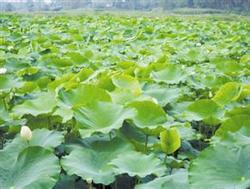
What causes lotus root rot?
Topdressing can be applied 2-3 times. The first time is when 1-2 standing leaves have grown, the second time can be before the rows close, and the third time is when the rear ridge leaves appear. For every 667 sq m (mu), apply 2000-4000 kg of manure or 15 kg of urea the first time, 20-25 kg of compound fertilizer the second time, and 10-15 kg of urea the third time. For early-maturing cultivation...
-

Detailed Guide to Identifying and Controlling Lotus Root Brown Streak Disease Symptoms and Control Methods
Lotus root brown streak disease is widely distributed and occurs in all regions, but it only harms lotus root. 1. Pathogen: This disease is caused by infection with fungi of the genus Alternaria in the Deuteromycotina. The pathogen overwinters in lotus fields as mycelium and chlamydospores with diseased plant residues, and produces conidia under high temperature and high humidity, spreading by wind and rain. 2. Symptoms...
-

Occurrence Patterns and Control Methods of Lotus Root Brown Spot Disease
Brown spot disease is a major disease of lotus root, widely distributed, and can occur in spring, summer, and autumn. Generally, diseased plants account for 30%-50%, and in severe cases, the incidence rate can reach over 80%, significantly affecting lotus root yield and quality. 1. Symptoms This disease mainly affects the leaves and leaf stalks of lotus root. In the early stage of leaf infection, small brownish-green...
-
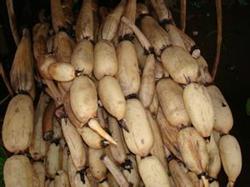
Key Techniques for Early-Maturing, High-Efficiency Lotus Root Cultivation under Plastic Tunnels
1. Select good varieties: choose medium-maturing large purple-red lotus root varieties whose main rhizome has 4-5 nodes. 2. Treat seed rhizomes: select main rhizomes with robust buds, 2-3 nodes and a weight above 0.5 kg as seed rhizomes, or use large secondary rhizomes as seed rhizomes. After the seed rhizomes are dug up, plant them as early as possible, with a seeding rate of 300-400 kg per mu. Before planting, use...
-

Smart Fertilization for High-Yield Lotus Root: Mastering the Method Is Key
I. Fine Land Preparation and Sufficient Base Fertilizer. Lotus root grows in mud, and it requires soil rich in humus, soft, smooth and loose, with good aeration, which is most favorable for the growth of lotus root and makes it easy to obtain high quality and high yield. Therefore, before planting lotus root, the soil should be deep-plowed, finely prepared, and given sufficient base fertilizer. Generally, at the end of winter when the soil thaws...
条件筛选