Detailed Guide to Lotus Root Cultivation: Master All Key Points of Cultivation and Management
Lotus root belongs to the Nymphaeaceae family as a perennial aquatic plant, also known as pond lotus and furong. It prefers a warm, humid climate and requires ample sunlight, fertile deep soil, and an environment with adjustable water levels. Its fruit is called the lotus seed, its rhizome is called lotus root, and its flower is called the lotus. The main edible part is the rhizome. Lotus root is rich in nutrients and can be boiled, pan-fried, and...
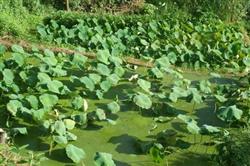 1. What are the differences in water level standards between deep-water lotus root and shallow-water lotus root, and how are they adjusted in production?
According to their adaptability to water levels, lotus root can be divided into two ecological types: shallow-water lotus root and deep-water lotus root. Shallow-water lotus root is suited to a water level of 10-20 cm, with a maximum tolerance depth of 30-50 cm. Deep-water lotus root is suited to a water level of 30-50 cm, with a maximum tolerance depth of 1-1.2 m.
The general principle of water layer management for shallow-water lotus root is: shallow at the front, deep in the middle, shallow at the back. During the sprouting and growth period from planting the lotus root to the emergence of standing leaves, shallow water should be maintained to raise soil temperature and promote sprouting. Generally, maintaining a water layer 4-7 cm deep is best. With the emergence of standing leaves, the stems and leaves of the lotus root gradually grow more vigorously, and the water layer should gradually rise to 12-15 cm. When the terminal leaf appears, it indicates that lotus root formation has begun, and the water layer should gradually be lowered to 4-7 cm to promote root formation. The water level for deep-water lotus root is not easy to adjust; the main task is to prevent waterlogging during the flood season. In particular, after standing leaves are submerged, emergency drainage should be carried out within 8 hours to expose the lotus leaves above the water surface and prevent them from drowning.
2. How can herbicides be rationally used to remove weeds in lotus ponds?
During the growth of lotus root, especially in the early growth stage of shallow-water lotus root, weeds such as pondweed, needle spikerush, dwarf arrowhead, triangular bulrush, four-leaf clover fern, and black algae are abundant in the paddy field and grow quickly, affecting lotus root growth, so weeds should be removed promptly. In the past, manual inter-row cultivation and weeding were often used, which required a large workload and easily damaged the underground stem buds of lotus root. If chemical weeding is used, it saves labor and effort and causes no harm to lotus root.
In recent years, through research and experiments by scientific and technical personnel, some safe and effective methods for chemical weeding in lotus fields have been explored and are being promoted in production.
(1) Choose 50% Weilosheng emulsifiable concentrate. When the standing leaves of lotus root grow 30 cm above the water surface, take 100 mL of the pesticide, first mix it with 5 kg of urea, then add 5 kg of fine soil, mix thoroughly, and broadcast it into the field when the dew has dried. During application, keep the lotus field water depth at 7-10 cm. After application, maintain the water layer for more than one week. The effect is good, and the residual effect period can reach more than 1 month.
(2) Choose 40 mL of 12.5% gallant or 35% quizalofop-p, add 40-50 kg of water, mix thoroughly, and spray on the weed leaf surfaces when the dew has dried. After 4 days, the effect on killing grass-family weeds at the 3-4 leaf stage is significant.