-
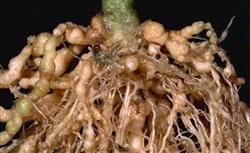
Control Methods for Root-Knot Nematode Disease in Cantaloupe Cultivation
What harm does root-knot nematode disease cause to cantaloupe? How do you control root-knot nematode disease when growing cantaloupe? Please provide control methods. Zhongdiwang has compiled the harm and control methods of cantaloupe root-knot nematode disease, listed below for netizens' reference. Harm of cantaloupe root-knot nematode disease: Root-knot nematode disease is a...
-
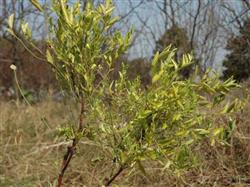
What is jujube root crown gall? Introduction to common diseases in jujube tree management
What is jujube root crown gall? What causes it? How should it be prevented and controlled? Please give an introduction. Jujube root crown gall is a bacterial disease that occurs in jujube-growing areas in the north. After the roots are affected, above-ground growth is slow and the plant is stunted; in severe cases the leaves turn yellow and drop early, and the branches and shoots weaken or even die, but it rarely causes the whole...
-
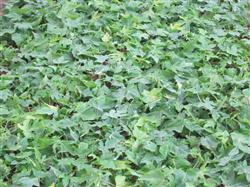
What is papaya seedling root rot disease in papaya tree cultivation?
What is papaya seedling root rot disease? What harm does papaya seedling root rot disease cause? How is papaya seedling root rot disease prevented and controlled? Please provide guidance: papaya root rot disease is also called papaya root rot; the main harm of papaya seedling root rot disease: root rot mainly damages the root collar and roots, and seedlings during the nursery period and those planted not long ago are more susceptible to the disease....
-
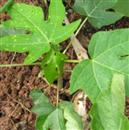
Papaya Cultivation Techniques: How to Prevent and Control Papaya Seedling Root Rot?
How to prevent and control papaya seedling root rot? Please explain. Papaya root rot is also called papaya root rot disease. Symptoms: This disease mainly affects the root collar and roots. Seedlings during the nursery period and those planted not long ago are more susceptible. It is especially likely when the groundwater level in the nursery and cultivation area is high or poor drainage causes waterlogging, and when the soil is highly clayey. Affected plants...
-
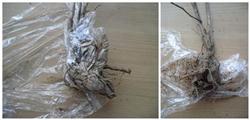
What are the morphological characteristics of the blueberry root system?
What kind of characteristics do blueberry roots have? Please introduce them. The blueberry root system has no root hairs. For this reason, the absorptive capacity of the blueberry root system is much smaller than that of root systems with root hairs. Its absorption area is only 1/10 that of a wheat root system of the same size with root hairs. The blueberry root system is fine and fibrous, and before branching the fine roots are straight...
-
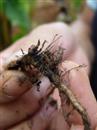
Detailed Guide to Identifying Symptoms of Banana Root Nematode Disease and Control Methods
What is banana root nematode disease and how is it controlled? Please provide an introduction. The introduction to banana root nematode disease and control methods is as follows: (1) Symptoms. Root nematodes infect the roots of banana. Affected large roots appear short and swollen, with cracking, and galls sometimes form on small roots. Sometimes they are destroyed before developing into large roots; when swollen, cutting the tissue open reveals brown dotted substances. Because of nematode damage, the roots become infected by pathogenic bacteria, causing root rot and leaving few effective roots. Above ground, the main symptoms are stunted plants, yellow leaves or clustered leaves, loose bunches, loss of green at leaf margins, many dead leaves, and wavy, crinkled leaves. In plants that have emerged from the bud, old leaves look scorched, withering from the leaf margin to the midrib. In severe cases, the fruit bunch cannot bend down normally, and the fruit is thin, small, shriveled and hard; sometimes the symptoms resemble bunchy top disease, except that the petiole has no "green veins".
-
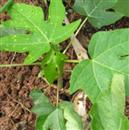
Methods and Technical Key Points for Controlling Root Rot in Papaya Seedlings
Papaya is a subtropical crop, propagated by seedlings and transplanting. Analysis suggests the main causes of root rot at the seedling stage are: water accumulation in the seedbed after rain, excessively high fertilizer concentration during the seedling stage, nematode invasion of the roots, and infection by root rot pathogens. Control measures: 1. The papaya root system carries out respiration in the soil. Under oxygen-deficient conditions, anaerobic respiration...
-
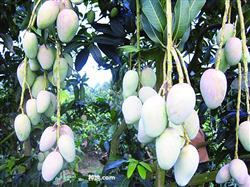
What are the methods for cultivating mango grafted rootstock seedlings?
How should large mango trees be fertilized scientifically? Please advise on fertilizing bearing mango trees. The principle should be to reasonably adjust the contradiction between vegetative growth and reproductive growth. It is necessary both to promote flowering and fruiting in the current year and control excessive summer shoot growth, and to promote the flushing and robust growth of autumn shoots, laying a good foundation for continued high yields the following year. Fertilization...
-
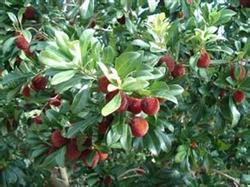
How to Treat Bayberry Root Rot? Detailed Explanation of Key Prevention and Control Techniques
1. Mounding soil. In conjunction with deep plowing, carry out one round of fertilizing mud and mounding soil around the tree disk. Use locally available materials such as mountain surface soil, plant ash, river mud, pond mud, etc., generally once every two years, each time raising the soil by about 5 cm, in order to increase the cultivated layer of the bayberry orchard, protect the root system, expand the extension range of the roots, and improve the bayberry root system...
-
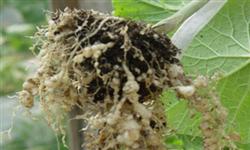
Symptoms and Control Methods of Root-Knot Nematode Disease in Hami Melon
Root-knot nematode disease is an important disease of Hami melon, occurring and distributed in some areas. It can develop both in protected cultivation and in open fields, with more severe incidence in autumn. Infection at the seedling stage has a great impact on production, and after onset the diseased plant rate often reaches more than 60%, significantly affecting Hami melon production. The symptoms mainly damage the root system, producing on the main root and lateral roots...
条件筛选