-
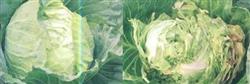
Prevent cabbage head splitting in early spring by taking precautions in advance
In early spring, cabbage grown under protective cultivation is prone to head splitting, which not only affects the appearance quality and marketability of the cabbage, but also makes it more susceptible to disease, affecting storage and transportation. According to experiments, cabbage head splitting is not only related to variety, but also to excessive moisture, while it is basically unrelated to fertilizer. If moisture is insufficient, the cabbage heads are small; if moisture...
-
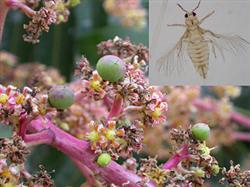
How to prevent and control diseases and pests during the mango flower spike stage? A detailed practical guide
After mango flower spikes are damaged by diseases and pests, the spikes become deformed, flower quality declines, buds drop, flowers dry up, and they cannot bloom or set fruit. The control methods for the diseases and pests harming mango flower spikes are as follows: 1. Anthracnose Anthracnose is the most serious disease harming flower spikes. It strikes as soon as the flower spikes emerge, first appearing as black...
-
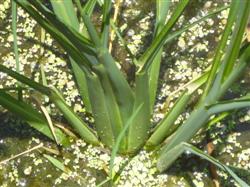
What causes wild rice stem to turn male? Here's how to prevent male wild rice stem
During the cultivation of wild rice stem, plants often emerge that bolt and produce flower stems instead of forming wild rice stem; these are called "male wild rice stem" or "strong wild rice stem". Wild rice stem forms after the plant is infected by the smut fungus, loses the ability to bolt, flower and set seed, and its flower stem swells. The spread of the smut fungus is mainly from the previous year's...
-
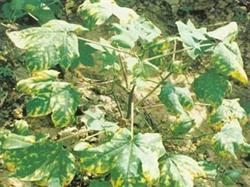
Scientific prevention and control methods for cotton Fusarium wilt and Verticillium wilt
Cotton Fusarium wilt and Verticillium wilt are the main diseases affecting high yield and high efficiency of cotton. Only by correctly identifying the symptoms and taking corresponding measures can yield and quality be improved and benefits increased. I. Cotton Fusarium wilt: This disease can occur at the cotyledon stage, with the first peak of incidence appearing at the squaring stage. At the seedling stage, the symptoms of Fusarium wilt are complex and varied...
-
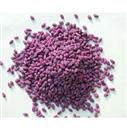
Countermeasures for preventing seedling diseases from pre-sowing to seedling stage in cotton
Cotton seedling diseases mainly include damping-off, anthracnose, Pythium blight, root rot and more than a dozen others, collectively known as cotton seedling diseases. In mild cases, growth is slow, plants wilt and develop late; in severe cases, there are gaps and broken rows in the field, with plants dying in patches, causing tremendous damage. After cotton seedlings become diseased, although a series of disease prevention and treatment measures have been taken, such as timely ventilation of plastic-film cotton, intertillage near the roots...
-
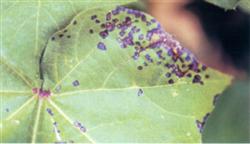
How to effectively prevent and control cotton bacterial angular leaf spot
I. Agricultural measures. 1. Prepare the soil carefully, apply sufficient basal fertilizer, ensure adequate pre-planting soil moisture, and select disease-resistant varieties. 2. Practice rational crop rotation, plow deeply and irrigate in winter to promote the decomposition of diseased plant residues. 3. During the seedling stage, strengthen intertillage, reduce soil moisture, apply less nitrogen fertilizer and more phosphorus and potassium fertilizer, and cultivate strong seedlings. 4. Strengthen cotton field management, drain promptly after rain...
-
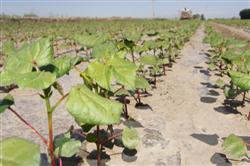
How to comprehensively prevent and control cotton seedling diseases? Master these key points
There are many types of cotton seedling diseases, and they cause severe damage. Among them, the most common and most damaging are damping-off and anthracnose. The incidence rate is generally 20%-30%, and in severe cases reaches 50%-90%. Especially with low temperatures and continuous rain in early spring, cotton seedlings grow weakly and emerge slowly, making them highly susceptible to infection by pathogens, causing large numbers of rotten seeds, diseased seedlings...
-
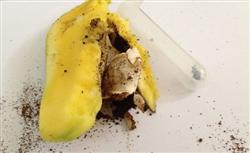
How to prevent early flowering in mango? These methods are worth mastering
1. The mango leaf-cutting weevil is widely distributed. Adult beetles feed on young mango leaves, causing the leaves to dry up; or the female beetles lay eggs on the young leaves and bite the young leaves off at the base, affecting plant growth. Control methods: ① During the growth period of young shoots, pick up the bitten-off fallen leaves from affected plants once every 3 days, dry them in the sun and burn them to kill the larvae;...
-
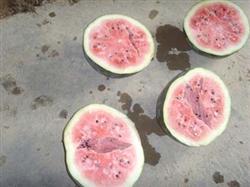
How to effectively prevent and control hollow heart in spring watermelons
Symptoms: Gaps or hollow cavities appear in the flesh inside the watermelon fruit. Causes: It occurs easily when fruit is set at low nodes, when excessive nitrogen nutrition causes rampant vine growth, or when fruit set is poor and leaf area increases. The main cause is excessive accumulation of nutrients in the plant. Hollow fruit usually shows longitudinal grooves on the fruit surface, with thick rind, irregular fruit shape...
-
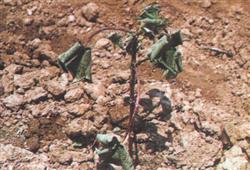
How to prevent and control cotton damping-off? These methods you need to know
Cotton damping-off, also known as root rot and black root disease, is caused by Rhizoctonia solani. Infection before seed germination can cause seed rot, and infection after germination but before emergence can cause sprout rot. When cotton seedlings are affected after emergence, yellow-brown lesions initially appear on the base near the soil surface, and the lesions gradually expand to encircle the entire base. Senior agricultural...
条件筛选