-
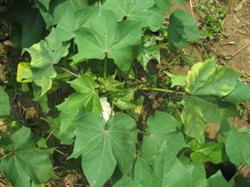
How to prevent and control cotton Verticillium wilt? A detailed guide to practical control techniques
The damage caused by cotton Verticillium wilt is mainly manifested in the middle and late stages of cotton growth. July and August, when the plant flowers and sets bolls, are the peak period of the disease. In summer, in years with high temperatures, drought and lack of rain, the disease is relatively mild. Verticillium wilt generally does not cause stunting, and the plant can still set a small number of cotton bolls. After a long drought during the flowering and boll-setting stage followed by torrential rain, the leaves suddenly wilt, take on a water-soaked appearance, and then drop off...
-
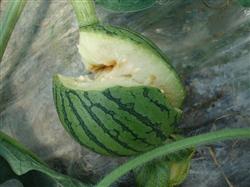
What are the methods for preventing watermelon fruit cracking in spring
Watermelon fruit cracking can be divided into field cracking and harvest cracking. Field cracking is the bursting of the rind under static conditions, and its main cause is a sudden change in soil conditions. For example, if soil moisture is low during a certain stage of fruit development, fruit development is hindered, and then rain or heavy irrigation suddenly causes soil moisture to surge, the fruit rapidly expands and cracks,...
-
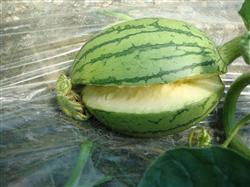
Effective Prevention and Control Methods for Watermelon Fruit Cracking in Spring
Watermelon fruit cracking can be divided into field cracking and harvest cracking. Field cracking is the bursting of the rind under static conditions, mainly caused by sudden changes in soil conditions. For example, if soil moisture is low during a certain stage of fruit development, fruit development is hindered; if rain or heavy irrigation suddenly occurs, soil moisture increases sharply, causing the fruit to expand rapidly and crack,...
-

What causes stunted cotton seedlings? A detailed guide to prevention and control methods
Causes of stunted cotton seedlings and prevention and control methods
-
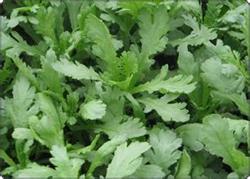
How to prevent and control dead seedlings in garland chrysanthemum? Soil covering treatment cannot be ignored
Scientific workers at the Shanghai Institute of Organic Chemistry, Chinese Academy of Sciences, isolated a unique antifeedant-active component, chrysanthemum lactone, from the common vegetable garland chrysanthemum (Glebionis coronaria), and for the first time internationally used a new synthetic method to artificially synthesize a batch of chrysanthemum lactone compounds. Tested by South China Agricultural University, an authoritative domestic unit for antifeedant research, this artificial...
-
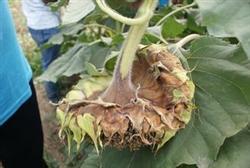
How to prevent and control sunflower sclerotinia? A detailed guide to practical methods
To prevent and control sunflower sclerotinia, the first thing to pay attention to is practicing crop rotation and removing diseased plant residues. Sunflower should be rotated with grass-family crops such as broomcorn millet, foxtail millet and corn, and continuous cropping with legumes and solanaceous crops should be avoided. The rotation period should be at least 3 to 5 years. At autumn harvest, remove the stalks as much as possible, dig out the root stubble and plow deeper than 10 cm. Next is...
-
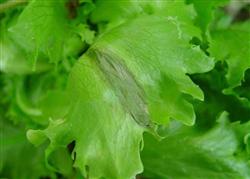
How to prevent and control lettuce soft rot? These methods you need to master
The disease mostly infects from the petioles at the root crown or the base of the roots, initially appearing as water-soaked yellow-brown soft rot with a foul odor. Sometimes soft rot starts from the edges of the outer leaves or the top of the head, and in severe cases the root pith and head rot. The pathogen spreads through watering or insects, invading through wounds and cracks in the plant. The optimum temperature for disease occurrence is 2...
-

Detailed Explanation of the Symptoms and Prevention and Treatment Methods of Calf White Scours
Symptoms and Prevention and Treatment Methods of Calf White Scours
-
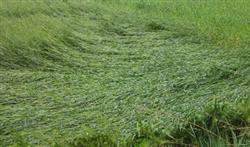
How to prevent spring wheat from freezing damage? Practical anti-freezing methods
"Lodging" is one of the main obstacles affecting wheat yield under high-fertilizer and high-water conditions. In recent years, the promotion and application of plant growth regulators in wheat production has opened up a new way to prevent lodging and promote yield increases, and is an important supporting technical measure for high and stable wheat yields. 1. Spraying paclobutrazol: during the wheat stem elongation stage, every...
-
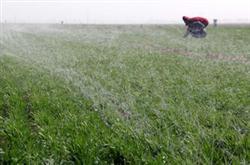
Spring lodging prevention in wheat: these management techniques you need to master
Water and fertilize well at the standing-up and jointing stages. Applying nitrogen fertilizer during the standing-up and jointing stages of wheat can both significantly increase protein content and is a key period for raising wheat yield. Therefore, the standing-up and jointing fertilizer and water should be applied according to local conditions. Wheat grain yield and protein content depend to a large extent on the nitrogen supply level during the development period. At every 66... ⟧3⟧ 1. Spraying paclobutrazol: At the standing-up stage of wheat, spray 30 kg of 200 ppm paclobutrazol solution per mu. This can dwarf the plants, enhance lodging resistance, and also control wheat powdery mildew and improve the plant's absorption and utilization rate of nitrogen.
条件筛选