-
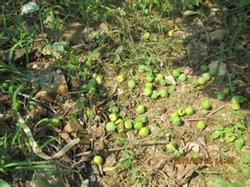
How to prevent flower and fruit drop in persimmon trees? Remember these seven key words
Peel: Girdling the trunk or main branches of vigorous trees not only promotes flower bud differentiation and earlier fruiting, but also reduces physiological fruit drop and advances fruit ripening. Girdling is generally carried out at the initial flowering stage and completed by full bloom, with an incision width of 0.3-0.5 mm. After girdling, wrap the incision with plastic (11395,70.00,0.62%) strips...
-
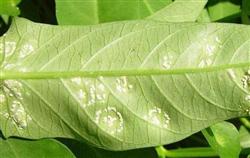
How to prevent and control white rust in water spinach, all in one article
1. Practice a 2- to 3-year crop rotation with other vegetable varieties. 2. Before sowing, mix the seed for sterilization at a ratio of 300 g of 35% metalaxyl per 100 kg of seed; 3. In the early stage of the disease, spray with 50% copper metalaxyl wettable powder at 6000 to 7000 times dilution, or with 72.2% propamocarb aqueous solution at 8000 times dilution, once every 7 to 10 days...
-
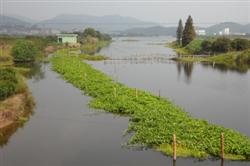
How to prevent pests and diseases in water spinach? Practical control measures shared
1. Preparing seedlings: After the mother stems of the planted water spinach form nodes, when the branches growing from the nodes reach 20 cm in length, cut off the seedlings with fibrous roots to use as planting material. 2. Cultivation method: Prepare braided straw ropes, wooden stakes and floats (the plastic foam ball-shaped floats used for the upper rope of fishing nets will do). When planting, place the seedlings at 15-20 cm...
-
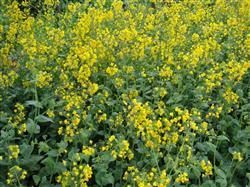
What to Do About Rape Seedling Stunting? A Detailed Guide to Targeted Prevention and Control
After transplanting and seedling recovery, rape (Brassica napus) sometimes shows stunting in the early field growth stage, with symptoms such as reddened or yellowed leaves, curled leaf centers, slow or halted growth, and poor development. To prevent and control rape stunting, targeted measures must be taken based on investigating its causes. Stunting caused by drought or waterlogging - drought not only...
-
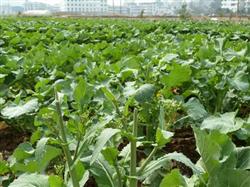
How to prevent fertilizer damage in rapeseed? Introduction to practical methods
1. Reform fertilization methods based on the principles of being practical, useful, and effective. Advocate the application of compost fermented with effective microorganisms and decomposed organic fertilizer, using layered application or full-layer deep application. According to the planned cropping sequence and total fertilization amount for the year, it can be applied all at once during deep plowing. Adopt formula fertilization technology, and properly manage the ratios of nitrogen, phosphorus, and potassium as well as trace...
-
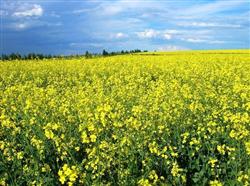
How to prevent and control weeds in rapeseed? Master the occurrence characteristics and control methods
The amount of nitrogen, phosphorus and potassium absorbed by rapeseed is nitrogen greater than potassium, and potassium greater than phosphorus. For every 1000 kg of rapeseed produced, it needs to absorb 2.76 kg of nitrogen, 0.33 kg of phosphorus and 2.06 kg of potassium. The absorption ratio of nitrogen, phosphorus and potassium is 8.38:1:6.24. A deficiency of the trace element boron will produce boron deficiency symptoms. Rapeseed plants...
-
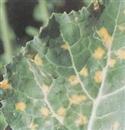
How to prevent and control rapeseed viral disease? A detailed practical guide
Viral disease is one of the main diseases of rapeseed. Affected plants reduce yield by around 20%, and in severe cases by more than 70%. It is generally more susceptible in years with little rain or in areas where vegetables are often grown nearby. Comprehensive control techniques must be adopted to prevent and control rapeseed viral disease. First, disease-resistant varieties should be selected; second, aphids should be controlled in a timely manner; third...
-
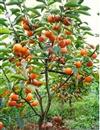
How to prevent and control persimmon tree diseases? These two methods are very practical
The main pests and diseases that persimmon trees are prone to include: persimmon angular leaf spot, circular leaf spot, anthracnose, black spot, leaf blight, powdery mildew, Eumeta variegata, Japanese mealybug, tea tussock moth, Maladera ovata, red wax scale, Homona magnanima, and small black slug moth, etc. Control methods: (1) Remove diseased fallen leaves and burn them; at the early stage of the disease, spray Bordeaux mixture, zineb, carbendazim or any one of these fungicides several times; when powdery mildew is severe, spray triadimefon. (2) Use light traps to kill adult insects; during the larval or nymph stage, spray dichlorvos, trichlorfon, fenitrothion or any one of these insecticides.
-
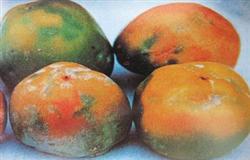
How to prevent and control persimmon witches' broom disease? Key control points every fruit grower must see
Symptoms: Diseased trees bud late in spring and grow slowly; the leaf veins turn black, and the xylem of the branches and trunk turns dark brown; in severe cases it spreads to the phloem tissue, causing clustered branches or upright excessive growth, or branch dieback and scorched shoot tips, with few fruits set, and the fruits soften prematurely and then drop; in severe cases there is no fruit set or the whole tree dies. Control methods: (1) Choose...
-
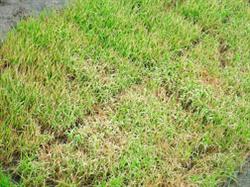
What to Do About Rice Seedling Rot? Detailed Prevention Measures
Rice seedling rot is the general term for seed rot, sprout rot and seedling death occurring at the seedling stage. Rice seedling rot can be divided into two categories: physiological and infectious. Physiological seedling rot is mainly caused by low temperatures and mistakes or poor management practices in the seedling nursery; infectious seedling rot is caused by pathogen infection, and the main diseases include rice cottony rot, rice rot disease and rice...
条件筛选