-
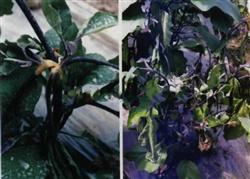
How to prevent and control pests and diseases in early spring eggplant? Key technical points to master
For eggplant seedlings raised in early spring, the main focus is preventing and controlling soil-borne diseases: damping-off, rhizoctonia rot and sclerotinia rot. For seedbed soil disinfection, mix 50 kg of seedbed soil with 20 g of 68% Jinlei water-dispersible granules and 10 ml of 2.5% Shileshi suspension concentrate, sift the soil and mix well, then fill nutrient pots, or spread it over the seedling bed. During the seedling stage, spray 0.1%-0.2% monopotassium phosphate...
-
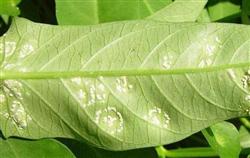
What to Do When Water Spinach Gets White Rust? A Detailed Guide to Prevention and Control Methods
First, implement a 2-to-3-year crop rotation with other vegetable varieties. Second, before sowing, dress the seeds for sterilization at a ratio of 300 g of 35% metalaxyl per 100 kg of seeds; third, in the early stage of the disease, spray with 50% copper metalaxyl wettable powder at 6000 to 7000 times dilution, or with 72.2% propamocarb aqueous solution at 8000 times dilution, applying once every 7 to 10 days...
-
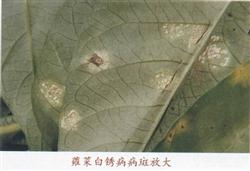
How to prevent and control downy mildew in water spinach? A detailed explanation of practical technical points
1. Practice a 2-to-3-year crop rotation with other vegetable varieties. 2. Before sowing, dress the seed for sterilization at a ratio of 300 g of 35% metalaxyl per 100 kg of seed; 3. In the early stage of the disease, spray with 50% copper metalaxyl wettable powder at 6000 to 7000 times dilution, or with 72.2% Previcur AS at 8000 times dilution, applying once every 7 to 10 days...
-
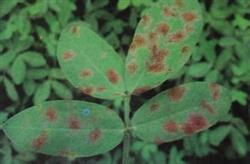
Prevent early defoliation in peanuts and take timely control measures
Peanut net blotch diseased leaves. Early defoliation in the late stage of peanut growth can seriously affect peanut yield. The main causes of early defoliation in the late stage are premature senescence of the plants and damage from leaf spot diseases (net blotch, brown spot, etc.). Peanuts sprayed with paclobutrazol and regulators containing this ingredient shed leaves earlier and more severely. Therefore, preventing early...
-
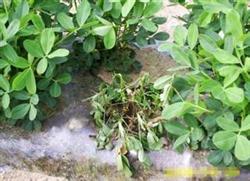
How to prevent and control peanut bacterial wilt? The flowering and pegging stage is key
Peanut bacterial wilt is a devastating disease. Once infected, the whole plant wilts and dies, and it cannot be cured. The flowering and pegging stage of peanuts is the period when bacterial wilt breaks out, and during this time attention should be paid to spraying for control. Specific control method: when peanuts begin to bud, spray the leaves once every 10 to 15 days with a 1500-fold 70% hymexazol water-soluble...
-
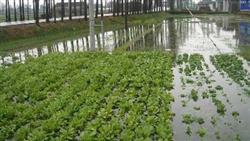
How to prevent and control waterlogging damage in peanuts? Detailed explanation of key technical points
Peanut waterlogging damage occurs for two reasons: first, low-lying terrain, heavy clay soil, and poor drainage; second, during seasons with long rainfall periods or excessive rainfall, surface water and groundwater are in excess and cannot be drained away in time. From the perspective of the water requirements for peanut growth and development, the suitable soil relative humidity at the seedling stage of peanuts is 50%-60%. When the soil relative humidity is higher than 70% or there is standing water...
-
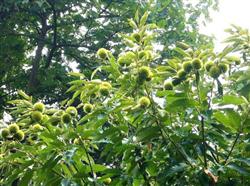
Chestnut Pest and Disease Prevention and Control Methods and Technical Key Points
In Anhui Province, chestnuts are mainly distributed in the mountainous areas of southeastern and western Anhui. Since the 1990s, they have also been developed on a large scale in the Jianghuai hilly region. The main chestnut-producing counties (cities) include Jinzhai, Huoshan, Shucheng, Yuexi, Guangde, Ningguo, Taihu, and others. There are about 150 species of pests and diseases harming chestnuts in our province, with common and severe occurrences affecting chestnuts...
-
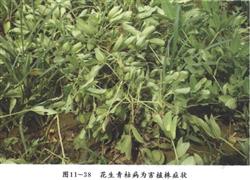
How to prevent and control peanut bacterial wilt and stem rot? Detailed explanation of technical key points
I. Peanut bacterial wilt 1. Symptoms. Peanut bacterial wilt mostly begins to develop around flowering, but the disease is most severe during the peak flowering and pegging stage, and the condition eases somewhat after pod setting. Its most notable symptom is: the aboveground leaves of diseased plants wilt rapidly, the vascular bundles of the underground roots turn brown, and along the root-stem section, when moist, squeezing the cut surface can exude...
-
How to prevent and control peanut southern blight? Detailed practical methods
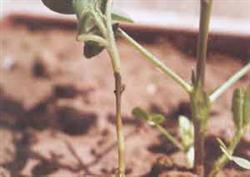
Peanut southern blight generally begins to occur in large numbers in early to mid-June. Comprehensive control measures are as follows: for lower-lying fields, dig good ditches to help drain standing water and lower the water table; sloping peanut fields should also have good ditches so that water does not accumulate after rain. Apply more calcium and potassium fertilizer. After the initial flowering stage, in combination with building up soil and hilling the beds, apply 40-5...
-
How to prevent and control peanut bacterial wilt? These methods must be mastered
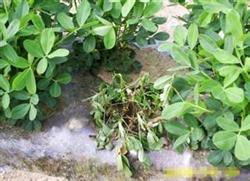
The period of peanut flowering and peg penetration is the outbreak period of peanut bacterial wilt, and during this period attention should be paid to spraying for control. Control method: when peanuts begin to show buds, spray the leaf surface once every 10-15 days with a 1500-fold 70% hymexazol aqueous solution, or a 600-fold 20% thiodiazole-copper aqueous solution, evenly wetting all leaves, until water droplets begin to...
条件筛选