How to comprehensively prevent and control cotton seedling diseases? Master these key points
There are many types of cotton seedling diseases, and they cause severe damage. Among them, the most common and most damaging are damping-off and anthracnose. The incidence rate is generally 20%-30%, and in severe cases reaches 50%-90%. Especially with low temperatures and continuous rain in early spring, cotton seedlings grow weakly and emerge slowly, making them highly susceptible to infection by pathogens, causing large numbers of rotten seeds, diseased seedlings...
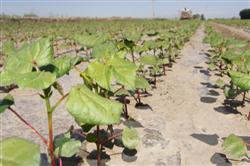
There are many types of cotton seedling diseases, and they cause severe damage. Among them, the most common and most damaging are damping-off and anthracnose. The incidence rate is generally 20%-30%, and in severe cases reaches 50%-90%. Especially with low temperatures and continuous rain in early spring, cotton seedlings grow weakly and emerge slowly, making them highly susceptible to infection by pathogens, causing large numbers of rotten seeds, diseased seedlings and dead seedlings, and even gaps in the rows and missing plants, or even plowing under and destroying the crop, seriously affecting high cotton yields.
To prevent and control cotton seedling diseases, the following comprehensive control measures should be taken.
Seed selection and sunning
Cotton seedling diseases, such as anthracnose, mostly overwinter as conidia and mycelium inside and on the surface of seeds. Before sowing, seeds must be carefully selected, removing rotten seeds, insect-damaged and diseased seeds, and foreign seeds. It is also necessary to seize sunny days to sun the seeds for 1-2 d, in order to kill some of the pathogens carried on the seeds, improve seed quality, promote after-ripening of the seeds, help increase the germination rate, and promote uniform and strong seedlings with less disease.
Fine land preparation and good drainage ditches
Before land preparation, thoroughly and completely clearing the dead branches, fallen leaves and rotten bolls around the cotton field is an effective measure for preventing and controlling anthracnose, damping-off and other diseases. Before plowing, apply sufficient base fertilizer, and level and finely prepare the soil to facilitate seedling emergence. Good drainage ditches must be opened in cotton fields, especially in low-lying cotton fields, where deep ditches and high beds should be used. This is especially true in southern cotton regions, where there is much rain in spring and the groundwater level is high; deep ditches and high beds help drainage, reduce soil moisture, and achieve the effect of preventing disease and protecting seedlings.
Timely sowing
Late sowing is not conducive to cotton seedling growth; early sowing, when air and soil temperatures are relatively low, causes too slow emergence and favors pathogen invasion and damage. Generally, the suitable sowing time is when the 5 cm soil temperature is stable above 12°C, that is, the best sowing period in the Yangtze River basin cotton region is mid-April, and the best sowing period in the North China cotton region is late April.
Crop rotation
Cotton damping-off mainly overwinters as mycelium or sclerotia in the soil or on diseased plant residues. The pathogen in the soil can survive saprophytically for as long as 2-3a. Anthracnose can also overwinter as conidia and mycelium on diseased plant residues. After cotton is sown, both can invade cotton seedlings and cause disease. If paddy-upland rotation is carried out, the pathogens in the soil can be greatly reduced and eliminated, which has a good effect on controlling diseases mainly including damping-off and anthracnose. If interplanting with crops such as wheat, rapeseed and broad bean, wheat should be tied into bundles, old leaves of rapeseed should be removed, and broad bean should be topped in a timely manner, so as to facilitate ventilation and light penetration, reduce field humidity, and reduce disease occurrence.
Chemical seed dressing (soaking)
5.1 Seed dressing with daojiaoqing: Mix 0.5kg of 25% daojiaoqing wettable powder with 10kg of semi-dry and semi-moist fine soil plus plant ash evenly, which can dress 100kg of cotton seeds. It is best to mix and sow immediately, and it must not be left for long after mixing; a 0.5% daojiaoqing aqueous solution can also be used to dress seeds and then store them for 15d before sowing, which can control damping-off, anthracnose and blight.
5.2 Seed dressing with carbendazim: Use 1 kg of 50% carbendazim wettable powder, or 2 kg of 25% carbendazim wettable powder, to dress 100 kg of cotton seeds, which can control seedling-stage diseases such as damping-off and anthracnose, as well as cotton Fusarium wilt and Verticillium wilt.
5.3 Seed soaking with carbendazim suspension concentrate: Use 0.7 kg of 40% carbendazim suspension concentrate, add to 100 kg of water, and soak 50 kg of cotton seeds. After soaking for 14h, remove and drain slightly before sowing. It has a good effect on controlling anthracnose and damping-off, and also has a certain effect on cotton Fusarium wilt and Verticillium wilt.
5.4 Seed dressing with wuduo mixture: The wuduo mixture is a compound preparation of quintozene and carbendazim. When dressing seeds, use 0.5 of the seed amount, and sow immediately after dressing, which can control damping-off, anthracnose, red rot and blight.
5.5 Seed dressing with banzhongshuang: Use 40% banzhongshuang wettable powder at 0.1%-0.2% of the seed amount, and sow immediately after dressing, which can control damping-off, anthracnose and blight.
5.6 Seed dressing with seed coating agent: The seed coating agent is a compound preparation of carbofuran and carbendazim. When dressing seeds, use 0.5% of the seed amount of seed coating agent, and sow immediately after dressing, which can control damping-off, anthracnose and blight, and can also control seedling aphids.
5.7 Seed dressing with "802": Before cotton sowing, use a 3000-fold solution of "802" antibacterial agent, add an amount of liquid equal to 60% of the cottonseed weight, rub the seeds while spraying until the agent is used up, leave for 4-6h, and then sow. A 3000-fold solution can also be used to submerge the cotton seeds for 6-10h, then filter off the excess liquid before sowing. It can control damping-off, anthracnose, red rot and other diseases. According to experiments, after seed dressing with "802", the number of primary lateral roots per cotton plant and the dry matter weight per plant at the 5-leaf stage were respectively 5.85 more and 4.05% higher than the control.
Chemical protection
After cotton seeds emerge, if low temperature and rain occur, especially after a cold wave, seedling diseases are very likely to become epidemic. Therefore, timely use Bordeaux mixture (1:2:20), or 50% carbendazim wettable powder 800-fold solution, or 20% daojiaoqing wettable powder 1000-fold solution, or 50% tuzhite wettable powder 1000-fold solution, or other effective pesticides for control and protection, using kg of liquid per 667m2 each time.