-
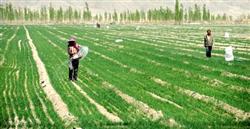
Spring management of wheat: focus on preventing and controlling the four major harms
How to manage the first spring irrigation and fertilization of wheat? The first spring irrigation and spring fertilization have a great impact on wheat yield. For example: if the wheat is too dense, too sparse, or lodging occurs in the later growth stage, it indicates that the timing of the first spring fertilization and irrigation was problematic. Another example: if the wheat stays green and ripens late, and the grains are shriveled and thin, that indicates your spring water and fertilizer use...
-
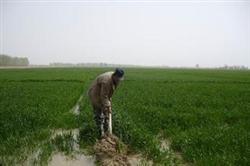
Early prevention and early treatment of wheat pests and diseases in spring is key
From the perspective of water conservation, it is recommended to water wheat twice in spring. For wheat fields that have normal growth after winter irrigation, if the soil moisture is good, the green-up water can be skipped. The first spring watering of wheat should be at the stem elongation to jointing stage (late March to early April), and the second spring watering at the heading to flowering stage (late April to early May). The specific watering time...
-
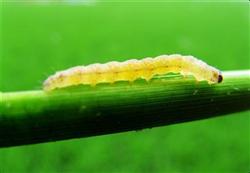
How to prevent and control common rice pests and diseases? A detailed practical guide
Rice bacterial leaf blight is a bacterial disease of rice leaves. The pathogen is Xanthomonas oryzae pv. oryzae in the prokaryote kingdom. The bacterium invades through wounds and water pores in the roots, stems and leaves, and reproduces and causes damage in the vessels of the vascular bundles. Seedlings and tillering stages are the most susceptible. Seedling leaves mostly show leaf blight symptoms. In susceptible varieties...
-
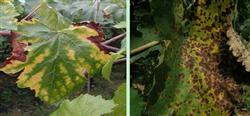
How to Prevent and Control Grape Leaf Blight? A Full Analysis of Practical Methods
Grape leaf blight starts on the lower leaves of the plant and gradually spreads upward. It can occur from June to November, with July to September being the peak period. It is severe in rainy years and in poorly managed vineyards. Prevention and control methods: 1. After autumn, thoroughly clear away fallen leaves in the vineyard to reduce or eliminate the overwintering source of the disease. During the grape growing season...
-
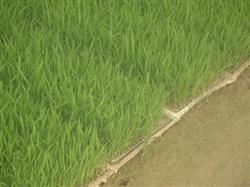
How to prevent and control pests and diseases during the rice seedling-raising period
During the rice seedling-raising stage, phenomena such as stunted rooting, yellowing, and stalled growth are prone to occur. For fields where stunted rooting has already occurred, drainage should be carried out immediately to increase temperature and aeration and reduce toxicity, and at the same time quick-acting nitrogen, phosphorus, and potassium fertilizers should be applied, along with supplementary micro-fertilizers, with zinc fertilizer being the key; where deficiency symptoms are present, the corresponding deficient nutrient fertilizer should be applied promptly. Withdraw the water and sun the field, or use circuitous...
-
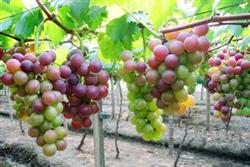
How to prevent small berries from appearing on grapes
Small grapes are formed due to seed abortion. According to observations, mature small berries have the same number of seeds as large berries, but the seeds of small berries are all at an immature stage, small and without kernels. If a berry contains 1 mature seed, the berry can be slightly larger; if it contains 2 mature seeds, the berry can grow to a medium size; if it contains...
-
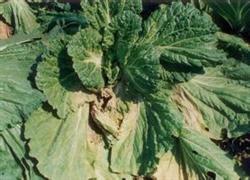
How to prevent and control Chinese cabbage virus disease? These medication guidelines must be remembered
Agricultural control 1. Choose disease-resistant varieties and avoid continuous cropping. Planting experience has proven that varieties with green stems and green leaves are generally relatively resistant to disease. Do not plant near other cruciferous crops and do not practice continuous cropping with cruciferous crops, which can effectively avoid the occurrence and spread of the disease; 2. Sow at the appropriate time but later, and cover to lower the temperature. According to planting experience, appropriately...
-
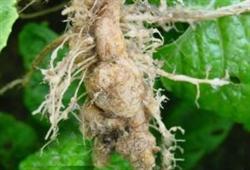
What medication works well to prevent and control clubroot in napa cabbage
Clubroot in napa cabbage refers to the formation of tumors of varying sizes and shapes on the roots of the cabbage; the tumors are smooth in the early stage and become cracked and rough later, and after cracking they are prone to infection by pathogens. Clubroot not only harms cabbage but also harms many crops in the cruciferous family. Clubroot can affect napa cabbage at the seedling stage, and in severe cases the plants die. This disease...
-
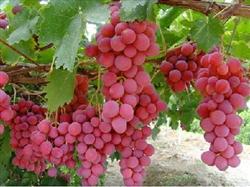
How to prevent and control grape diseases in the rainy season? A detailed guide to practical methods
The peak period for many diseases such as grape downy mildew, white rot and anthracnose is summer. The occurrence of downy mildew can cause grape leaf drop, dead branches, rotten fruit and even death. Therefore, China Agricultural Technology Network reminds you to strengthen vineyard management during the rainy summer season and to prevent and control diseases in good time. 1. Clean the vineyard: if in the vineyard...
-
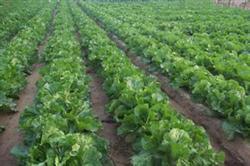
How to prevent diseases in autumn-planted Chinese cabbage? Early preparation is key
As the saying goes: turnips in the first fu, mustard in the second fu, and Chinese cabbage sown at the start of autumn. The season for planting autumn Chinese cabbage has arrived again, and it should be planted at the right time to ensure good quality and high yield. The key points of autumn Chinese cabbage cultivation techniques are introduced as follows: For variety selection, generally choose tall, late and mid-maturing varieties for plots with good fertilizer and water conditions; for fertile...
条件筛选