-
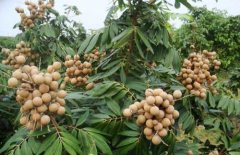
The Origin of the Longan, the Main Production Areas for Longan Cultivation in Taiwan, China, and the Classification of Varieties by Maturity Period
The longan belongs to the Sapindaceae family and is a subtropical evergreen fruit tree. It originated in mainland China, and its cultivation history in Taiwan, China is very early. It was already recorded in works such as the "Zhuluo County Gazetteer" in the 55th year of the Kangxi reign of the Qing Dynasty. It was brought over for cultivation when people from Fujian and Guangdong migrated to Taiwan, China. Although the longan cultivated in Taiwan, China was introduced from mainland China, because of its wide adaptability, strong reproductive capacity, and easy cultivation management, it has developed into the most localized economically cultivated fruit tree in Taiwan, China. What is popular now is the <a href="https://www.nongxun.net/zhongzhi/zz201903311855877506.html">method for growing longan in pots</a>.<br /> <br /> Taiwan, China is currently, besides mainland China and Thailand, one of the world's main longan production areas. According to the "Annual Report of Agricultural Statistics," in the 94th year of the Republic of China, the total cultivated area in Taiwan, China was 12,358 hectares, with an annual output of 102,790 metric tons. The main production areas are Tainan, Kaohsiung, Taichung, Nantou, and Chiayi, with Tainan having the most. The main cultivated variety is "Pink Shell," accounting for about 60% of the cultivated area.</span></span></div> <div> </div> <div> <span style="font-size: 14px;"><span style="font-family: georgia, serif;">The longan fruit tree has a very wide range of uses. Its wood is tough and its grain is beautiful, making it a superior material for furniture and carved products. Besides being eaten fresh, the fruit can be dried into longan and processed into canned longan, longan wine, longan paste, and so on. In recent years, the food industry has produced a great many processed products using dried longan flesh as a raw material, causing the consumption of dried longan flesh in Taiwan, China to increase year by year, which has been of great help in easing the pressure on Taiwan, China's fresh longan fruit market.</span></span></div> <div> </div> <div> <span style="font-size: 14px;"><span style="font-family: georgia, serif;">The longan cultivars grown in Taiwan, China are very mixed, mostly consisting of natural forest-like stands of many naturally variant plants planted together. To facilitate market transactions, they have long been divided into only 4 major categories according to fruit size and quality: Fuyan, Shuiyan, Tangsuanrouyan, and Niuzaiyan.</span></span></div> <div> </div> <div> <span style="font-size: 14px;"><span style="font-family: georgia, serif;">The Chiayi Agricultural Experiment Branch Station and Chung Hsing University have carried out variety improvement and identification and selection work. To date, surveys have discovered as many as more than 70 cultivated varieties. Although there are many varieties, cultivated varieties change quite rapidly. The 8 more important varieties can be divided into 3 categories according to maturity period: (1) early-maturing (fruit harvested in early to mid-July): Zhuqi Zaosheng, (2) mid-maturing (fruit harvested from late July to late August): Pink Shell, Large Pink Shell, Red Shell, Green Shell, Shuigong, (3) late-maturing (fruit harvested from September to mid-October): Fanlu Wansheng, October.</span></span></div> <div style="text-align: center;"> <span style="font-size: 14px;"><span style="font-family: georgia, serif;"><img alt="" src="/uploads/allimg/190615/2-1Z61510044Mc.jpg" style="width: 500px; height: 323px;" /></span></span></div>
-
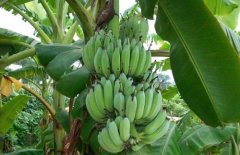
Banana tree varieties: Origin and characteristics of Musa ornata, Musa laterita, and Musa beccarii
The potted cultivation method for banana plants is a growing method that many people now know. In addition to being grown in gardens or pots, ornamental banana varieties with showy flowers have large, brightly colored blooms that are suitable for cut flowers use, and are even more distinctive when used in flower arrangements. Foliage varieties (
-
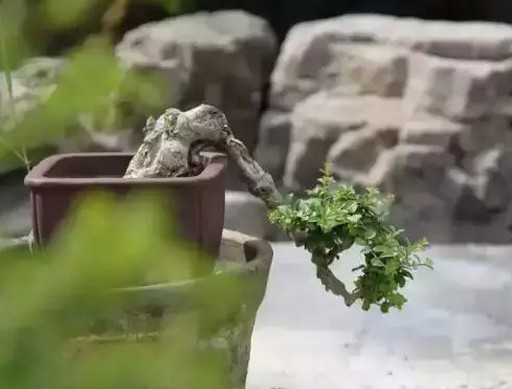
Cultivation of small trees for landscape bonsai originates from insights into how nature shapes trees
Bonsai starts from small seedlings, pruned once a year in the early stage, beginning with basic training; as time accumulates, the small tree naturally shows healed pruning cuts, and according to one's own needs and purposes, the tree's form is gradually perfected through continuous pruning. Young trees in the early stage have no degree of aging. Due to the characteristics of some tree species, such as Chinese privet (Ligustrum sinense)
-
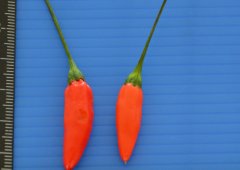
What are the origins and characteristic differences between facing-heaven chilies and lantern peppers?
There are relatively many factors influencing chili pepper cultivation profitability. Based on research by previous botanists and Kraft's (Kraft, 2013) records of wild species collected in Central and South America, it is inferred that the four currently important domesticated cultivated species of Capsicum are: C. annuum, C. chinese, C. frutescens,
-
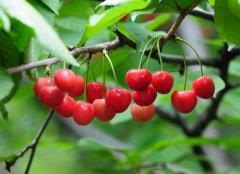
What Does the West Indian Cherry Taste Like? An Introduction to Its Place of Origin, Uses and Cultivar Characteristics
From California cherries and Northwest cherries in the Northern Hemisphere, then to New Zealand and Australia in the Southern Hemisphere. The largest sources of imported cherries in the country are mainly the United States, Canada and New Zealand-Australia, and the main production areas in the United States are California and the Northwest as the bulk. Generally speaking
-
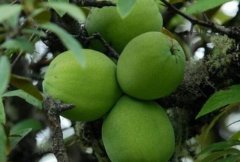
Introduction to the Origin, Uses, and Seed Sowing and Seedling Raising Methods of Tibetan Papaya
There is a unique papaya variety in our country, and that is the Tibetan papaya. This type of papaya is produced in Tibet, so it was named Tibetan papaya. Would you like to learn about it? Below we introduce it to you, and along the way also explain the seed sowing and seedling raising methods for papaya. Tibetan papaya
-
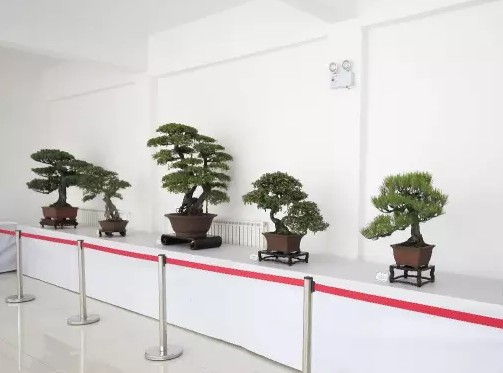
A Detailed Explanation of the Origin and Characteristics of Shanghai-Style Bonsai
Shanghai-style bonsai is one of the outstanding traditional arts of the Han Chinese people, and it is a bonsai art school named after Shanghai. It embodies literature and aesthetics, and integrates plant cultivation science, plant morphology, plant physiology, garden art, and plant modeling art into one. The distribution range of Shanghai-style bonsai is mainly in Shanghai and its surrounding counties and cities.
-
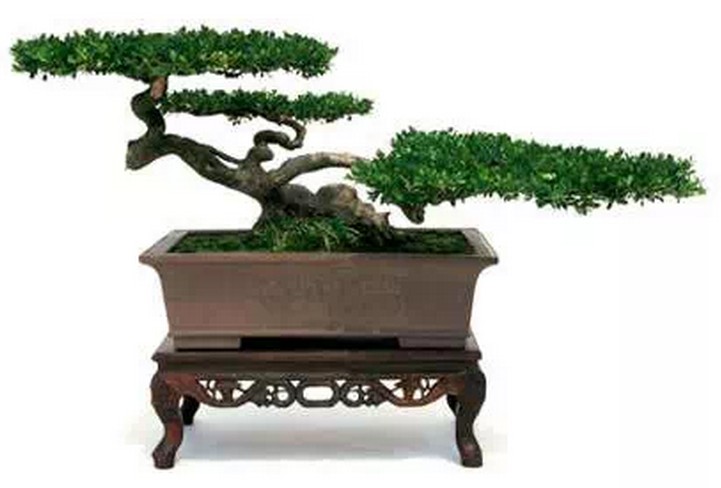
Historical Origins of the Formation of the Yangzhou-style Bonsai Art
The Yangzhou-style bonsai art took shape in the Ming Dynasty and matured in the Qing Dynasty. Drawing materials from nature and learning from the creator, it absorbed traditional Chinese humanistic values and aesthetic ideas, blending poetry, calligraphy, painting and technique into one. With a style that is delicate, elegant, graceful and expressive, and with the pruning and binding craft of "careful binding and fine pruning" and "one inch, three bends," it carries on the lineage of Chinese bonsai art
-

The Originator of Japanese Local Design, Shin Umehara: Using Design to Convey the Scenery of Production Areas
The Originator of Japanese Local Design | Shin Umehara: Designing for Local Places, Conveying the Scenery of Production Areas Through Design
-
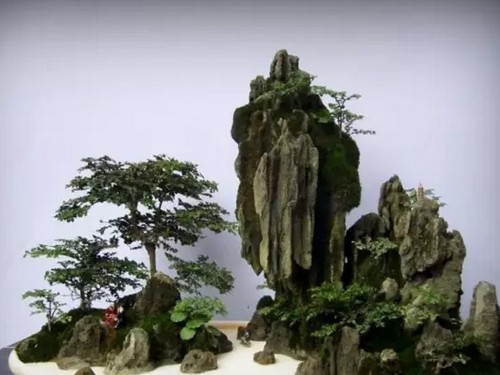
What are the historical origins of Sichuan-style bonsai art?
Sichuan has a suitable climate, dense vegetation, abundant resources, and outstanding people; since ancient times it has enjoyed the reputation of the "Land of Abundance," providing the conditions for bonsai development. Sichuan bonsai is a bonsai art school named after its region; it originated in the Five Dynasties period and has a long history. Sichuan bonsai is roughly divided into two artistic styles: western Sichuan and eastern Sichuan
条件筛选