-

Overview of the Implementation of the Subsidy Policy for Primary Processing of Agricultural Products at the Place of Origin
The potatoes we worked so hard to grow could not be sold right away, so we had no choice but to store them in crude earthen cellars. Because the storage conditions were so poor, sometimes we could only watch as the potatoes slowly sprouted and rotted. More than one farmer has reported similar situations. In fact, this is the reality of the difficulties faced in the primary processing of agricultural products at their place of origin in our country.
-
Favoring the rich instead of helping the poor betrays the original intent of targeted poverty alleviation
On the one hand, people who are obviously wealthy and should not be assisted are identified as poverty alleviation targets; on the other hand, a large amount of poverty alleviation funds is left sitting idle in accounts rather than being used to help those who are truly poor. Behind the seemingly chaotic poverty alleviation logic of Mashan County are actually tangled interests, a disregard for laws
-
How Can China's Agricultural Origin System Be Built by Market Means?
A few days ago, the Ministry of Commerce and other multiple departments jointly issued the "National Agricultural Product Market System Development Plan", proposing to initially build an agricultural product market system with Chinese characteristics by 2020. The plan is based on China's regional economic and social conditions, transportation locations, population distribution, and agricultural product circulation
-
China's total number of geographical indications of origin has reached more than 1,900
On June 15, the reporter learned from the General Administration of Quality Supervision, Inspection and Quarantine that as of the end of May this year, China's total number of geographical indications of origin had reached more than 1,900. Among the currently protected geographical indication products, there are also 15 foreign geographical indication products. According to the introduction, China's geographical indications of origin
-
Fresh wild lion's mane mushrooms hit the market, Zhumadian residents can taste an original-ecology delicacy
Recently, the Xinyang Specialty Soft-Shelled Turtle Village, located on the western section of Jinque Road in Zhumadian City, Henan, newly introduced fresh wild lion's mane mushrooms and fresh snow fungus. It is understood that with the Spring Festival approaching, these edible fungus products were all transported back from the cultivation site together with the logs, fresh and nutritious, and very much in line with consumer
-
How are agricultural product origin standards strictly controlled?
Since the beginning of this year, Yiyuan County in Shandong Province has taken safeguarding the quality and safety of crop agricultural products as its bottom line, closely focusing on agricultural transformation and upgrading and sustained increases in farmers' incomes, and has persisted in grasping with one hand the effective supply of major agricultural products while with the other hand grasping quality and safety supervision, vigorously promoting large-scale,
-
Unified tea safety standards benefit small-scale tea farmers
Tea did not originally come in decorated canisters or neat tea bags. It comes from the leaves of the Camellia sinensis plant, and more than 50 countries currently grow tea, but there are four main growing regions: China, India, Kenya and Sri Lanka. In these regions
-
Cotton farmer subsidies to be extended to the Yangtze and Yellow River regions, existing agricultural subsidies unchanged
The National Development and Reform Commission held a press conference on "the pilot reform of the cotton target price and market regulation." Zhou Wangjun, deputy director of the Price Department of the National Development and Reform Commission, said that cotton subsidies will be extended to the Yangtze and Yellow River production regions, and the existing agricultural subsidy policies will remain unchanged. When talking about
-
Cotton farmer subsidies to be extended to the Yangtze and Yellow River production areas, existing agricultural subsidies unchanged
China.com Finance, September 22 - The National Development and Reform Commission today held a press conference on the cotton target price reform pilot and market regulation. Zhou Wangjun, deputy director of the Price Department of the National Development and Reform Commission, said that cotton subsidies will be extended to the Yangtze and Yellow River production areas, and the original agricultural subsidy policies
-
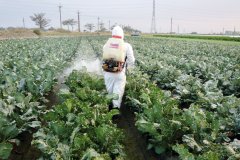
What causes plant pests and diseases? Tracing the origins of IPM crop production management techniques
IPM is not about setting absolute methods, but about finding the most optimized approach. Let's take a look together below. Cruciferous crops in their growth pattern often develop serious pests and diseases only near harvest time. Taking broccoli as an example, the head is covered by outer leaves, and pests easily hide within, leading to poor control
条件筛选