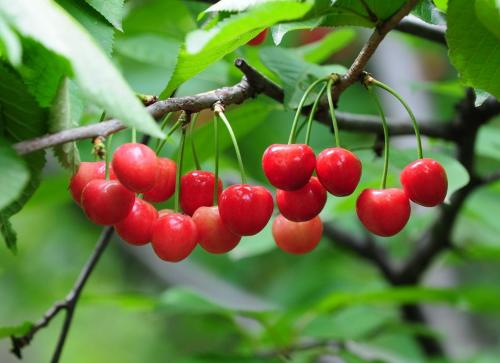
What Does the West Indian Cherry Taste Like? An Introduction to Its Place of Origin, Uses and Cultivar Characteristics
From California cherries and Northwest cherries in the Northern Hemisphere, then to New Zealand and Australia in the Southern Hemisphere. The largest sources of imported cherries in the country are mainly the United States, Canada and New Zealand-Australia, and the main production areas in the United States are California and the Northwest as the bulk. Generally speaking
From California cherries and Northwest cherries in the Northern Hemisphere, then to New Zealand and Australia in the Southern Hemisphere. The largest sources of imported cherries in the country are mainly the United States, Canada and New Zealand-Australia, and the main production areas in the United States are California and the Northwest as the bulk. Generally speaking, California cherries have relatively high sweetness, and with large production and prices that can be balanced, they are the variety most favored by local consumers. (Washington State cherries are grown in large quantities in the northern state of Washington and are the world-renowned Northwest cherries.) The current prospects for domestic cherries are relatively good!
West Indian cherry
Place of origin: The West Indian cherry is native to tropical America. The indigenous peoples of the Caribbean region of the West Indies were already cultivating and using it several hundred years ago, and it later spread from tropical America to Hawaii and India and then to other countries in tropical and subtropical regions around the world.
Uses of the West Indian cherry:
Besides the fruit being used to make various processed products such as juice, candied fruit, jam, jelly, pudding and vitamin C tablets as a nutritional source of vitamin C for the human body, because the plant grows quickly and vigorously, has a graceful tree shape, and has a long fruiting period, it can also be cultivated for environmental greening and beautification in gardens, hedgerows and bonsai, as well as for leisure (sightseeing) orchard cultivation, and is especially more suitable for garden cultivation in schools and parks.
The cultivated varieties of the West Indian cherry in Taiwan, China, originated in 1953 and 1954 (the 42nd and 43rd years of the Republic of China) and were introduced from Florida in the United States and Puerto Rico by Lin Pu and Cai Zhimo respectively, totaling four varieties: A1, A21, B17 and Florida. After trial planting, observation, domestication and selection, and distinguished according to their fruit flavor, the West Indian cherries currently cultivated in Taiwan, China, roughly fall into the following three types:
1. Sweet type: The ridges on the fruit surface are conspicuously raised, the flowers are light red, and the leaves are ovate (round leaves); it can be eaten fresh.
2. Sour type: The fruit surface is smooth, the flowers are light pink, and the leaves are long ovate (needle leaves); it is used for processing.
3. Sweet small-fruited type: The fruit is small, the fruit surface is smooth, and the flavor is bland; it is mostly used for garden ornamentation.
Although the above-mentioned West Indian cherry has a "sweet type," its taste is still slightly sour and is not as sweet as the real cherries sold on the market. There are differences among varieties or individual plants in vitamin C content, fruit size, depth of fruit color, degree of sourness and even yield per plant, so the type should be carefully selected according to management goals when planting.