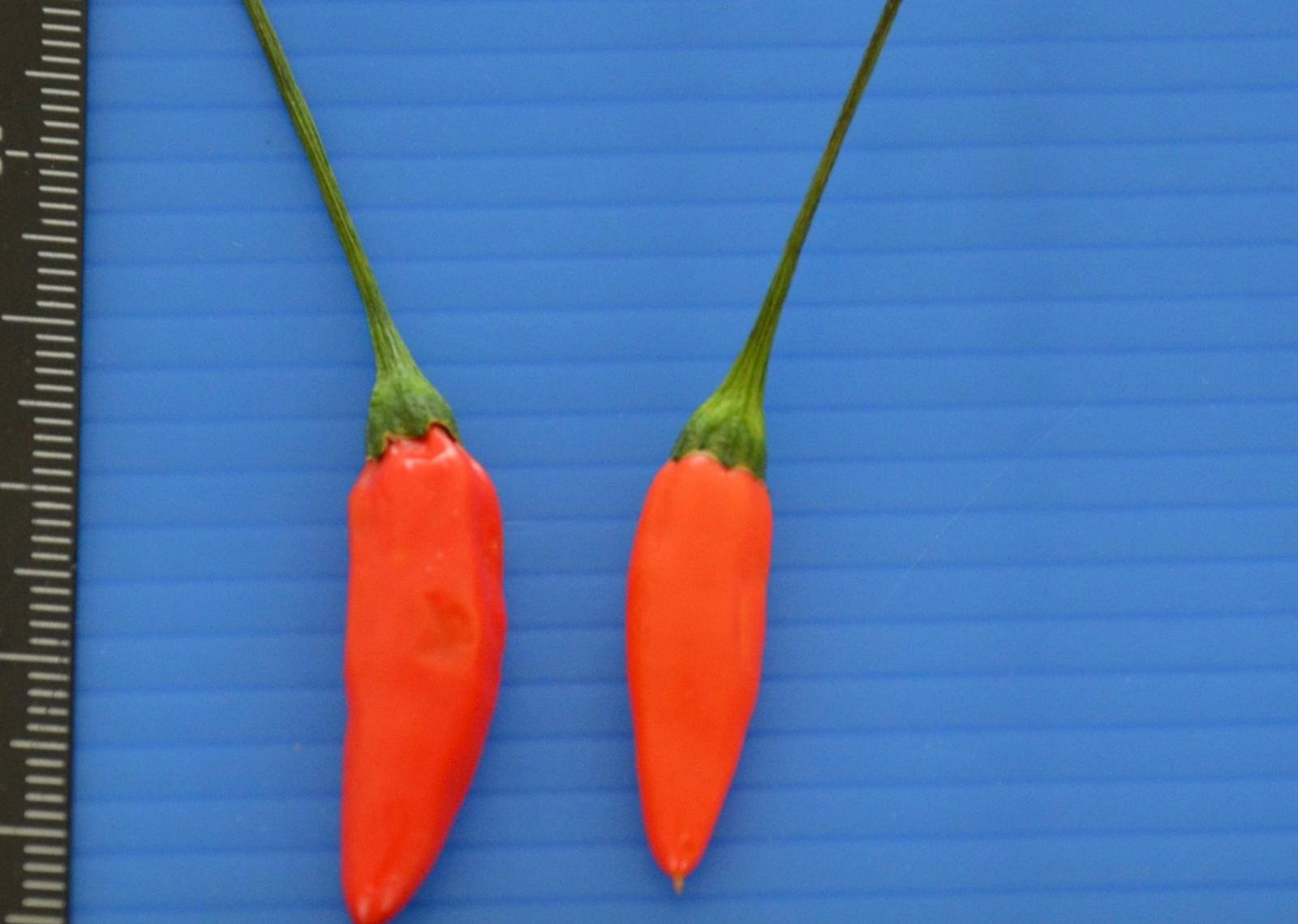
What are the origins and characteristic differences between facing-heaven chilies and lantern peppers?
There are relatively many factors influencing chili pepper cultivation profitability. Based on research by previous botanists and Kraft's (Kraft, 2013) records of wild species collected in Central and South America, it is inferred that the four currently important domesticated cultivated species of Capsicum are: C. annuum, C. chinese, C. frutescens,
There are relatively many factors influencing chili pepper cultivation profitability. Based on research by previous botanists and Kraft's (Kraft, 2013) records of wild species collected in Central and South America, it is inferred that the four currently important domesticated cultivated species of Capsicum are: C. annuum, C. chinese, C. frutescens, C. baccatum, among which three -- C. annuum, C. chinese, C. frutescens -- may have come from the same wild chili pepper ancestor, while the ancestor of C. baccatum is different. In modern times, scholar Walsh (Walsh, 2001) used molecular biotechnology to analyze the chloroplast gene atpB-rbcL spacer on chili pepper paraffin specimens. The phylogenetic tree classification results obtained through nucleic acid sequencing are consistent with the results of earlier protein-level isozyme analysis, both supporting the inferences of Andrews and other scholars.
Capsicum spp. are commonly known in English based on fruit shape or representative variety names.
Chili pepper germplasm and representative varieties
Regarding the distribution and representative chili pepper types of these four domesticated Capsicum species that are the most widely cultivated or used in breeding globally, they are described separately as follows:
1. The germplasm of C. annuum originates from the wild species C. annuum var. glabriusculum (also commonly known as bird pepper) from the Mexico region, and was later domesticated and cultivated to become the largest and most widespread economic species globally. C. annuum has an enormous number of germplasm accessions. According to the USDA National Plant Germplasm System, the total number of Capsicum germplasm accessions is 6,194, of which C. annuum accounts for 4,028, about 65%. The genebank of AVRDC - The World Vegetable Center is currently the unit preserving the largest number of Capsicum germplasm, with 8,165 Capsicum accessions, about 11% of the global total, of which C. annuum accounts for 5,537, about 66%. Therefore C. annuum can be called the largest Capsicum species.
Therefore it is not difficult to see that C. annuum covers all sweet pepper varieties and the vast majority of economically cultivated chili pepper varieties. Its fruit shape varies greatly (fruit length 0.5cm to 20cm, fruit weight 1g to 250g), with fruit shapes including round, pumpkin-shaped, conical, long, bell-shaped, etc. C. annuum chili peppers have specific names according to fruit shape or particular wild species, such as cayenne pepper, cherry pepper, long (green) pepper, pimento pepper, aji, jalapeno, pasilla, piquin, serrano bird pepper (C. annuum var. glabriusculum), etc.
2. The germplasm of C. frutescence is distributed in the low-altitude tropical Americas from Colombia and Ecuador to El Salvador. Its Chinese common name is "facing-heaven chili", and its representative variety is "Tabasco", famous for Mexican hot sauce. The fruits of facing-heaven chilies are relatively small, mostly round or long oval. The vast majority of C. frutescence are pungent chili peppers, except for a very few that are not spicy due to mutations in the pungency gene. The English common name of C. frutescence is bird pepper, or Tabasco pepper.
The fruit of the Capsicum frutescens var. "Tabasco" cultivar.
3. The germplasm of C. chinense is distributed in the Amazon region. Its Chinese common name is "lantern pepper", and as the name suggests, its fruit takes a lantern shape. Lantern peppers are known for their pungency, with "habanero" being a classic variety; but the Bhut jolokia, famous for being extremely pungent, is an interspecific hybrid of C. chinense and C. frutescens. C. chinense is an excellent raw material for making high-pungency, flavorful hot sauces.
4. The germplasm of C. baccatum is distributed in Bolivia, Brazil, Peru, Uruguay and Argentina. The corolla of C. baccatum has yellow or green spots, making it very easy to distinguish from other chili pepper species. The fruit skin of C. baccatum is noticeably wrinkled; small fruits under 10g are round or long oval in shape, while slightly larger fruits over 25g are long pendant-shaped or papaya-shaped. The fruit has a unique aroma, with pungency ranging from mildly spicy to extremely spicy; the representative variety is "Aji", with a pendant-shaped fruit.
The fruit of the domesticated cultivated variety Capsicum baccatum var. "galapagoense".
The pungent compounds of chili peppers, "capsacinoids", contain at least more than 10 isomers, among which capsaicin (abbreviated CAP) and dihydrocapsaicin (abbreviated DHCAP) are the main components responsible for pungency, accounting for about 90% of total capsaicinoids.
The biosynthesis of capsaicin involves 2 main metabolic pathways. One is phenylalanine metabolism, which produces the precursor substance for vanillin; the precursor substance of the other pathway is valine, used to produce the side-chain fatty acid. The former two are catalyzed by capsaicin synthase to synthesize capsaicin.
Cross-section of the fruit of Capsicum baccatum var. "galapagoense".
The main pungent components are capsaicin and dihydrocapsaicin, both colorless, odorless compounds, specifically present on the upper epidermis of the placenta where seeds are borne -- the septum -- and stored in the form of oil droplets. Therefore, the white membrane next to the fruit's placenta is the most pungent part of the chili pepper; the way to eat it to reduce pungency is to carefully remove the nearly white septum and eat the brightly colored flesh portion.
In modern times, many medical scientists have conducted research on the health potential of capsacinoids, and have verified that they have special effects such as anti-inflammatory or analgesic properties. Regarding the health uses of highly pungent capsacinoids (CAP or DHCAP), or low-pungency capsinoids, pharmacological and clinical trials are still ongoing.