A Detailed Explanation of the Origin and Characteristics of Shanghai-Style Bonsai
Shanghai-style bonsai is one of the outstanding traditional arts of the Han Chinese people, and it is a bonsai art school named after Shanghai. It embodies literature and aesthetics, and integrates plant cultivation science, plant morphology, plant physiology, garden art, and plant modeling art into one.
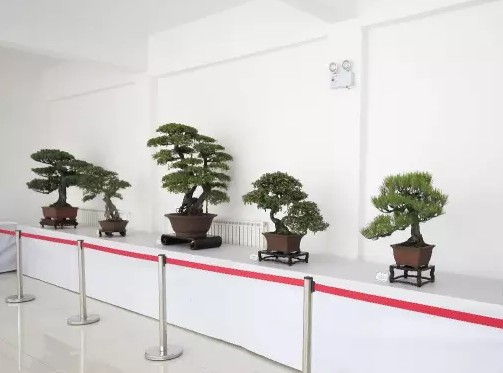
The distribution range of Shanghai-style bonsai is mainly in Shanghai and its surrounding counties and cities. Shanghai is China's largest industrial and commercial city, and also one of the largest cities in the world. Shanghai is located in the delta region of the lower reaches of the Yangtze River, where the Yangtze River flows into the sea, with convenient land and water transportation. The climate is mild, the four seasons are distinct, and it has the characteristics of a maritime climate. The superiority of natural conditions and the development of economy and culture are the main factors in the formation of the Shanghai-style bonsai school.
According to research, Shanghai bonsai also has a history of more than 400 years. It gathers the strengths of many schools. On the basis of studying and researching China's traditional bonsai art, it learns from nature and deliberately seeks innovation, gradually forming its own style and becoming Shanghai-style bonsai art.
Celebrate the motherland's birthday and enjoy Shanghai-style bonsai. But where did Shanghai-style bonsai originate, what is its style, how many masters are there, and what achievements have been made? Let us explore and feast our eyes!
The Bonsai Garden of Shanghai Botanical Garden was officially established and opened to the public in 1978, covering an area of 4 hectares. As early as 1954, when Longhua Nursery (the predecessor of Shanghai Botanical Garden) was founded, the bonsai garden had already collected and created a large number of bonsai and established a bonsai garden, thus becoming the birthplace of Shanghai-style bonsai. At present, the garden gathers thousands of fine bonsai, mainly Shanghai-style bonsai.
Shanghai-style bonsai inherits the essence of Chinese painting art, "learning from nature, ancient and picturesque," and absorbs the strengths of other traditional schools, creating its own school of bonsai art.
The characteristics of Shanghai-style bonsai are that the tree species used are mainly evergreen pines and cypresses such as five-needle pine, true cypress, black pine, and Buddhist pine. In production, metal wire is used to wrap branches for shaping, with careful binding and fine pruning to construct the image. In the distribution of branch layers, it discards artificiality and seeks simplicity, returning to authenticity. In the treatment of form, large and small are matched, and uniformity is rejected. Therefore, the works are well-arranged and orderly in expression, natural and generous, yet with a profound artistic conception. In addition to commonly used pine and cypress materials, Shanghai-style bonsai also uses deciduous colorful tree species such as Japanese apricot, red maple, Chinese elm, Chinese fringe tree, and Chinese hackberry, as well as flowering and fruiting bonsai such as firethorn, golden bullet tree, Caragana, pomegranate, and wisteria, to create bonsai scenes like Chinese literati paintings and freehand paintings. In the presence of such poetic and picturesque bonsai, people will be filled with infinite reverie.
Shanghai Botanical Garden has produced four bonsai masters in total: Mr. Yin Zimin, one of the first national bonsai masters who made important contributions to the formation and development of Shanghai-style bonsai art, especially skilled in tree stump bonsai production; Mr. Hu Rongqing, especially skilled in tree stump bonsai production; Mr. Shao Haizhong, known for large and medium-sized tree stump bonsai; and Mr. Wang Yiding, a master of landscape bonsai. The four masters can be called national treasures, and they made immeasurable contributions to laying the foundation for the national status of Shanghai-style bonsai and even making it famous in the world.
Rock bonsai is also the essence of Shanghai-style bonsai. Rock bonsai is also called three-dimensional landscape painting. Rock bonsai integrates the essence of the magnificent rivers and mountains of nature, shrinking the beautiful image of green mountains and waters into one pot. It not only has a beautiful painting-like scene but also has an elegant artistic conception. The bonsai uses natural rocks, and by relying on the natural shapes of the rocks, outlines the basic contour of the landscape bonsai. The rocks sit in a flat pot. In the pot, there may be still water like a mirror, reflecting the rocks and composing a landscape picture; or dry flat ground and vast wilderness, returning nature to one appearance. Compared with tree stump bonsai, landscape bonsai has a larger capacity, often with the artistic conception of "a spoonful of water contains the beauty of rivers and lakes, and a foot of mountain flourishes in the autumn of heaven and earth."
At the two world-class bonsai events held in China in 2013: the World Bonsai Friendship Federation Convention and the World Bonsai Convention, the bonsai sent by Shanghai Botanical Garden all won the highest awards, showing the strength of Shanghai-style bonsai to the world.