The Origin of the Longan, the Main Production Areas for Longan Cultivation in Taiwan, China, and the Classification of Varieties by Maturity Period
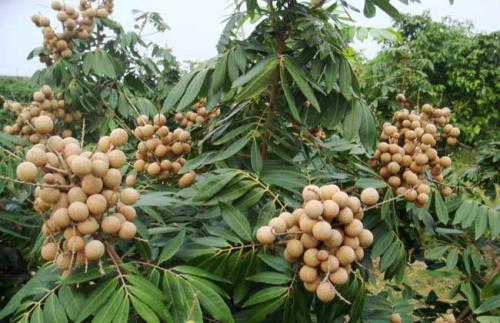
The longan belongs to the Sapindaceae family and is a subtropical evergreen fruit tree. It originated in mainland China, and its cultivation history in Taiwan, China is very early. It was already recorded in works such as the "Zhuluo County Gazetteer" in the 55th year of the Kangxi reign of the Qing Dynasty. It was brought over for cultivation when people from Fujian and Guangdong migrated to Taiwan, China. Although the longan cultivated in Taiwan, China was introduced from mainland China, because of its wide adaptability, strong reproductive capacity, and easy cultivation management, it has developed into the most localized economically cultivated fruit tree in Taiwan, China. What is popular now is the <a href="https://www.nongxun.net/zhongzhi/zz201903311855877506.html">method for growing longan in pots</a>.<br />
<br />
Taiwan, China is currently, besides mainland China and Thailand, one of the world's main longan production areas. According to the "Annual Report of Agricultural Statistics," in the 94th year of the Republic of China, the total cultivated area in Taiwan, China was 12,358 hectares, with an annual output of 102,790 metric tons. The main production areas are Tainan, Kaohsiung, Taichung, Nantou, and Chiayi, with Tainan having the most. The main cultivated variety is "Pink Shell," accounting for about 60% of the cultivated area.</span></span></div>
<div>
</div>
<div>
<span style="font-size: 14px;"><span style="font-family: georgia, serif;">The longan fruit tree has a very wide range of uses. Its wood is tough and its grain is beautiful, making it a superior material for furniture and carved products. Besides being eaten fresh, the fruit can be dried into longan and processed into canned longan, longan wine, longan paste, and so on. In recent years, the food industry has produced a great many processed products using dried longan flesh as a raw material, causing the consumption of dried longan flesh in Taiwan, China to increase year by year, which has been of great help in easing the pressure on Taiwan, China's fresh longan fruit market.</span></span></div>
<div>
</div>
<div>
<span style="font-size: 14px;"><span style="font-family: georgia, serif;">The longan cultivars grown in Taiwan, China are very mixed, mostly consisting of natural forest-like stands of many naturally variant plants planted together. To facilitate market transactions, they have long been divided into only 4 major categories according to fruit size and quality: Fuyan, Shuiyan, Tangsuanrouyan, and Niuzaiyan.</span></span></div>
<div>
</div>
<div>
<span style="font-size: 14px;"><span style="font-family: georgia, serif;">The Chiayi Agricultural Experiment Branch Station and Chung Hsing University have carried out variety improvement and identification and selection work. To date, surveys have discovered as many as more than 70 cultivated varieties. Although there are many varieties, cultivated varieties change quite rapidly. The 8 more important varieties can be divided into 3 categories according to maturity period: (1) early-maturing (fruit harvested in early to mid-July): Zhuqi Zaosheng, (2) mid-maturing (fruit harvested from late July to late August): Pink Shell, Large Pink Shell, Red Shell, Green Shell, Shuigong, (3) late-maturing (fruit harvested from September to mid-October): Fanlu Wansheng, October.</span></span></div>
<div style="text-align: center;">
<span style="font-size: 14px;"><span style="font-family: georgia, serif;"><img alt="" src="/uploads/allimg/190615/2-1Z61510044Mc.jpg" style="width: 500px; height: 323px;" /></span></span></div>
Longan belongs to the Sapindaceae family and is a subtropical evergreen fruit tree. It originated in mainland China and has a very early cultivation history in Taiwan, China. As recorded in the "Zhuluo County Gazetteer" in the 55th year of the Kangxi reign of the Qing Dynasty, it was brought over and cultivated by people from Fujian and Guangdong when they migrated to Taiwan. Although the longan cultivated in Taiwan, China was introduced from mainland China, due to its wide adaptability, strong reproductive capacity and easy cultivation management, it has developed into the most localized economic fruit tree cultivated in Taiwan, China. What is popular now is the longan potted planting method.
Taiwan, China is currently the world's main longan production area besides mainland China and Thailand. According to the "Agricultural Statistics Annual Report", in the 94th year of the Republic of China, the cultivation area in Taiwan, China was 12,358 hectares, with an annual output of 102,790 metric tons. The main producing areas are Tainan, Kaohsiung, Taichung, Nantou and Chiayi, with Tainan being the largest. The main cultivated variety is "Fenke", accounting for about 60% of the cultivation area.
Taiwan, China is currently the world's main longan production area besides mainland China and Thailand. According to the "Agricultural Statistics Annual Report", in the 94th year of the Republic of China, the cultivation area in Taiwan, China was 12,358 hectares, with an annual output of 102,790 metric tons. The main producing areas are Tainan, Kaohsiung, Taichung, Nantou and Chiayi, with Tainan being the largest. The main cultivated variety is "Fenke", accounting for about 60% of the cultivation area.
The longan fruit tree has a wide range of uses. Its wood is tough and its grain is beautiful, making it a superior material for furniture and carved products. Besides being eaten fresh, the fruit can be baked into dried longan and processed into canned longan, longan wine, longan paste, etc. In recent years, the food industry has produced a great many processed products using longan aril as a raw material, which has increased the consumption of dried longan aril in Taiwan, China year by year and has been of great help in relieving the pressure on the fresh longan fruit market in Taiwan, China.
The cultivated longan varieties in Taiwan, China are very mixed, mostly forming a natural forest appearance of many naturally mutated plants planted together. To facilitate market transactions, they have long been divided into only 4 major categories based on fruit shape, size and quality: Fuyan, Shuiyan, Tangsuanrouyan and Niuzaiyan.
The Chiayi Agricultural Experiment Station and Chung Hsing University have engaged in variety improvement and selection and identification work, and so far more than 70 cultivated varieties have been found through surveys. Although there are many varieties, the cultivated varieties change quite rapidly. The 8 more important varieties can be divided into 3 categories according to maturity period: (1) early-maturing (fruit harvested in early to mid-July): Zhuqi Zaosheng; (2) mid-maturing (fruit harvested from late July to late August): Fenke, Dafenke, Hongke, Qingke, Shuigong; (3) late-maturing (fruit harvested from September to mid-October): Fanlu Wansheng, Shiyue.