-
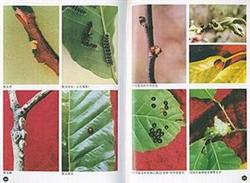
How to prevent and control chestnut pests? A detailed guide to practical control methods
1. Chestnut gall wasp The chestnut gall wasp, also called the chestnut tumor wasp, has a dark brown head and abdomen in the adult stage, filiform brown antennae, and a swollen, jet-black thorax. It lays eggs inside buds from June to July, and the larvae grow and overwinter inside the buds. In spring, when the buds sprout and produce short shoots, the affected branches or leaf stalks swell into galls (tumors), causing the branches and leaves to wither and die and weakening the tree...
-
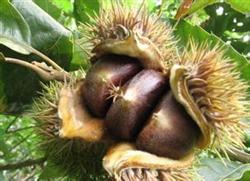
How to prevent and control empty burs in chestnut? These methods are very practical
Chestnut "empty burs" is also called "empty bur", and the empty bur rate can reach 30%-90%, affecting chestnut yield. The main causes of empty burs in chestnut are: (1) poor pollination and fertilization during the chestnut flowering period. (2) boron deficiency and available phosphorus deficiency in the soil. (3) the influence of other factors. First, variety: different varieties have different numbers of female and male inflorescences and consume different nutrients, so the empty bur rate also differs. The...
-
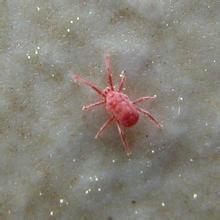
What are the control methods for chestnut spider mites?
The chestnut spider mite, also known as the conifer small claw mite, damages chestnut leaves, causing them to lose chlorophyll and develop small yellowish-white spots; in severe cases the leaves scorch and turn brown, resulting in reduced yield. It overwinters as winter eggs laid on the leaf scars, rough bark crevices and branching points on the underside of 1- to 4-year-old branches, and begins hatching in late April to early May of the following year, which coincides with the chestnut bud-break period...
-

How to Plant Sugarcane to Increase Yield? A Detailed Guide to Practical Planting Methods
How to Increase Sugarcane Yield
-
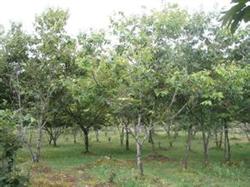
Key Pest and Disease Control Methods and Techniques for Chestnut
1. Select good varieties and prepare enough scion wood. Select good varieties. For the improvement of chestnut orchards, the three new varieties Dahongpao, Qingmaozao and Hongmaozao should be selected. These new varieties have been trial-planted in our city and have the characteristics of early fruiting, high quality, high yield, large fruit and strong stress resistance, and are suitable for promotion and planting throughout the city. Scion collection and storage...
-
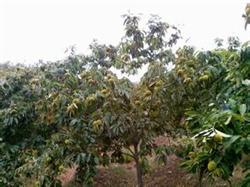
How to save water when growing chestnuts on hillsides? Four methods to teach you
1. Deep plowing to improve the soil and heavy application of organic fertilizer. Because hillside chestnut orchards are often left unmanaged, with severe soil erosion and extremely low soil fertility, measures should be taken to build up soil fertility. Immediately after harvesting the fruit that year, deep plow to improve the soil. 2. Foliar topdressing after fruit harvest. Timely foliar topdressing after fruit harvest can both ensure that the leaves drop at the right time, ...
-
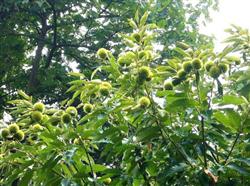
Chestnut Pest and Disease Prevention and Control Methods and Technical Key Points
In Anhui Province, chestnuts are mainly distributed in the mountainous areas of southeastern and western Anhui. Since the 1990s, they have also been developed on a large scale in the Jianghuai hilly region. The main chestnut-producing counties (cities) include Jinzhai, Huoshan, Shucheng, Yuexi, Guangde, Ningguo, Taihu, and others. There are about 150 species of pests and diseases harming chestnuts in our province, with common and severe occurrences affecting chestnuts...
-
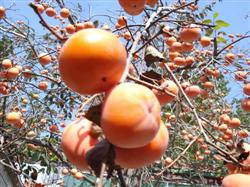
Detailed Explanation of Fertilization Techniques for Persimmon Orchards: Master Scientific Fertilization Methods
The main cultivation and management techniques are: 1. Implement the "Three Improvements" 1.1 Improve the orchard site: The vast majority of mature mountain persimmon orchards have terraces with no ridge in front and no ditch behind, and the terrace surface is low in front and high in back, causing severe soil and water erosion and exposed root systems. To improve the orchard site, the terrace surface of the persimmon orchard should be shaped with a ridge in front and a ditch behind, with the front ridge 10-15 cm high...
-
How to prevent and control persimmon tree diseases? These two methods are very practical
The main pests and diseases that persimmon trees are prone to include: persimmon angular leaf spot, circular leaf spot, anthracnose, black spot, leaf blight, powdery mildew, Eumeta variegata, Japanese mealybug, tea tussock moth, Maladera ovata, red wax scale, Homona magnanima, and small black slug moth, etc. Control methods: (1) Remove diseased fallen leaves and burn them; at the early stage of the disease, spray Bordeaux mixture, zineb, carbendazim or any one of these fungicides several times; when powdery mildew is severe, spray triadimefon. (2) Use light traps to kill adult insects; during the larval or nymph stage, spray dichlorvos, trichlorfon, fenitrothion or any one of these insecticides.
-
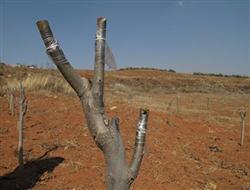
A detailed guide to sweet persimmon grafting techniques: methods and key points made easy to understand
Sweet persimmon completely loses its astringency while still on the tree, is convenient to eat, simple to manage, and highly resistant to stress, which has drawn increasing attention from fruit growers and favor from fruit merchants. To make sweet persimmon cultivation large-scale, industrialized, and market-oriented, the key grafting techniques for sweet persimmon nursery stock propagation are presented to readers here. Sweet persimmon grafting uses the wood-bearing...
条件筛选