-
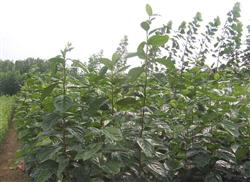
What are the methods for safely overwintering young persimmon trees?
Young persimmon trees have poor cold resistance and often suffer from winter dieback of shoots, so effective measures must be taken to ensure their safe overwintering. 1. Water early with frozen water. In mid-to-late October before the persimmon trees shed their leaves, irrigate fully with frozen water; a few days later, plow, turn and harrow the soil, which can reduce the frozen layer and ensure the roots' water needs. 2. Mound soil for cold protection. Before the freeze...
-
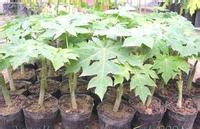
How to choose papaya seedlings? Master these methods to select high-quality, good seedlings
To grow papayas, you must first choose good seedlings. Look, these fruits are growing pretty well, aren't they? When choosing seedlings back then, there were actually many little tricks. Reporter: Hello, viewers and friends. Beside me are two papaya plants. One bears long-shaped fruit, and the other bears round fruit. Both plants are growing well. But if you ask which one is better...
-
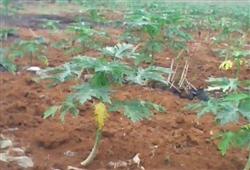
Key Points of Xuanmu Gua (Chinese Quince) Planting Techniques and Management Methods
Base fertilizer is applied during deep plowing of the orchard in late September, mainly using barnyard manure and human excrement and urine, mixed with quick-acting N fertilizer. For young trees, apply 15-30 kg of base fertilizer per tree; for mature trees, apply 30-50 kg per tree. Topdressing: before bud break (late March to early April), apply 130 g of urea and 400 g of NPK compound fertilizer per tree in holes or furrows. Spray 0.3... once each 2 weeks before and after flowering.
-
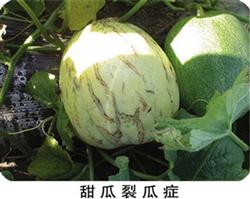
What are the control methods for small fruit and fruit cracking in melons?
As temperatures rise, melons grow rapidly, and the critical period for field management has arrived. Recently, some farmers have reported that small fruit and fruit cracking occur during melon growth. How can this be solved? To prevent small fruit, strengthen fertilizer and water management in the early stage to promote vegetative growth. According to variety characteristics and cultivation...
-
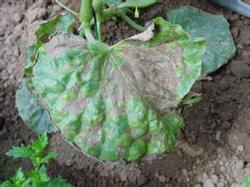
How to treat bacterial leaf blight in greenhouse melons? Detailed control methods
This disease is a bacterial disease that mainly damages leaves, petioles and young melons, and can cause damage throughout the entire growth period. When infected at the seedling stage, the cotyledons show water-soaked yellow sunken spots. When leaves are infected, the early stage shows light green water-soaked spots on the underside of the leaves, and gradually the leaf surface turns into light brown necrotic lesions. After drying, the lesion area becomes brittle and perforated. To prevent this disease...
-
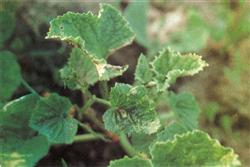
What to Do When Open-Field Melons Get Mosaic Virus Disease? Symptom Identification and Control Methods
Symptoms: In the early stage of the disease, the leaves show mosaic mottling interwoven with yellow-green and dark green, the leaves become smaller, and the leaf surface is wrinkled, uneven, and curled. The main vine is distorted and stunted, the plant is dwarfed, the melons are small, and the fruit surface has mottled patches of alternating light and dark, or slight bump-like protrusions. Causes: The incidence of mosaic virus disease has been relatively high in recent years...
-
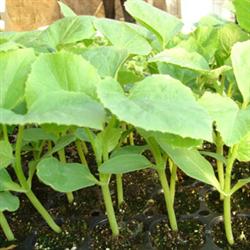
Open-field sowing methods and technical key points for melons
Open-field melon sowing method: open-field melons are grown using plastic film mulching with a water-and-dry bed system. Generally, the water bed is 0.5 m wide, the dry bed is 1.5-1.8 m, and the furrow is 20 cm deep. A north-south orientation of the beds is best. Before forming the ridges, open a small furrow (8-10 cm) with a small plow on both sides of the dry bed at 30 cm from the ridge edge line and apply organic fertilizer. The ridge height is 20 cm, the top opening of the water furrow is about 50 cm wide, and the depth is...
-
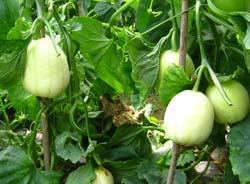
What are the pruning methods for muskmelon?
I. Pruning methods for early-to-mid-maturing varieties. Early-to-mid-maturing varieties generally have a single fruit weight below 1.5 kg and a maturity period of 35-42 days. Depending on the growing season and environment, the following pruning methods can be adopted. 1. Winter-spring crop cultivation in a winter-warm greenhouse. Generally, the method of using the mother vine as the main vine and leaving fruit on a single vine in two layers is adopted, that is...
-
What to Do About Potassium Deficiency in Melons? Detailed Prevention and Control Methods
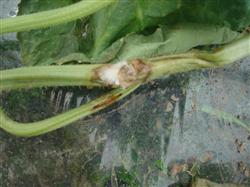
While inspecting the growth of watermelons and melons, a few melon plants at the flowering and fruiting stage were found to be affected by sclerotinia rot. This disease generally occurs sporadically and has no obvious impact on melon production. In a few greenhouses, however, the incidence was more severe, causing dead vines and rotten melons and affecting yield. Prevention and control methods: (1) Pay attention to ventilation and dehumidification, and promptly remove old leaves at the base during the growing period...
-
Causes and Control Methods of Deformed Melon Fruits
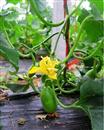
For melons raised in greenhouses and grown with double-film cultivation, the fruit-setting rate is not high, and flower and fruit drop is very serious. According to surveys, some drop rates reach as high as over 70%, especially for thick-skinned melons, where the drop rate is even higher. This affects both yield and quality, delays the melon's time to market, and reduces profits. The reasons are: first, too much base fertilizer was applied...
条件筛选