-
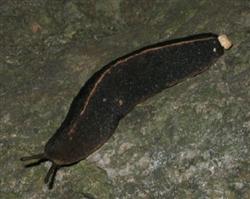
Pest and Disease Control Methods and Technical Key Points for Dragon Fruit
Because dragon fruit is a wild plant and has not been domesticated for long, it has no specific pests or diseases. To date, no fatal insect pests have been found. As for diseases, it can become infected with pathogenic bacteria or viruses when its resistance weakens after transplanting or injury, but no local or widespread infectious diseases have been found. In terms of insect pests, during the branch growth period...
-
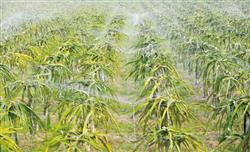
How to Water Dragon Fruit Properly? A Detailed Guide to Planting and Watering Methods
How should dragon fruit be watered when growing it? What should be noted when watering dragon fruit? We also ask netizens with dragon fruit growing experience to share their advice. Dragon fruit has strong drought resistance and tolerance, but this does not mean dragon fruit does not need watering. Therefore, Zhongdiwang has compiled the watering methods and precautions for dragon fruit, listed in detail below...
-
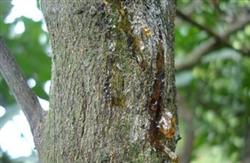
What are the control methods for citrus gummosis?
What is citrus gummosis? How do you control citrus gummosis? We also ask netizens with citrus growing experience to help explain. Citrus gummosis, also called resin disease, is a fungal disease, and once it occurs it is very difficult to control. The causes of gummosis are: planting too densely, causing shade and poor ventilation and light penetration, heavy clay soil...
-
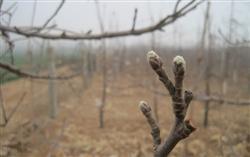
Spring notching and branch-bending management methods for 1-3 year old young apple trees
How should 1-3 year old young apple trees be notched and branch-bent in spring? Are there any apple growers who can help explain? As prices rise, the economic value of apples has also increased, and many farmers have joined the apple growing boom. Therefore, Zhongdiwang has compiled the spring notching and branch-bending methods for 1-3 year old young apple trees,...
-
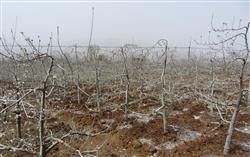
What are the methods for improving the quality of Red Fuji apples?
How can the quality of Red Fuji apples be improved? We also ask netizens with experience growing Red Fuji apples to help explain. High-quality Red Fuji apples require a well-formed fruit shape, a noticeably tall and cylindrical profile, a smooth and clean fruit surface, bright and vivid color, moderate fruit size, moderate crispness and firmness, good fruit flavor, high soluble solids content, and at the same time low pesticide residue...
-
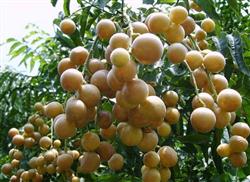
How to fertilize heart-shaped wampee? Detailed scientific fertilization methods
How to fertilize heart-shaped wampee properly? We ask netizens with wampee growing experience to help introduce it. Heart-shaped wampee is waxy yellow or brownish yellow, glossy, with large fruit; a single fruit weighs 9-14 grams; the flesh is yellow-white, sweet with a honey aroma or sweet with slight sourness, crisp and juicy; the edible rate is 47%-62%, and the soluble solids content is 14.5%, thereby... ⟧3⟧How to fertilize heart-shaped wampee properly? We ask netizens with wampee growing experience to help introduce it
-
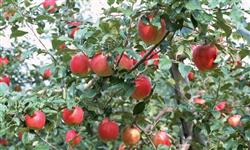
Red-Fleshed Red Fuji Apple Planting Methods and Technical Key Points
How are Red-Fleshed Red Fuji apples planted? What management methods are there for Red-Fleshed Red Fuji apples? We would also like netizens with planting technology experience to help introduce them. Red Fuji apples are deeply loved by people for being crisp, sweet and delicious, but Red-Fleshed Red Fuji apples are a late-maturing variety with a relatively late market time, and they only gradually mature and come to market after November...
-
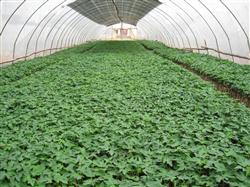
How to grow papaya trees so they thrive? A detailed guide to cultivation methods
How do you grow papaya well? Here is a detailed introduction to the planting method. To grow papaya trees, you can refer to the following techniques: 1. Choose excellent papaya tree varieties: varieties suitable for the local area include Yizhou papaya, Yipinhong papaya, etc., and they can pollinate each other. 2. Papaya tree planting site selection method: it is best to choose deep, fertile soil with good drainage and neutral or slightly alkaline loam or sandy loam. Plant spacing 2.5 m x 4 m. Before planting, dig planting holes 1 m long, 1 m wide, and 0.8 m deep, and apply 10 kg of decomposed organic fertilizer per hole. Before planting, select 2-3 year old strong seedlings of good varieties. Both spring and autumn planting are acceptable. Spring planting is best before the seedlings bud, and autumn planting is carried out from leaf fall until the soil freezes. Autumn planting wounds the roots less easily, has a high survival rate, and grows well. When planting, choose grafted seedlings with a height of more than 1.2 m, a graft union thicker than 1 cm, and a well-healed graft union. The root system should be intact. The planting depth should be such that after planting and watering, the root crown junction is level with the ground, and cover the tree base with 1 sq m of plastic film.
-
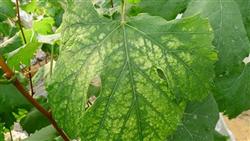
What to Do About Zinc Deficiency in Grapes? Symptoms, Pictures and Control Methods
What does zinc deficiency in grapes look like? What causes zinc deficiency in grapes? How do you prevent and control zinc deficiency in grapes? We also ask netizens with grape-growing experience to help explain. Grapes are perennial vines, generally grown in greenhouses or on trellises, which means vineyard soil cannot be plowed for long periods, causing the elements in the soil...
-
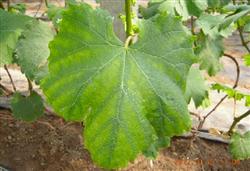
Pictures of Boron Deficiency Symptoms in Grapes and Control Methods
What does boron deficiency in grapes look like? What causes boron deficiency in grapes? How to prevent and control boron deficiency in grapes? We also ask netizens with grape-growing experience to help explain. Grapes are perennial vines, generally cultivated in greenhouses or on trellises, which means vineyard soil cannot be plowed for long periods, causing the soil...
条件筛选