-
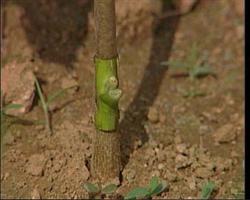
Detailed Explanation of Summer Bud Grafting Techniques and Methods for Jujube Trees
Pre-grafting preparation: Select wild jujube (Ziziphus jujuba var. spinosa) seedlings that are vigorous, free of pests and diseases, and have a basal stem diameter of more than 0.5 cm as rootstock. Cut vigorous, pest-free, plump-budded, current-year lignified branches as scions, 0.4-0.6 cm thick, remove the leaves but keep the petioles. Cut the scions into 20-30 cm long sections, wrap them in wet sand...
-
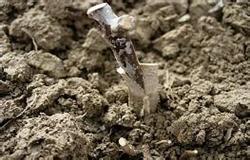
Jujube Tree Grafting Propagation Methods and Technical Key Points
1. Cultivation of rootstock. In production, the commonly used rootstock is wild jujube seedlings, which can be obtained either by direct sowing or by transferring them from other places. Before sowing wild jujube, the nursery should select fertile sandy loam soil, then open furrows and make beds; after fertilizing and watering, sow the seeds, mostly by drilling, with a sowing width of 10cm and a furrow depth of 3cm, then press the soil after sowing. After sowing...
-
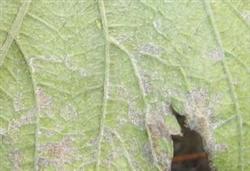
Grape Disease Prevention and Control Methods in the Rainy Season
Grape downy mildew is one of the important diseases of grapes and can occur in all parts of our country. It mainly damages the leaves, causing early defoliation, and can also harm new shoots and fruit clusters. The main symptom is the formation of polygonal yellow spots on the upper surface of the leaves, which later die, turn brown, and produce white downy mildew on the underside. Grape downy mildew...
-
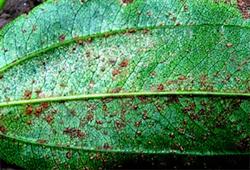
Identification and Control Methods of Jujube Rust Disease Explained in Detail
(1) Symptoms: Jujube rust disease only damages the leaves. In the early stage, pale green small spots are scattered on the underside of the leaves, later gradually becoming raised and dark yellow, which are the uredinia of the pathogen. The uredinia are irregular in shape and mostly occur on both sides of the midrib, at the leaf tip and base. After the surface of the lesion ruptures, yellow urediniospores are scattered. On the upper side of the leaf, corresponding to the uredinia, green...
-
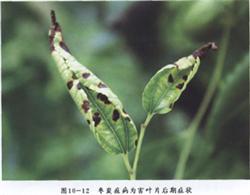
How to prevent and control jujube anthracnose? Sharing practical methods
1. Symptoms: Infected fruit first shows red-brown spots, after which the lesions gradually enlarge, surrounded by a pale yellow halo; finally the lesion color turns dark brown, slightly sunken but then expanding slowly, and the lesion shapes are diverse, including round, oval or spindle-shaped. The flesh inside the lesion gradually changes from green to brown, becomes necrotic,...
-
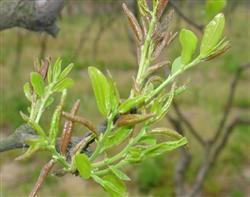
What are the control methods for the jujube gall midge, a pest of jujube trees?
This insect, commonly known as the jujube leaf maggot, is found in jujube-growing areas across the country, where its larvae damage the tender leaves, flower buds and young fruit of jujube trees. Damaged tender leaves curl into a tube shape, turn purplish red, become hard and brittle, and soon blacken and wither. Once flower buds are damaged they cannot open, and they turn yellow and drop off. Damaged young fruit cannot develop and grow properly; at about the size of a soybean they turn yellow and drop off...
-
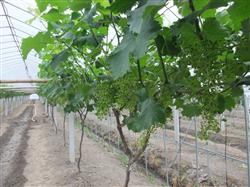
Detailed Explanation of Grape Inflorescence Thinning Methods and Key Technical Points
The main flowering-period diseases of grapes such as Summer Black and Red Globe are gray mold and rachis brown blight, both of which are fungal diseases. Gray mold, also known as bunch rot, has occurred rather severely in recent years; in severely affected orchards it can destroy more than 70% of flower clusters, mainly damaging the corolla, pedicels, rachis, and newly set fruit after pollination during the pre-bloom and blooming periods...
-

What to Do About Mango Flower and Fruit Drop? Causes and Control Methods
Causes of Mango Flower and Fruit Drop and Control Methods
-
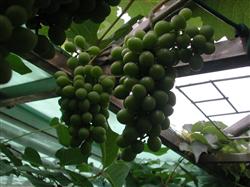
The best time, purpose and methods for thinning grape flower clusters explained
Pinching the tips of grape flower clusters: grape vines produce many flower clusters, which easily consume a large amount of nutrients and reduce the fruit set rate. Pinching off the tips of the flower clusters can reduce the number of flowers, lessen competition for nutrients, and increase the fruit set rate. The best time for pinching the tips is one week before flowering, and it should be finished by the time flowering begins. First pinch off the secondary clusters, then pinch off 4-5 lateral branches on the main axis, leaving...
-

What are the common methods for controlling pests and diseases in Hami melons?
Common pest and disease control methods for Hami melons
条件筛选