-
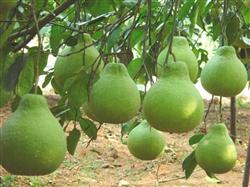
Can wood ash be used on red heart honey pomelo? Application methods explained
Summer is the period when red-fleshed honey pomelo roots grow, summer shoots emerge, and young fruit and fruit enlargement occur. This period is important for fertilization throughout the year, and it is also a period when pests and diseases occur heavily. All summer management technical measures must be carried out in a timely manner to promote strong shoots and strong fruit, and to secure a bumper harvest. The following points are proposed for summer management for reference. 1 and...
-
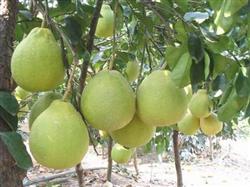
Detailed Guide to Spring Fertilization Methods After Pomelo Trees Bear Fruit
I. Fertilization for 1-3 year old young trees: To accelerate the growth of young trees and bring forward high yields, fertilization should be carried out multiple times in line with the pomelo tree's characteristic of sending out new shoots several times. Fertilizing before shoot emergence can promote shoot emergence and make the shoots grow robustly. Topdressing should mainly use quick-acting fertilizers. Fertilization method: apply frequently and in small amounts, with more fertilizer applied for spring shoots. The fertilization times are February, May and July respectively....
-
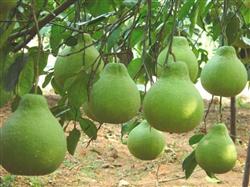
How to plant pomelo trees properly? A full breakdown of scientific planting methods
Proper fertilization. For pomelo trees to grow normally, flower and bear fruit, they need a certain amount of nutrients, and the mineral nutrients from the soil are the raw materials for all the nutrients the pomelo tree needs. Mineral nutrients can also promote root growth and absorption. Increasing the mineral nutrients in the soil is an important way to improve pomelo yield and quality. (1) What pomelo needs...
-
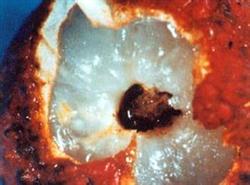
How to control litchi fruit-boring pests? These methods are very effective
Litchi fruit-boring pests include the litchi tortricid (Cryptophlebia ombrodelta), the litchi small grey moth, the Yaowen moth and the litchi stem-end borer, among others. Damage begins each year when litchi trees start to flower, and is most severe from late April to early June. The larvae first bite through the skin of the young fruit, then bore into the fruit and feed on the stone, causing heavy fruit drop, reducing yield and lowering fruit quality, with...
-
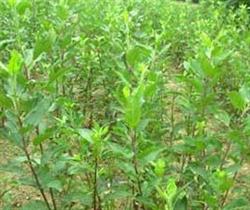
A Complete Guide to Spring Planting Methods for Cherry Trees
Cherry planting is generally done in spring after the soil thaws and before the saplings bud, mostly from mid-to-late March to early-to-mid April, planted close to the time before budding. When planting, pay attention to the following two points: 1. Selection and treatment of saplings. Before planting, select robust saplings with plump buds, well-developed root systems, and no pests or diseases. Then soak the saplings...
-
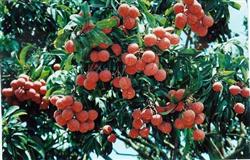
How to Grow Lychee for High Yield? A Detailed Guide to Practical Cultivation Methods
Site selection and planting: For high-yield lychee cultivation, open terrain with loose, fertile soil, a deep soil layer, and a water source on hills or slopes should be chosen, as this is ideal for developing a planting orchard. Lychee mycorrhizae are aerobic, so the soil should be loosened, improved, and made porous and well aerated to promote root development. Soil fertilization should follow the principle of frequent light applications. Spray in a timely manner...
-

-
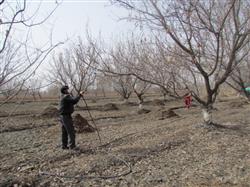
Winter Pruning Methods and Technical Key Points for Apricot Trees
Spring Management of Apricot Trees As the saying goes, "apricot trees fail nine years out of ten." Besides the low fruit-setting rate, the main reason is that apricot trees' ability to withstand low temperatures during bud break and blooming is greatly reduced. When temperatures fall below -3.9 at the bud stage, below -2.2 at the blooming stage, or below -0.6 at the young fruit stage, and the low temperature lasts more than 30 minutes, frost damage is likely to occur. Therefore...
-
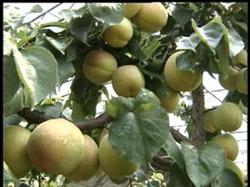
Key Points of Apricot Cultivation Techniques, Detailed Explanation of Planting and Management Methods
1. Orchard establishment: Choose sandy loam orchard land with deep, fertile soil that can be irrigated and drained; waterlogged lowlands, heavily saline-alkali land, and replanted land are not suitable for orchard establishment. For pollinizer trees, choose varieties whose flowering period coincides with or is slightly earlier than that of the main cultivar; the ratio of pollinizer varieties to the main cultivar is generally 1:6-8. Planting density on plains: spacing between plants and rows 3 m x 4-5 m; in...
-
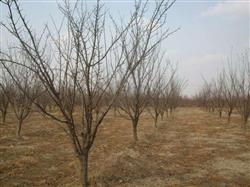
Pest Control Methods and Technical Key Points for Apricot Cultivation
Apricot seed wasp: Larvae overwinter inside fallen apricot pits or inside pits on branches. Female adults lay eggs between the pit shell and the kernel. The egg-laying hole on the fruit surface is not obvious, slightly grayish-green, and sunken; sometimes apricot gum flows from the egg-laying hole. The egg stage lasts about 10 days. The hatched larvae feed on the kernel inside the pit, causing a large number of fruit drops. Around early June...
条件筛选