A detailed guide to sweet persimmon grafting techniques: methods and key points made easy to understand
Sweet persimmon completely loses its astringency while still on the tree, is convenient to eat, simple to manage, and highly resistant to stress, which has drawn increasing attention from fruit growers and favor from fruit merchants. To make sweet persimmon cultivation large-scale, industrialized, and market-oriented, the key grafting techniques for sweet persimmon nursery stock propagation are presented to readers here. Sweet persimmon grafting uses the wood-bearing...
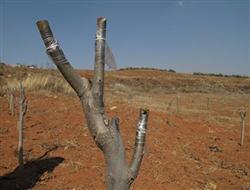
Sweet persimmon completely loses its astringency while still on the tree, is convenient to eat, simple to manage, and highly resistant to stress, which has drawn increasing attention from fruit growers and favor from fruit merchants. To make sweet persimmon cultivation large-scale, industrialized, and market-oriented, the key grafting techniques for sweet persimmon nursery stock propagation are presented to readers here.
Sweet persimmon grafting uses the wood-bearing bud grafting method. This method has wide adaptability, a long grafting window, fast speed, a high survival rate, and saves scion wood, making it one of the most ideal grafting methods currently promoted.
Sweet persimmon grafting can be divided into three stages throughout the year: spring, summer, and autumn:
Spring: This is from the budding of the seedling rootstock to the leaf-expansion stage, the period with the longest grafting window and the largest grafting volume of the year. The scion wood used in this period is branches cut during winter, and care must be taken to prevent water loss during storage. Grafting in this period must be done after the sap begins to flow and the seedling rootstock buds are about to or have just begun to sprout; it must not be done earlier.
Summer: The scion wood used is the new tender branches that grew in the current spring. The scion wood must be defoliated promptly and placed in a shaded, moist place, collected as you graft and taken as you use. This period is hot and rainy; taking branches too early means they have not yet lignified, resulting in low utilization and great waste; taking them too late means facing high temperatures and rain, when tannin substances become active and intense, and if the grafting technique is not proficient and the speed is slow, it easily causes a diaphragm to form on the cut surface, affecting healing and leading to grafting failure.
After grafting in the above two stages is completed, check survival promptly, cut back the rootstock, re-graft those that did not take, and supply sufficient water and fertilizer, striving to have the nursery stock leave the nursery the same year.
Autumn: The base of the seedling rootstock has already thickened and the branches have matured. Grafting must be finished before the saplings stop growing, and the rootstock must not be cut back after grafting.
The specific timing of the entire grafting process should be carried out flexibly with reference to local natural, climatic (phenological) and other factors.
The entire grafting process requires: the grafting site should be chosen at a smooth spot (0-15 cm) above the ground, not too high, and the orientation should face the windward side. The rootstock and scion should be basically the same thickness, and the cut surfaces of both grafting partners should be flat, straight, and smooth, with the top and bottom, left and right, and size basically equal and matching. After grafting is completed, strive to achieve exposed white on the top, no gap at the bottom, and no seam in the middle. The plastic tape used for tying should be of appropriate width, with good elasticity and strong stretchability, free of pathogens and contamination, and the tying should be tight, dense, firm, and fast. The grafting knife blade should be thin, flat, even, and sharp, with tough steel, and the grafting personnel should be skilled, flexible in operation, and fast.