-
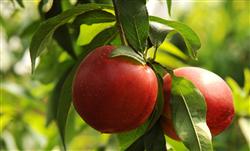
Key Technical Points and Methods for Summer Management of Nectarines
How to manage nectarines well in summer? Please give guidance. Summer nectarine management can refer to the following methods: 1. Control excessive shoot growth to prevent orchard canopy closure. Nectarines have strong branching ability and readily produce secondary even tertiary shoots; in addition, nectarine trees are vigorous, especially with excessive vegetative growth before fruiting. A large number of shoots plus excessive growth...
-
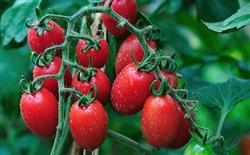
Is cherry tomato the same as cherry tomato? A detailed guide to growing methods
What is cherry tomato? How to grow it? Please give an introduction. Cherry tomato is also known as grape tomato and cherry tomato. In addition to containing all the nutrients of tomato, its vitamin content is 1.7 times that of ordinary tomato. The nutritional value of cherry tomato is superior to the components of ordinary tomato. Cherry tomato contains special substances such as glutathione and lycopene...
-
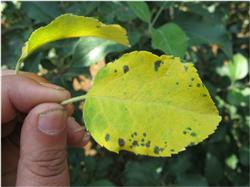
Common Summer Pests and Diseases of Apple Trees and Their Control Methods
What pests and diseases of apple trees need to be controlled in summer? Here are several pests and diseases that may need to be controlled in summer apple orchards for reference: 1. Peach fruit borer: The larvae bore into the fruit and cause damage, resulting in deformed fruit development and the formation of "monkey-head fruit," "bean-paste-filled fruit," and the like. Commonly used pesticides are 2.5% Kung Fu at 1500x dilution, or chlorpyrifos...
-
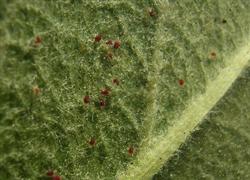
What are the methods for controlling summer mites on apple trees?
How to control mites on apple trees in summer? Please learn about the damage caused by summer mites on apple trees: I. Damage symptoms 1. Hawthorn spider mite. Also known as the hawthorn red spider, it mainly damages the leaves, tender buds and young fruit of apple trees. When leaves are damaged, the red spiders gather on the underside of the leaves, spin silk and form webs, with fine soil particles and eggs sticking to the webs, and many pale white spots appear on the upper surface of the leaves. When the damage is severe, rust-colored symptoms appear on the underside of the leaves, followed by dehydration and hardening, and the whole leaf turns yellow-brown and scorched, resembling being burned by fire. In severely affected orchards, most leaves may drop between June and July, causing a second round of flowering and budding, and severely damaged buds cannot continue to grow and die.
-
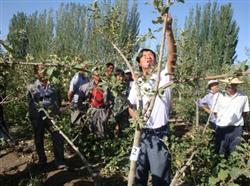
Apple Tree Summer Pruning Methods and Technical Key Points
How to prune apple trees in summer? Methods explained. Summer pruning, also called growing-season pruning, is one of the important parts of the year-round pruning of apple trees and holds a rather important position in the annual pruning of fruit trees. Its main pruning methods include ringing, girdling, shoot twisting, pinching, branch bending, branch thinning, and autumn heading cuts, etc. But if...
-
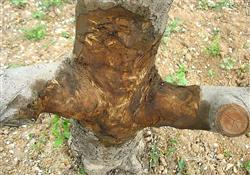
How to prevent and control apple canker in summer? These methods must be mastered
How to prevent and control apple canker in summer? Please introduce the methods. In the prevention and control of apple tree canker, for many years attention has been paid to spring control while summer and autumn control has been neglected, resulting in a high recurrence rate of the disease and making it impossible to eradicate completely. However, according to the occurrence pattern of canker, changing the single spring scraping and chemical treatment to mainly summer and autumn control, combined with spring control...
-
What are the methods for controlling pests and diseases of loquat?
What pests and diseases need to be controlled when growing loquat? Please provide an introduction and control methods. The pests and diseases that need to be controlled when growing loquat are: 1. Flower cluster rot. There are many causes of loquat flower cluster rot, but they are mainly due to two aspects: harmful organisms and climate. During the loquat flowering period (September-November), continuous autumn rain and high humidity accelerate the occurrence of flower cluster rot. Especially in the mid-to-late flowering period, the flower axis turns brown, soft and rotten, appearing mushy. When the diseased part is squeezed by hand, a viscous liquid flows out, and in the later stage the flower axis shrinks, dries up and appears wilted.
-
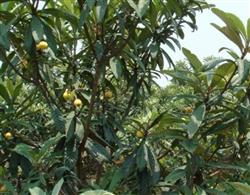
What are the management methods for loquat trees in June and July?
How should loquat trees be managed in June and July? Please advise. The main points for managing loquat trees in June and July are as follows: 1. Continue harvesting and selling the fruit. 2. Apply a heavy post-harvest fertilizer promptly after harvest. Apply it 5-10 days after harvest to replenish the tree's nutrients and promote flower bud differentiation and the sprouting and growth of summer shoots. The N, P, K ratio is generally 3:2:2 with quick-acting fertilizer and high-quality organic fertilizer, generally accounting for 30%; for trees with a heavy crop or weak vigor, more can be applied, accounting for 40-50% of the annual total. 100 jin of decomposed human and animal manure + 1.5 jin of potassium sulfate + 2 jin of calcium-magnesium phosphate fertilizer.
-
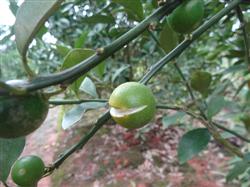
What to Do About Citrus Fruit Cracking? Cause Analysis and Prevention Methods
What to do about citrus fruit cracking? Here is an introduction. Citrus fruits are highly prone to cracking from July to September, before they ripen and are harvested. The main reason is that as the fruit develops and swells, gradually entering the ripening stage, the rind stops growing or thickens, while the juice sacs inside the fruit rapidly elongate and expand, pressing against the outer rind and causing it to thin rapidly. If the ripening period continues...
-
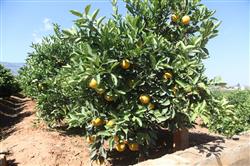
What are the summer and autumn management methods for citrus?
How to manage citrus well in summer and autumn? Please give an introduction. Summer and autumn are exactly when citrus is in the fruit expansion stage, with relatively large fertilizer and water needs, and at the same time it is a hot, sweltering, rain-scarce and drought-prone season, and it is the peak period for citrus pests and diseases. Therefore, attention should be paid to strengthening the management of citrus orchards in summer and autumn. The specific measures are as follows:...
条件筛选