-
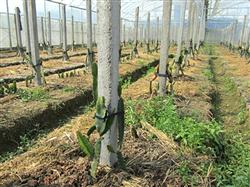
Detailed Guide to Dragon Fruit Planting Methods and Management Techniques
How to plant and manage dragon fruit? Please provide guidance. The reference for dragon fruit planting and management is as follows: 1. Site selection and soil requirements. The suitable growth temperature for dragon fruit is 25-35°C, and it can be planted anywhere south of the Tropic of Cancer. For planting, choose loose, fertile sandy loam soil with good granular structure, pH 6-7....
-
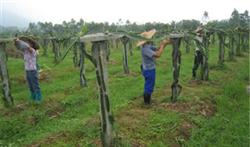
How to prune a dragon fruit tree properly? Practical pruning methods and techniques
How should a dragon fruit tree be pruned properly? Please explain the methods. Shaping and pruning a dragon fruit tree can adjust the structure of each part of the population and the individual, improving conditions for light energy use; using the dynamic balance between the aboveground and belowground parts to regulate the overall growth of the fruit tree; adjusting the quantity, quality and rhythm of organ formation. Coordinating growth...
-
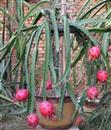
What are the methods for growing dragon fruit in pots?
How do you grow dragon fruit in a pot? Here are the methods. Dragon fruit is a plant in the genus Hylocereus of the cactus family. When grown in a pot, it climbs on a support and can reach 2 m in height. Dragon fruit loves light and fertilizer, can withstand short periods of low temperature down to 0°C in winter, and its flowering and fruiting season can last as long as 3 to 4 months. When growing it in a pot, pay attention to: 1. Choice of growing medium. For potting...
-
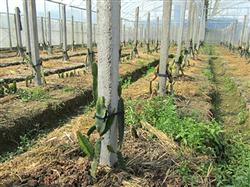
How to grow dragon fruit so it thrives? A detailed guide to methods and techniques
How do you grow dragon fruit well? Here are the planting methods and management methods. Dragon fruit cultivation can follow these methods: 1. Biological characteristics. Dragon fruit is a tropical and subtropical fruit, drought-tolerant, high-temperature-tolerant and light-loving, with no strict requirements for soil quality; it can be planted on flat land, hillsides and sandy-stony ground, and the most suitable soil p...
-
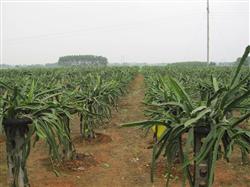
Management Methods and Technical Points for Pitaya After Planting
How to manage pitaya after planting? Please introduce the management methods. Pitaya begins to flower and bear fruit about 12-14 months after planting, and can flower 12-15 times per year. The fruiting period is from April to November, and fruits can be harvested 30-40 days after the flowers fade. The single fruit weight is generally 500-1000 grams. In the second year after planting, each column produces more than 20 fruits, and in the...
-
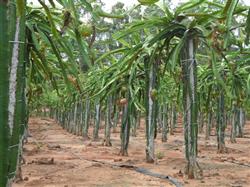
What are the common pest and disease control methods for dragon fruit?
What pests and diseases need to be controlled when growing dragon fruit? Please provide an introduction and guidance. To control pests and diseases when growing dragon fruit, you can refer to the following methods: (1) Pests and diseases. Because dragon fruit is a wild plant and has not been domesticated for long, it has no specific pests and diseases. To date, no fatal insect pests have been found. As for diseases, after transplanting or injury, its resistance weakens and it may be infected by bacteria or viruses, but no local or widespread infectious diseases have been found. As for insect pests, during the branch growth period, the tender shoots will be gnawed by pests, but because the plant produces many tender shoots in a very short time and they grow rapidly (more than 2 cm per day), the amount gnawed by pests is extremely limited and will not affect branch growth.
-
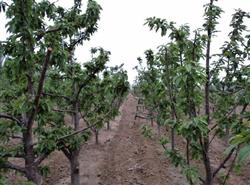
Management Methods and Technical Key Points for Cherry Trees After Harvest
How to manage cherry trees well after harvest? Please introduce the methods. The main management methods for cherry trees after harvest are: pinching new shoots. To promote flower bud differentiation and prevent excessive vegetative growth, the method of pinching new shoots should be adopted for control. That is, pinch the new shoots that have not stopped growing, and the pinching position is generally at the half-leaf boundary; after pinching...
-
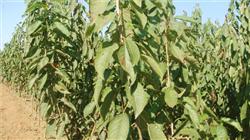
Sweet Cherry Summer Grafting Methods and Key Technical Points
How to graft sweet cherry in summer? Here is an introduction to the method. For sweet cherry in summer, the following method can be used: The suitable period for bud grafting is, first, early June (before the rainy season arrives); second, late July to late August (late rainy season to before the cambium stops growing). Bud grafting during the dog-day rainy season (early July) makes the graft union prone to gumming...
-
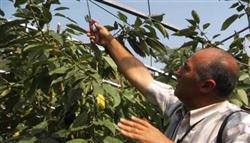
What are the summer pruning methods for sweet cherry trees?
What summer pruning methods are there for sweet cherry trees? Please give an introduction to the pruning methods. Summer pruning of sweet cherry is best done after harvest, while the branches have not yet fully lignified. The main methods include branch bending, pinching, shoot tipping, branch thinning, and girdling. 1. Branch bending. Winter pruning alone cannot solve the tree's ventilation and light conditions in one go...
-
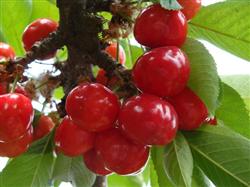
Summer Pruning Methods and Technical Points for Sweet Cherry
How do you prune sweet cherry in summer? Please give guidance. Summer pruning of sweet cherry can be done with reference to the following methods: 1. Pinching. Removing the tip portion of a new shoot before the branch becomes woody is called pinching. The main effect of pinching is to control the vigorous growth of branches, increase the order of branching and the number of short fruit branches, and accelerate the expansion of the canopy...
条件筛选