What are the summer and autumn management methods for citrus?
How to manage citrus well in summer and autumn? Please give an introduction. Summer and autumn are exactly when citrus is in the fruit expansion stage, with relatively large fertilizer and water needs, and at the same time it is a hot, sweltering, rain-scarce and drought-prone season, and it is the peak period for citrus pests and diseases. Therefore, attention should be paid to strengthening the management of citrus orchards in summer and autumn. The specific measures are as follows:...
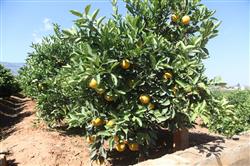
How to manage citrus well in summer and autumn? Please give an introduction
Summer and autumn are exactly when citrus is in the fruit expansion stage, with relatively large fertilizer and water needs, and at the same time it is a hot, sweltering, rain-scarce and drought-prone season, and it is the peak period for citrus pests and diseases. Therefore, attention should be paid to strengthening the management of citrus orchards in summer and autumn. The specific measures are as follows:
1. Apply sufficient fertilizer to promote tree growth and fruit development. During the citrus fruit expansion stage, the root system has a strong ability to absorb fertilizer, and applying sufficient fertilizer can promote tree growth and fruit development. According to the age of the tree and the fruit load, fruit trees should be supplemented with 20-25 kg of livestock and poultry manure, 1-1.5 kg of cake fertilizer, and 0.5-1 kg of superphosphate or bone meal, and sprayed with potassium dihydrogen phosphate on the leaves. When nutrient deficiency symptoms are found in new leaves, spraying should be carried out, supplementing whatever is deficient. In high temperature and drought, spraying hormones can also promote root cell division, improve absorption capacity, and has a certain effect on preventing fruit drop.
2. Strengthen water management, prevent floods and fight drought. Mountain orchards should repair irrigation and drainage systems, reinforce the surrounding orchard walls, and clear drainage ditches to prevent rainstorm erosion and soil erosion. At the same time, drought resistance and cooling work should be done well to prevent fruit drop from high temperatures. When the citrus growth temperature exceeds 35C, photosynthesis weakens and physiological functions are hindered. Therefore, when high temperatures arrive and citrus leaves are found to begin curling, water should be diverted into the orchard in time to regulate temperature and increase humidity with water; where conditions permit, sprinkler irrigation or drip irrigation can be used to increase air temperature and soil moisture, and intertillage and soil loosening should be carried out to cut off soil capillaries and improve water and fertilizer retention capacity, thereby improving the orchard microclimate, reducing fruit drop, and promoting fruit enlargement. At the same time, in the hot and dry summer season, grass should be cut or rice straw should be spread around the tree bases in the orchard to reduce direct sunlight and water evaporation, lower surface soil temperature, protect the root mass, enhance root vitality, and reduce fruit drop.
3. Remove summer shoots and promote autumn shoots. For fruiting trees, summer shoots should be removed until autumn shoots emerge, so as to reduce the consumption of large amounts of nutrients and ensure robust autumn shoots. For old trees and trees with a large fruit load, autumn shoots should be allowed to emerge earlier; for young trees and low-yielding trees, it can be slightly later. Generally, it is required to allow shoots to emerge from late July to mid-August. For sweet oranges, it is suitable to allow shoots to emerge in August.
4. Control pests and diseases to promote high yield and quality. In July-August, citrus fruits expand and are susceptible to damage by fruit-piercing noctuid moths, often causing a large amount of fruit drop; when rust mites occur, severe cases can cause defoliation and the fruit turns purplish brown; red spider mites cause stunted tree growth, defoliation and dead branches, and leaves turn white-gray; leafminers harm new shoots, and the larvae bore into the epidermis of tender leaves to feed, causing severe leaf curling and affecting growth. In response, in addition to strengthening soil management, water should also be supplied and irrigated frequently to protect the trees and fruit.
When rust mites occur, 80% zineb 600-fold solution, or dicofol 500-fold solution or other acaricides can be used for spraying to kill them; when red spider mites occur, 1000-fold dimethoate or dichlorvos can be sprayed; when leafminers occur, 50% dichlorvos 800-fold solution or 90% trichlorfon 1000-fold solution mixed with 0.2 degree lime sulfur mixture can be sprayed for control. Around August is the peak period for fruit-piercing noctuid moths, and control should be carried out timely before and after their occurrence, clearing weeds inside and outside the orchard, and manually catching and killing adults on stuffy hot nights also has a very good effect. Diseases include canker, scab, and anthracnose, and prevention should be the main approach. If disease occurs, 1:1:100 Bordeaux mixture, or 50% carbendazim or thiophanate 800-fold solution can be sprayed for control, and spraying with 50% thiram 600-fold solution also has a very notable effect.
Click to get more citrus planting techniques
Click to get more fruit planting techniques