-
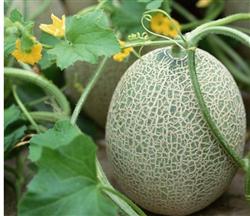
Suitable Growing Regions and Cultivation Methods for Zhuguan Hami Melon
Where is Zhuguan Hami Melon suitable to grow, and how to cultivate it well? Please provide introduction and guidance. Zhuguan Hami Melon is a Hami melon variety from Northwest China introduced to the southeastern region of China. Because it cannot adapt to the climate conditions of small temperature differences, high humidity, and insufficient sunlight, it often shows poor disease resistance, low sugar content, and is prone to cracking on the melon surface...
-
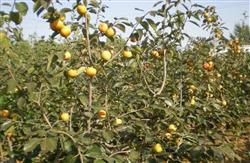
How to Fertilize Persimmon Trees Well? A Detailed Guide to Practical Methods
How to Fertilize Persimmon Trees Well? Please give guidance. Persimmon trees can be fertilized by referring to the following methods: (1) Base fertilizer 1. Ring trench application At the edge of the canopy projection, dig a ring-shaped trench 30-40 cm deep and 30-40 cm wide, mix the fertilizer evenly with the topsoil and apply it, then cover with soil. This method is mostly used for young trees. 2. Radial...
-
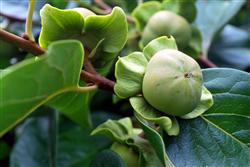
How to Improve the Fruit Set Rate of Persimmon Trees? A Detailed Guide to Practical Methods
What methods can improve the fruit set rate of persimmon trees? Please give guidance. For persimmon trees, the following methods can be used to improve the fruit set rate: 1. Control of the persimmon fruit borer. 7-8 days after the persimmon tree begins to bloom (based on 1 flower opening in the persimmon orchard), you can choose 2.5% fenpropathrin 2500x solution, 21% fenvalerate 2500x solution, 10% duolaibao susp...
-
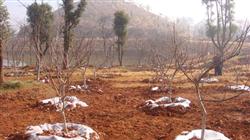
What are the methods for planting and managing persimmon trees?
How do you plant and manage persimmon trees? Please give an introduction. The methods for planting and managing persimmon trees can refer to the following methods: 1. Planting persimmon trees. 1. Choose the site and build the persimmon orchard. Choose a leeward, shady site with deep soil, fertile and loose soil, and a low groundwater table. 2. Dig holes and apply base fertilizer. Follow the mountain contour to cut horizontal terraces, and build them into mountain orchards with a front ridge and back ditch, reverse-sloping terrace surfaces, or a "fish-scale pit" style. Plant at a row spacing of 6 x 5.5 m, with 20 trees or 50 trees (close planting) per mu. The hole surface width, bottom width, and depth of the planting hole should reach 1 m, 0.8 m, and 0.6 m respectively. First allow weathering, then backfill the planting hole with weeds and topsoil to 80% full, and at the same time backfill a corresponding amount of organic fertilizer as base fertilizer, with the hole position 20 cm above the terrace surface. When planting, spread 1-1.5 kg of calcium magnesium phosphate fertilizer in each hole to improve planting quality and growth.
-
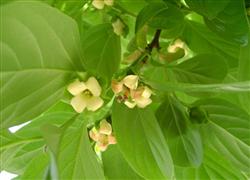
How to improve the fruit set rate of persimmon trees? Sharing practical methods
How to improve the fruit set rate of persimmon trees? Please give an introduction to the methods. To improve the fruit set rate of persimmon trees, you can refer to the following methods: 1. Control the persimmon fruit borer. 7 to 8 days after the persimmon tree begins to bloom (based on 1 flower blooming in the persimmon orchard), you can choose 2.5% fenpropathrin 2500x solution, 21% fenvalerate 2500x solution, 10% duo...
-
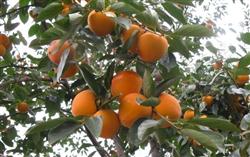
How to Fertilize a Persimmon Tree Well? A Detailed Guide to Scientific Fertilization Methods
How to fertilize a persimmon tree well? Please give guidance. The persimmon tree is a fruit tree that is widely cultivated, easy to manage, long-lived and high-yielding. It originated in our country, and is also cultivated in Japan, Korea and other countries. The persimmon tree is a deciduous tree, with a tree height of more than 10 m, a crown spread of about 16 m, and a lifespan of several hundred years. I. Root nutrition of the persimmon tree...
-
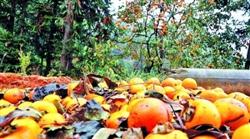
What are the methods for preventing and controlling fruit drop in persimmon trees?
How do you prevent and control fruit drop in persimmon trees? Please give an introduction to the prevention and control methods. The causes of fruit drop in persimmon trees include two situations: physiological fruit drop caused by the physiological disorder of the persimmon tree itself, and fruit drop caused by diseases and pests such as anthracnose or persimmon fruit moth. To prevent and control persimmon fruit drop, first, pollinator tree varieties need to be arranged, and pollinator trees must be planted or...
-
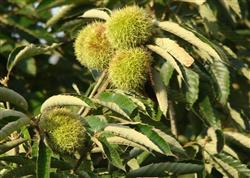
How to prevent empty burrs in chestnuts? An introduction to practical prevention methods
How to prevent empty burrs in chestnuts? What methods are available? Please advise. Empty burrs in chestnuts are also called empty husks or empty shells, and growers call them "mute chestnuts." The rate of empty burrs in chestnuts is generally about 15%, and can reach as high as 80%, with some trees having almost entirely empty burrs. Therefore, preventing empty burrs is key to increasing chestnut yield and quality. Reasonable selection...
-
What methods can promote chestnut fruiting?
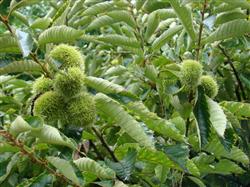
What methods can promote chestnut fruiting? Here is an introduction. To promote chestnut fruiting, you can refer to the following methods: 1. Increase boron fertilizer application, with remarkable results. Through experiments, combined with chemical fertilizer application, use 100-150 grams of borax per tree evenly mixed into urea, dig a ring-shaped ditch about 1 m from the trunk with a depth and width of 15-20 cm each...
-
What are the scientific fertilization methods for chestnut trees?
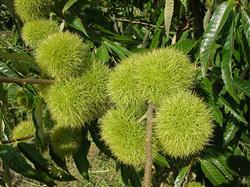
How do you fertilize chestnut trees scientifically? Please give a detailed introduction. Chestnut, like other fruit trees, has the same fertilizer requirements, except that in addition to the three major elements of nitrogen, phosphorus and potassium, it is especially sensitive to the secondary element magnesium and the trace elements manganese and boron. If these are lacking or insufficient, serious physiological disorders occur that affect growth and development. According to measurements...
条件筛选