What to Do About Citrus Fruit Cracking? Cause Analysis and Prevention Methods
What to do about citrus fruit cracking? Here is an introduction. Citrus fruits are highly prone to cracking from July to September, before they ripen and are harvested. The main reason is that as the fruit develops and swells, gradually entering the ripening stage, the rind stops growing or thickens, while the juice sacs inside the fruit rapidly elongate and expand, pressing against the outer rind and causing it to thin rapidly. If the ripening period continues...
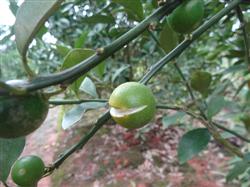
What to do about citrus fruit cracking? Here is an introduction
Citrus fruits are highly prone to cracking from July to September, before they ripen and are harvested. The main reason is that as the fruit develops and swells, gradually entering the ripening stage, the rind stops growing or thickens, while the juice sacs inside the fruit rapidly elongate and expand, pressing against the outer rind and causing it to thin rapidly. If, during the ripening period, a severe drought and water shortage persists and is then followed by torrential rain or several days of steady rain, the juice sacs absorb too much water too quickly, the segments swell too fast, and the rind cannot withstand the enormous pressure, so the fruit cracks. In addition, fruit cracking is also related to cultivation techniques. If ventilation and light penetration in the citrus orchard are poor, the groundwater level is too high, waterlogging damage in the soil is severe, nitrogen fertilizer is applied in excessive amounts, or too much fruit is set, the rind becomes fragile and cracking often occurs. Fruit cracking is also related to variety: navel oranges crack easily, while late-ripening Satsuma mandarins, Dahong sweet oranges, and ponkan mandarins are relatively resistant to cracking or crack only slightly. To prevent citrus fruit cracking, the following measures are mainly taken:
Keep the soil moist. Once the high-temperature period begins, loosen the soil around the tree base, then apply water and fertilizer, and cover the area around the tree base with weeds, green manure, or other weeds, which helps conserve soil and water and reduces nutrient loss. From July to September, if drought continues for more than 7-10 days, irrigate immediately to retain moisture and prevent cracking. For irrigation volume, about one ton of water per mu of citrus orchard per irrigation is appropriate; sprinkler irrigation gives the best results, followed by pouring irrigation, furrow irrigation, and so on.
Regulate tree nutrition. Apply less phosphorus fertilizer and more potassium fertilizer, nitrogen fertilizer, and farmyard manure, which can reduce fruit cracking. From early July to early August, dig holes 30-40 cm deep on both sides of the canopy of fruit-bearing trees, and apply 30 kg of human excrement and urine, 0.2 kg of urea, and 0.2 kg of potassium oxide; 3-5 kg of plant ash can also be used instead of potassium fertilizer. After 4 p.m. each day, spray the leaves with 0.3% potassium sulfate or potassium dihydrogen phosphate solution, once a week.
Chemical control of fruit cracking. Spray a mixture of naphthaleneacetic acid at a concentration of 30 parts per million plus kinetin at a concentration of 10 parts per million during the fruit-swelling period, which can reduce the occurrence of fruit cracking. During drought periods, spray 0.3% urea solution or gibberellin at a concentration of 30 parts per million in the evening on the parts of the canopy where fruit is borne, once a week for 3 consecutive sprays; alternatively, during drought with no rain, apply gibberellin at a concentration of 20 parts per million to the fruit, which has a good effect on preventing fruit cracking. Or, one month before the citrus harvest, spray the leaves with 0.3% potassium sulfate and 1% calcium oxide solution, which has a clear effect on reducing fruit cracking, and at the same time can increase fruit sweetness and reduce acidity.
Foliar topdressing. During the fruit-swelling period, when there has been a long drought with no rain, spray 0.4%-0.5% urea or 0.3% potassium dihydrogen phosphate, or 0.1%-0.15% Greenfenwei aqueous solution, etc., to stimulate rind growth so that the rind and the flesh grow consistently, which can prevent high-temperature fruit cracking. When spraying, apply more heavily to the middle and lower parts of the citrus tree, once every 7-10 days for 3-5 consecutive sprays. Alternatively, use 150 grams of urea, 100 grams of potassium nitride, 100 grams of edible vinegar, and 100 grams of lime, mix with 50 kg of water, and spray, which also has a cracking-prevention effect.
Click to get more citrus cultivation techniques
Click to get more fruit cultivation techniques