What are the methods for controlling pests and diseases of loquat?
What pests and diseases need to be controlled when growing loquat? Please provide an introduction and control methods. The pests and diseases that need to be controlled when growing loquat are: 1. Flower cluster rot. There are many causes of loquat flower cluster rot, but they are mainly due to two aspects: harmful organisms and climate. During the loquat flowering period (September-November), continuous autumn rain and high humidity accelerate the occurrence of flower cluster rot. Especially in the mid-to-late flowering period, the flower axis turns brown, soft and rotten, appearing mushy. When the diseased part is squeezed by hand, a viscous liquid flows out, and in the later stage the flower axis shrinks, dries up and appears wilted.
What pests and diseases need to be controlled when growing loquat? Please provide an introduction and control methods
The pests and diseases that need to be controlled when growing loquat are:
1. Flower cluster rot. There are many causes of loquat flower cluster rot, but they are mainly due to two aspects: harmful organisms and climate. During the loquat flowering period (September-November), continuous autumn rain and high humidity accelerate the occurrence of flower cluster rot. Especially in the mid-to-late flowering period, the flower axis turns brown, soft and rotten, appearing mushy. When the diseased part is squeezed by hand, a viscous liquid flows out, and in the later stage the flower axis shrinks, dries up and appears wilted.
2. Leaf and fruit diseases. According to a preliminary survey, the diseases harming leaves and fruits include: brown spot, leaf spot, sooty leaf spot, ring spot, gray spot and anthracnose, black rot, brown rot, sunscald, etc. These diseases harm new shoot young leaves and old leaves, and some can also harm flowers, flower clusters, young fruits, etc. After young tender leaves are damaged, they curl and wilt, affecting the emergence of new shoots; after old leaves are damaged, a large number of leaves fall; after fruits are damaged, brown round spots first form, rapidly expand around the navel of the fruit, and finally rot to the point of being inedible, losing commercial value and greatly affecting yield.
3. Loquat pest mites. The pest mites harming loquat leaves, tender shoots and flowers are mainly oribatid mites. The number of generations of this mite per year in loquat production areas is unknown, but generations overlap. By the period when loquat summer shoots emerge, the population is relatively large and can seriously affect loquat flower bud differentiation. When flowers are damaged, they wilt and form soot-like growth, causing a large number of flower clusters to drop.
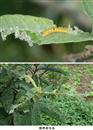
4. Loquat yellow hairy caterpillar. The loquat yellow hairy caterpillar is a major pest of loquat. Its larvae feed on tender leaves and tender buds. When the infestation is severe, even old leaves are eaten until only the veins remain, and it can even cause loquat trees to die. This insect occurs and causes damage from May to October. However, the damage is greatest from August to September.
5. Psyllids. Psyllids gather as adults and nymphs on new shoots, petioles and leaves to suck sap. Damaged leaves have twisted veins, wrinkled leaf surfaces, produce necrotic spots, and gradually turn black, inducing sooty mold and leaf drop.
6. Fruit borers. The fruit borers harming loquat include the pear fruit moth and peach pyralid, with the pear fruit moth being the main one. The pear fruit moth has a diverse diet. Its larvae bore into loquat new shoots causing wilting, bore into the ear axis and flower clusters causing rot, and bore into fruits causing fruit rot.
The following methods can be used for pest and disease control when growing loquat:
1. Improving the disease and pest resistance of loquat trees is the basic measure for controlling pest and disease damage. Strengthen orchard management. After harvest, prune out overly dense branches, bare-leg branches, thin out, retract and shorten. In particular, prune out diseased and pest-infested branches, suppress the growth of vigorous branches to slow their growth, so as to promote the emergence of summer shoots and lay the foundation for a high yield the following year; control nitrogen fertilizer and increase phosphorus and potassium fertilizer, so that vigorous trees are not given nitrogen fertilizer; improve the drainage and irrigation system, so that drainage is possible during the rainy season and irrigation is possible during drought. Young tree orchards generally are not irrigated in July-August, and the tree plate should be loosened in time. Through these agronomic measures, the stress resistance of loquat trees can be enhanced and the damage from pests and diseases can be reduced or alleviated.
2. Spray pesticides at the right time to protect the trees and keep pest and disease damage below the economically permissible level. According to the annual growth phenology of loquat and the corresponding occurrence characteristics of pests and diseases, grasp 3 key pesticide application times: The first is each shoot emergence period of loquat (spring, summer, autumn). The pests and diseases in this period include leaf-damaging diseases (gray spot, brown spot, leaf spot, ring spot and anthracnose, etc.), and the main insect pests are the yellow hairy caterpillar, pear fruit moth and psyllids. Fungicides and insecticides can be mixed and applied: 43% Dashengfu 600-800 times plus 40% Julei 1000-1200 times mixed application, or 43% Dashengfu 600-800 times solution plus 20% Haoniandong 1000 times or plus 4.5% Lubaishi 1000-1500 times; the second is the flowering period. This period is also the autumn shoot emergence period, and in addition to continuous autumn rain, there are many types of pests and diseases and the damage is severe, mainly flower rot, psyllids, oribatid mites, pear fruit moth, peach pyralid, etc. Use 2% Jiashouhuo 500 times plus 40% Shijiale 1000-1200 times spray to control flower rot, use 2.5% Tianwangxing 1500 times solution or 73% Guomanyuan 3000 times to control mites, 43% Dashengfu 600 times or 25% Yebanqing 4000 times spray to control leaf spot, anthracnose, etc., 40% Julei 1000-1200 times or 10% Anlubao 1500 times to control psyllids, pear fruit moth, peach pyralid, etc.; the third is the fruiting period. Whether pests and diseases can be well controlled in this period is the key to increasing loquat yield. The main diseases in this period are anthracnose, brown rot and black rot, and the main insect pests are pear fruit moth, peach pyralid, stink bugs and scale insects, etc. The pesticides are the same as those used in the flowering period (so they are not repeated here).
Once flax-colored spot disease is found in young tree orchards and nurseries, the plants should be immediately pulled out and destroyed. In orchards where dry rot occurs, the diseased part should be immediately scraped off and painted with 2% Jiashoumi 100 times. When white root rot and violet root rot harm the neck of loquat, use 71% Ailisha 800 times or 30% Aimiao 3000 times to drench the roots around the base.
Click to get moreLoquat cultivation techniques
Click to get more fruit cultivation techniques