Is cherry tomato the same as cherry tomato? A detailed guide to growing methods
What is cherry tomato? How to grow it? Please give an introduction. Cherry tomato is also known as grape tomato and cherry tomato. In addition to containing all the nutrients of tomato, its vitamin content is 1.7 times that of ordinary tomato. The nutritional value of cherry tomato is superior to the components of ordinary tomato. Cherry tomato contains special substances such as glutathione and lycopene...
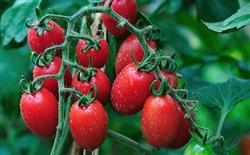
What is cherry tomato? How to grow it? Please give an introduction
Cherry tomato is also known as grape tomato and cherry tomato. In addition to containing all the nutrients of tomato, its vitamin content is 1.7 times that of ordinary tomato. The nutritional value of cherry tomato is superior to the components of ordinary tomato. Cherry tomato contains special substances such as glutathione and lycopene, which can promote human growth and development, especially the growth and development of children, and can increase human resistance and delay aging. The lycopene in cherry tomato can protect the human body from carcinogenic toxins in cigarettes and automobile exhaust, and can improve the body's anti-cancer function. Lycopene in tomato products can not only prevent cancer and fight cancer. Moreover, it is small and exquisite in shape, pleasing in color, and pleasantly sweet and sour. Use a knife to cut a "cross" about 1/3 of the fruit length deep from the stem end, and mix with white sugar or honey for a better flavor. It is a famous decorative material for cold dishes and is also the main dish at high-end banquets in guesthouses and large hotels. In addition, potted cherry tomato, with its elegant shape, has gradually been used by guesthouses, large hotels, and households as an ornamental potted vegetable and placed in halls. Therefore, cherry tomato can be called one of the modern popular fruits and vegetables that "enters the kitchen and appears in the hall."
Cultivation techniques
1 Variety selection. Choose varieties with strong disease resistance, such as Zijing, Red Sun, and Venus.
2 Cultivate strong seedlings. Before sowing, first soak the seeds in a 10% trisodium phosphate solution for 20 ~ 30 min, remove and wash them, then soak them in clean water for 4 ~ 6 h, remove and air-dry slightly, accelerate germination for 2 d, and then sow. Because the seeds are relatively expensive, nutrient pots or nutrient bags are mostly used for raising seedlings. If flat beds are used for broadcasting, thin sowing must be used.
3 Apply sufficient base fertilizer and transplant at the right time. Generally, it is required to apply 5 ~ 8 m3 of high-quality organic fertilizer per 667 m2, 50 ~ 100 kg of potassium sulfate, 200 kg of plant ash, 50 kg of diammonium phosphate, and 500 kg of decomposed cake fertilizer. After deeply plowing and leveling the land, form ridges according to wide and narrow rows, with a wide row spacing of 90 cm, a narrow row spacing of 60 cm, and a ridge height of 15 cm. When forming ridges, decomposed cake fertilizer can be applied at the bottom of the ridge. Transplant when the seedlings are 15 cm high and the plants have 5 ~ 6 true leaves. The transplanting plant spacing is 40 ~ 45 cm, and 2 000 ~ 2 200 plants are planted per 667 m2.
Strengthen cultivation technique management
1. Fertilizer and water management. Water thoroughly at the base, and once the soil layer is slightly loose, hoe and loosen the soil to promote rooting. Before the first cluster of fruit sets, cultivate 2 ~ 3 times to control vigorous growth. After the first cluster of fruit sets, topdress and water in time, applying 15 ~ 20 kg of ternary compound fertilizer per 667 m2 each time. The interval days between fertilization and watering should be flexibly controlled according to plant growth and weather changes.
2. Pruning and hanging vines. When the first inflorescence opens, hang the vines with plastic string in time. Cherry tomato is pruned using the double-vine pruning method, that is, keep 1 main vine and 1 strong side vine, hang both vines at the same time, and remove all other side branches or secondary branches in time.
3. Fruit setting by flower treatment and flower and fruit thinning. The main causes of tomato flower and fruit drop are mainly excessively high or low temperature, insufficient light, insufficient nutrients, and uncoordinated fertilizer and water. The solution, in addition to adopting corresponding measures for the above causes, is also commonly treated with hormones. A concentration of 10 ~ 15 mg/kg of 2,4-D can be used to treat the flower stalk. The tomato flower stalk has 3 nodes. When treating the flower stalk, treat the second node or the second internode for the best effect. If households do not use hormones in winter, cross-pollination can be carried out, otherwise the plant will only grow vines and not bear fruit. If the tip is accidentally broken during pollination, it can be inserted into the soil and kept out of direct sunlight for the first few days, and it can still survive. Each cluster of cherry tomato can set more than 30 fruits. To ensure the fruit is large and uniform and to improve marketability, timely flower and fruit thinning is needed. Generally, keeping 10 ~ 15 fruits per cluster is sufficient.
Pest and disease control. Like ordinary tomato, cherry tomato is prone to gray mold, early blight, late blight, blossom-end rot, tea yellow mite, whitefly, etc. Control methods should mainly use agricultural cultivation and physical control, supplemented by scientific use of chemical pesticides. ① To prevent early blight, on the premise of strengthening field management, 30% chlorothalonil smoke agent and powder can be used for fumigation and dusting, or 20% mancozeb 400 ~ 500 times solution can be sprayed. ② For leaf mold, 25% thiophanate-methyl 600 times solution or 20% mancozeb 400 ~ 500 times solution can be sprayed. ③ For gray mold, 20% procymidone 1 000 ~ 1 500 times solution can be sprayed. ④ For blossom-end rot, more calcium sulfate fertilizer should be applied, and a 0.5% calcium chloride solution or 1% superphosphate solution should be sprayed on the leaves; within 1 week after transplanting, use 904 plus a small amount of thiophanate-methyl or chlorothalonil and other disease-preventing agents, then add flour (that is, 904 100 ml + agent 50 g + flour 250 g), mix with water into a paste, and apply it to the stems for a good disease-prevention effect. ⑤ In areas where bacterial wilt occurs, spread quicklime. ⑥ At the early stage of late blight, spray 96% copper sulfate 1 000 times solution.
Click to get more cherry tomato cultivation techniques
Click to get more fruit cultivation techniques